

Salitrillos, Aserrí, San José real estate: investing guide
Overview
Salitrillos, Aserrí, San José real estate covers a district in the canton of Aserrí, in San José province, Costa Rica. The district covers 14.3 km² (5.5 sq mi) and its postal code is 10607. It is an inland district, not a coastal one, so anyone buying here is looking at a hillside, residential or rural setting rather than a beach market.
Before choosing a property, it helps to understand the zone itself: how it is organized, who governs it and what surrounds it. When there are enough listings, this page shows above what is currently for sale by type, along with typical prices, so you can compare against what you read below.
What people buy here
Buyers who look at a district like this usually fall into a few groups. Some want a home to live in, either full time or as a base while they get to know Costa Rica. Others want a lot to build on, which means checking access, utilities and permits early. Some buy a house to rent out later.
Buying to rent is investing, and it works only if the numbers hold up. Look at the real costs of ownership, such as taxes, upkeep and any management, before counting on rental income. A purchase here is best treated as a long-term decision rather than a quick resale. If you plan to farm or keep land, confirm that the terrain and access suit that use.
Property types
The pack lists no properties for sale in this district at the moment, so this page does not name specific types. When listings appear, the page shows the types for sale with their counts, and you can read each one with a few basic questions in mind.
- Condition: look at the structure, roof, drainage and any signs of damp or settling.
- Access: check how you reach the property and whether the approach is paved, shared or private.
- Water and electricity: ask for written confirmation of service.
- Fees and taxes: ask what is owed each year and whether anything is outstanding.
Visit in person, or send someone you trust, before you commit.
Why buy here
The main advantage of Salitrillos is its position near the capital. In a straight line, downtown San José is 10.3 km (6.4 mi) away, and the canton seat, Aserrí, is 3.0 km (1.9 mi) away. Juan Santamaría International Airport (SJO) is 21.6 km (13.4 mi) away in a straight line.
The district is not coastal, so the maritime-terrestrial zone rules do not apply to it. It belongs to the Central Valley region of the country, in San José province. That suits buyers who want to be close to the city and its services while living in a more residential or rural setting. Straight-line distances are only a guide, so test the real routes yourself.
What to check before buying
Before you sign anything, work through these checks with your lawyer or notary:
- A title search at the National Registry (Registro Nacional): who owns the property, and whether it carries mortgages, liens or annotations.
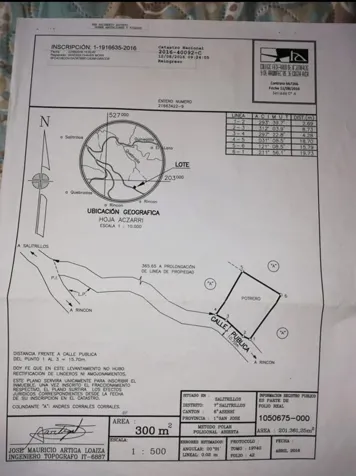
- A registered survey plan (plano catastrado) that matches the title and what you see on the ground, including boundaries, size and access.
- A land-use certificate (uso de suelo) from the Municipalidad de Aserrí and, where one exists, the canton's zoning plan. It says what can be built and for what use.
- Property tax (Law 7509) and municipal services paid up to date.
- If you plan to build, written water availability from AyA or the local ASADA, electricity service, and building permits from the local authority.
Getting around
Salitrillos borders San Miguel, San Rafael Arriba and Rosario, all in the canton of Desamparados, as well as Aserrí and Tarbaca. Knowing these neighbours helps you understand which direction you would travel for daily errands and for reaching the main roads.
Within the district, the official neighbourhoods include Cinco Esquinas and Santa Teresita. The official villages are Cerro, Cuesta Grande, Guinealillo, Huaso, Lagunillas, Palo Blanco, Quebradas and Rincón. Real travel time depends on the hour and the road, so drive the route from a specific property at the time of day you would normally use it.
How to buy
A purchase in Costa Rica is usually organized around a few professionals. A local agent helps you find and compare properties. A Costa Rican notary prepares the public deed, runs the title search and registers the transfer. Compare asking prices of similar properties in the area, and ask for the full closing-cost breakdown, including the transfer tax (Law 6999), before signing.
Foreigners can own titled property in Costa Rica with the same rights as citizens (Article 19 of the Constitution), with the exceptions the law sets. Agencies and agents with listings in this zone appear further down this same page. Treat the purchase as a long-term investment and take your time with each step.