How to plan a move in Costa Rica, step by step
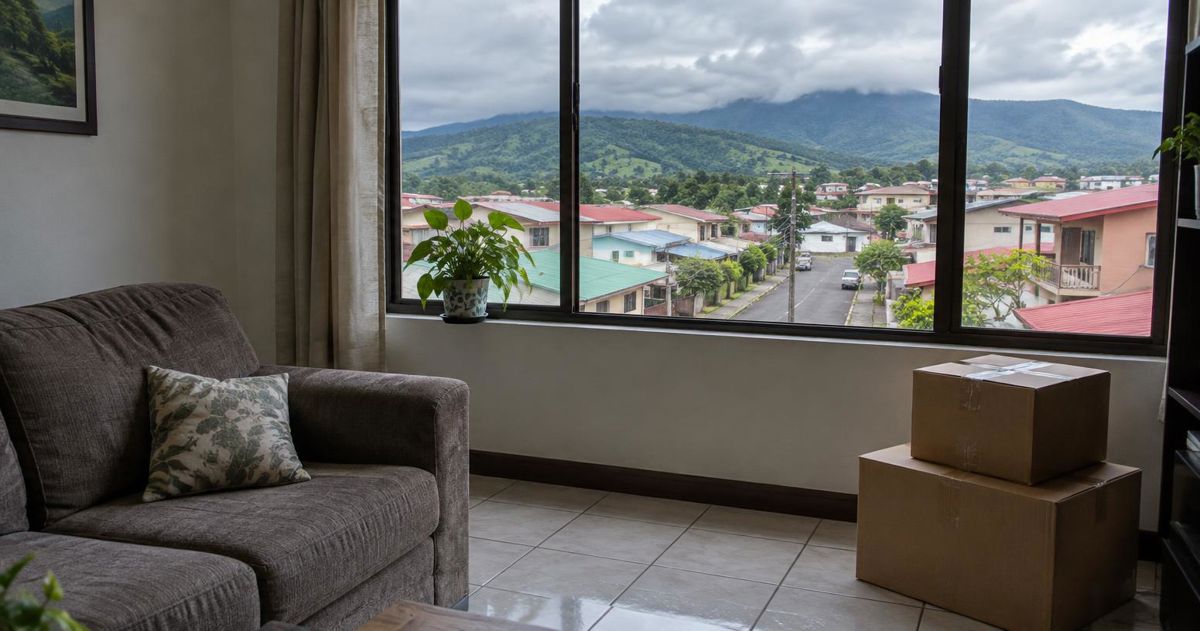
This guide explains how to organise a move in Costa Rica without improvising: when to start, how to choose the date, what to do with what you no longer need, how to pack and label, how to move power, water and internet to the new address and how to set up the home afterwards. It is meant for anyone leaving a rental or moving to another one, and also for anyone moving into a home of their own.
When should you start preparing the move and which date should you choose?
A move is planned backwards: you start from the date you hand over your current home and the date you receive the new one, and spread the work over the preceding weeks. The prudent approach is to start with at least a month of margin; it can be done with less time, but every decision is rushed and usually ends up costing more. If you rent, check what your contract says about notice to the landlord and handing over the property, and if you still have nowhere to go, compare homes for rent in Costa Rica before setting any date.
Three things are worth considering when choosing the date. First, the overlap: having the keys to the new home a few days before handing over the old one lets you clean, measure and move fragile items calmly. Second, the calendar: the end and the start of each month concentrate contract changes, so trucks and crews get booked earlier; a weekday is usually easier to secure. Third, the weather: from May to November it rains almost every afternoon in the Central Valley and the Pacific, and on the Caribbean it rains at any time of year, so it is best to load early in the morning.
If time is short, the order is compressed but does not change. First you secure transport and request the services at the new home, because those are the two things that depend on third parties; then you discard the obvious without lingering over each item, and pack room by room, with a simple inventory of box number and destination. The timeline below works as a base for a move with margin and can be squeezed into one or two weeks.
- A month ahead or more: set the date, check what your contract says about notice and handover, and ask for transport quotes.
- Three weeks ahead: do the inventory room by room and decide what to sell, give away or discard.
- Two weeks ahead: get boxes, tape and paper, and start packing what you use least.
- One week ahead: request the service connections at the new home and confirm the truck and the help.
- Two or three days ahead: defrost the fridge, prepare the essentials box and pack the last items.
- Moving day: supervise the loading, walk through the empty home, take photos, note the meter readings and hand over the keys.
- The first week: unpack by priority, check the inventory and update your address.
Advertisements
What should you sell, give away or discard, and how do you do the inventory?
Every item you pack costs time, boxes and space in the truck. That is why the clear-out comes before packing. A practical rule: whatever has not been used in the last year, whatever is broken with no repair in sight and whatever does not fit in the new home gets decided now. Large furniture is worth measuring against the doors, stairs and rooms of the new place; an armchair that does not fit through an apartment door becomes a problem on moving day, not before.
Items in good condition can be sold with a few weeks of margin, because last-minute sales force deep price cuts. What does not sell can be given to relatives, neighbours or organisations in your community. To discard, ask your municipality about its collection campaigns for bulky waste, such as mattresses and appliances, and take electronics and batteries to a recycling collection centre instead of leaving them with the regular rubbish.
The inventory is done room by room, in a spreadsheet or a notebook: box number, destination room, a short summary of contents and whether it holds anything fragile. For furniture and valuable appliances it is worth noting their condition and taking photos before wrapping them. That record serves three purposes: getting a transport quote based on real data, checking that everything arrived and backing up a claim if something turns up damaged.
| Item situation | Decision | When to do it |
|---|---|---|
| In good condition, but unused | Sell | Three weeks ahead |
| Useful to someone else and hard to sell | Give away | Two weeks ahead |
| Broken, expired or beyond repair | Discard or take to a collection centre | Two weeks ahead |
| Does not fit in the new home | Sell or give away | As soon as you have the measurements |
| You use it and it fits | Inventory and pack | Following the timeline |
How do you pack, label and transport without damaging anything?
Start with what you use least: ornaments, books, off-season clothes, the dishes for special occasions. Heavy items go in small boxes and light ones in large boxes, so that no box is impossible to carry. Reinforce the bottom with tape in a cross, wrap each plate and each glass separately and place them on edge, not flat, and fill the gaps with paper or clothes so nothing shifts. Electronics travel best in their original box or well padded, and the screws of each dismantled piece of furniture in a bag taped to that piece.
Each box is labelled on one side and on the top, because when stacked only the side is visible. The label shows the destination room, the number that matches the inventory and, where relevant, 'fragile' and an arrow pointing up. One colour per room helps whoever unloads: if the door of each room in the new home has a strip of tape in the same colour, every box reaches its place without anyone asking.
For transport there are two options: a moving company, which can handle the wrapping, loading, furniture assembly and insurance, or a hired truck with helpers, which is cheaper but leaves more work to you. In both cases ask for a written quote stating what is included and what is not, and if possible have someone see what is going to be moved. Mention difficult access in advance: stairs, narrow streets, steep slopes or a condominium that requires booking the lift or the loading time. In the rainy season, ask whether the truck is enclosed or whether they bring tarpaulins.
How do you move power, water and internet to the new home?
In Costa Rica, who provides each service depends on the area. Electricity is distributed by ICE, CNFL, ESPH, JASEC or an electricity cooperative depending on the canton; water may come from AyA, the municipality, ESPH or a community ASADA. Before moving, ask the landlord or the seller who provides each service at the new home, whose name the meters are in and whether any bills are outstanding. In rentals it is common for the services to stay in the owner's name with the tenant simply paying the bills; it is worth putting that in writing.
At the home you are leaving, take a photo of each meter reading on handover day, pay the last bill and, if the services are in your name, ask the company how to cancel or transfer them. At the new one, do the same when you receive the keys, so you do not pay for someone else's consumption. With internet the order matters more: confirm that your provider has coverage at the new address before setting the date, and schedule the installation for the first few days; if you switch provider, return the old one's modem.
Bottled gas deserves a separate question: ask the moving company whether it will carry the cylinder or would rather you take it yourself. And remember to update your address with your bank, your employer, deliveries and subscriptions.
| Service | Who handles it | What to have at hand |
|---|---|---|
| Electricity | The local distributor: ICE, CNFL, ESPH, JASEC or a cooperative | ID, meter number, photo of the reading |
| Water | AyA, the municipality, ESPH or the ASADA | ID, meter number, last bill |
| Internet and TV | The provider with coverage at the new address | ID, address with directions, installation date |
| Bottled gas | The gas distributor and the moving company | Confirmation of who carries it |
| Bank, employer, deliveries and subscriptions | The full new address |
What should you prepare for moving day and how do you unpack by priority?
The night before, it is worth putting together two things that do not go on the truck. A backpack with personal items: ID and documents, medicines, chargers, keys to both homes, some cash and valuables. And an essentials box, labelled separately, with toilet paper, soap, towels, bed linen, a change of clothes, cleaning supplies, basic tools, light bulbs, water, something to eat and the pets' food. The fridge is emptied and defrosted one or two days before.
On moving day, be there from the start of loading and tick off in the inventory each box that goes on. Before leaving, walk through the empty home: closets, cabinets, the laundry area, the yard. Take photos of the condition you leave it in, note the meter readings and hand over the keys as agreed with the landlord. At the new home, show where each box goes according to its colour and check the inventory and the condition of the furniture before signing off on the service.
Unpacking has an order too. First, whatever makes the home liveable that same night: the bathroom, the beds assembled and a basic kitchen. Then clothes and everyday items, and finally the living room, books and ornaments. Work one room at a time and flatten empty boxes as you go, so they are not in the way. Anything still unopened after a few weeks is a good sign it can be sold or given away.
Moving is also closing a chapter, and not everything is solved with boxes. If leaving the home is hard for you, the piece on the emotional aspects in the farewell to your rented home helps put a name to what you feel. And if you want to mark the ending with your family, you can read how to create a farewell ritual for your move: a last dinner, a walk through the home or a photo at the door.
What we would do before the move
- We would set the date only once the new home is confirmed and with a few days of overlap; if you are still looking and want to lower the cost of the move, we would check cheap homes for rent in Costa Rica.
- We would do the inventory before asking for quotes, so transport is priced on what will actually be moved.
- We would request the internet installation and confirm power and water at the new home before moving day.
- If the move is to a home of your own, we would compare homes for sale in Costa Rica and home prices in Costa Rica in good time, so the date does not depend on a rushed purchase.
- If the purchase budget is tight, we would also look at cheap homes for sale in Costa Rica before committing to a handover date.
Frequently asked questions
How do you organise a quick move when time is short?
The order is compressed but does not change. First you secure transport and request the services at the new home, because those are the two things that depend on third parties. Then you discard the obvious without lingering over each item and pack room by room, with a simple inventory of box number and destination. The personal backpack and the essentials box are prepared just the same, even if it is the night before, and the timeline in this guide can be squeezed into one or two weeks.
What should a checklist for before, during and after the move include?
Before: the date with overlap, what your contract says about notice and handover, the clear-out, the inventory, the transport quotes and the service requests. During: the personal backpack, the essentials box, ticking off each box that goes on the truck, the walk through the empty home, the photos, the meter readings and the handover of keys. After: checking the inventory at the new home, unpacking by priority, the internet installation and updating your address with your bank and deliveries.
Is it better to hire a moving company or a truck with helpers?
It depends on how much work you want to take on. A moving company can handle the wrapping, loading, furniture assembly and insurance; a truck with helpers is cheaper, but the packing and organisation stay with you. In both cases it is worth asking for a written quote stating what is included and what is not, mentioning difficult access and, in the rainy season, asking whether the truck is enclosed or whether they bring tarpaulins.
This guide summarises common practice for organising a move in Costa Rica and does not replace the advice of a lawyer or a notary. For the notice, handover or deposit terms of a rental contract, or for the handover of a purchased home, consult a professional before setting the date.
Advertisements