


Home insurance in Costa Rica: what it covers, how to choose
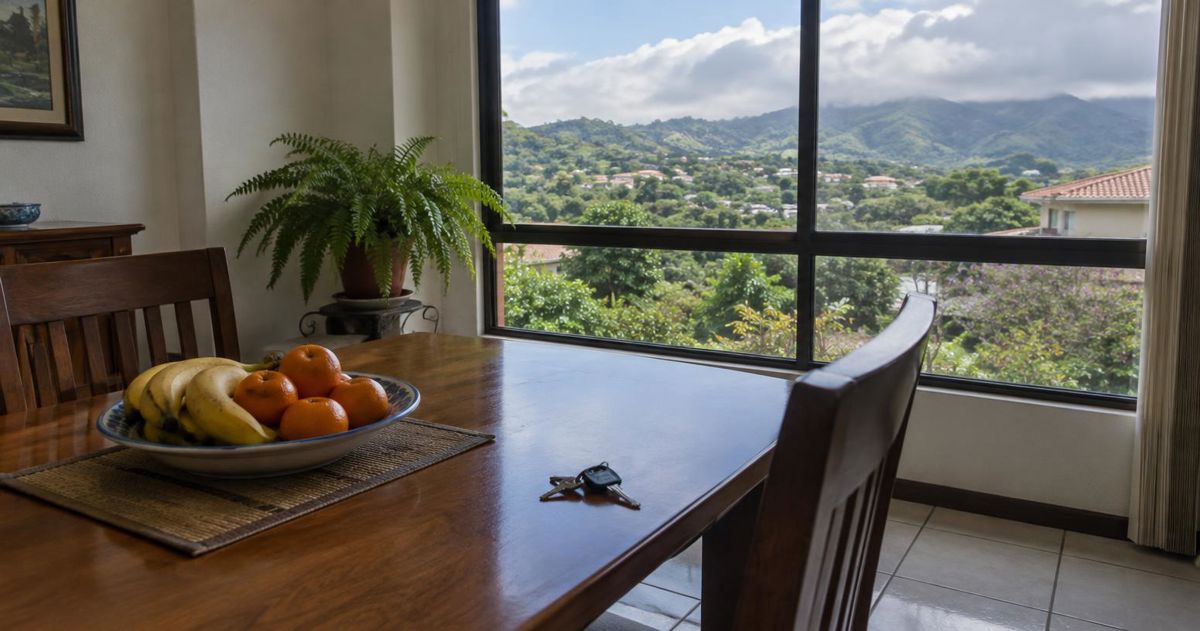
Anyone who buys a home with a loan in Costa Rica usually leaves the bank with two insurance policies tied to the loan: one on their life and one on the property. This guide explains what each one covers, how they differ from a full home insurance policy and how to choose the coverage, the insured value and the policy, whether you own or rent.
Which insurance does the bank require with a mortgage?
In Costa Rica, banks and mutual housing lenders that grant mortgages usually require two policies for as long as the loan lasts. The first is mortgage life insurance, also called outstanding-balance insurance: if the borrower dies or, depending on the policy, becomes totally and permanently disabled, the insurer pays the bank the remaining balance. The family keeps the house without inheriting the debt. That is why the bank asks for it: it backs the loan, but it also spares the heirs a heavy burden. The other loan requirements are explained in the guide mortgages in Costa Rica: what the bank asks for.
The cost of that policy is usually added to the monthly payment and depends on age, health and the loan balance. When you apply, the insurer may ask for a health declaration or medical exams. It pays to answer accurately: an omitted illness can give grounds to dispute the payment exactly when it is needed most. If two people share the loan, ask whether the policy covers both and in what proportion.
The second is property insurance, sometimes called fire or direct-damage insurance. It covers the building —walls, roof, fixed installations— against fire, lightning, explosion and often earthquake, because the house is the loan's collateral. What it usually leaves out is everything that is not structure: furniture, appliances, clothing, electronics, theft and the damage you cause to a third party. Nor does it cover the value of the land, which does not burn or collapse. And the main beneficiary is the bank: the payout goes first to repairing the house or covering the loan balance.
Before signing the mortgage, ask for the full policy, not just the summary: confirm which risks it includes, the amount the house is insured for and what requirements a policy taken out with another insurer must meet for the bank to accept it. In Costa Rica, the Instituto Nacional de Seguros (INS) and several private insurers operate under the supervision of the Superintendencia General de Seguros (SUGESE).
Advertisements
What does home insurance cover and which add-ons are worth it?
A full home insurance policy extends what the bank requires and is usually split into two parts. The structure is the building: walls, floors, roof, windows, pipes, wiring, perimeter walls and, depending on the policy, the gate, the carport or the storage room. The contents are what is inside: furniture, appliances, clothing, computers and other personal items. A practical test separates them: if you could turn the house upside down, what falls out is contents; what stays attached is structure.
Jewelry, cash, artwork and some high-value equipment usually have their own limit within contents or must be declared separately. If you own items like these, ask for them to be listed in the policy with their value.
| Coverage | What it protects | What to ask before buying |
|---|---|---|
| Earthquake | Earthquake damage to the structure and, if included, the contents | Whether it has its own deductible and how it is calculated |
| Flood and landslide | Damage from water coming in from outside, rising rivers or land movement | Whether the location of the house has restrictions |
| Internal water damage | Leaks or burst pipes inside the house | Whether it covers repairing the pipe or only the damage it caused |
| Theft | Loss of contents with signs of forced entry | What evidence it requires and whether it covers items outside the house |
| Liability | Damage that you or your house cause to neighbors or visitors | The limit per event and whether it includes defense costs |
In Costa Rica, seismic risk is present in almost the whole country, so earthquake coverage deserves priority even if it raises the premium. Flood and landslide coverage matters more for houses near rivers, streams or on hillsides, which are common in the Central Valley and in rainy regions. Theft and liability solve everyday problems: a neighbor affected by a leak, a visitor who gets hurt on the stairs. The sensible approach is to start with what you could not pay out of pocket and add the rest according to the house and its location.
When should you insure the house and for how much?
The house should be insured from the day it becomes yours, not weeks later. With a loan, the bank usually requires the property policy before releasing the money, so structural coverage starts with the deed. What is often left pending is contents and add-on coverage: it pays to buy them before moving in, precisely when there are boxes on the porch, open doors and valuables out of place. If you buy in cash, nobody will require it, which is why it is easy to put off. If you are still comparing homes for sale in Costa Rica, ask for an insurance quote on each finalist: the premium changes with location and construction.
The insured value of the structure is based on the cost of rebuilding the house with similar materials and finishes, not on the price you paid. The price includes the land, which is not insured, and the location, which cannot be destroyed. A practical way to estimate it is to multiply the square meters of construction by a current construction cost per square meter, according to the type of finishes, and add the outdoor works. An engineer, an architect or the insurer's adjuster can give you that figure. Home prices in Costa Rica help you negotiate the purchase, not set the insurance.
- Measure the square meters of construction, excluding the land.
- Ask a professional or the insurer for the construction cost per square meter based on your finishes.
- Add perimeter walls, carport, storage room and other outdoor works.
- Make a room-by-room inventory of contents, with photos and approximate values.
- Review both amounts every year or after a renovation.
Insuring for less than the real cost lowers the premium, but it turns out expensive: many policies apply a proportional rule, so if the house is insured for half of what it costs to rebuild, the payment for partial damage may also be reduced in proportion. Insuring for more does not help either, because the insurer pays the actual damage, not the policy amount. For contents, the room-by-room inventory is your best backup; keep it outside the house.
What should you check in the policy and what drives its cost?
The policy is the contract; the brochure is advertising. The deductible is the part of the damage you pay: it can be a fixed amount or a percentage, and for earthquakes it is usually different and higher than for the other coverages. Exclusions are what is not covered even if it seems obvious: wear and tear, lack of maintenance, built-up dampness, pests or a house left empty for a long period. Limits are the caps: per event, per year and per type of item, such as jewelry or equipment.
| Item | What to ask |
|---|---|
| Deductible | How much you pay on each claim and whether it changes by coverage |
| Exclusions | Which damage is left out and what maintenance is required of you |
| Limits | Caps per event, per year and per type of item |
| Payment basis | Whether it pays replacement value or deducts depreciation |
| Vacant home | What happens if the house stays empty for a while |
| Additional expenses | Whether it covers temporary lodging while the house is repaired |
The cost of home insurance depends on the insured value, the type of construction (concrete, wood or mixed), the location and its exposure to floods or landslides, the coverages you add, the deductible you choose and your security measures. To lower it without leaving yourself unprotected, compare several quotes with the same coverages and consider a higher deductible if you can afford it, because it usually lowers the premium. Good locks, an alarm, an inspected roof and up-to-date wiring also help, as does asking about discounts for annual payment or bundling policies. What does not pay off is cutting the insured value.
If you are looking among cheap homes for sale in Costa Rica, you are more likely to find wooden or mixed construction, or hillside lots, and the premium can vary widely from one to another. Ask for the insurance quote before closing the purchase.
Which insurance makes sense if you live in an apartment or rent?
In an apartment or a house in a condominium, the shared structure —roofs, facades, common areas— is normally insured by the condominium and paid through the maintenance fees. Ask the management for the current policy and check what it includes. In practice, what falls to you is what is on your side: interior finishes, contents and liability, especially for water leaks that reach the neighbor's unit below, one of the most common claims in buildings.
If you rent, the house belongs to the owner and the owner's insurance, if any, covers the structure, not your belongings. A renter's contents policy protects your furniture and equipment, and liability coverage, depending on the policy, covers damage you cause to the property or to third parties. Before signing the lease, ask the owner what they insure. If you are looking among cheap homes for rent in Costa Rica, a contents policy is usually affordable protection compared with what it safeguards.
If you are the owner and rent out your house, inform the insurer: some policies change their terms when the home is not occupied by the policyholder.
How do you file a claim after damage?
A well-documented claim is resolved sooner. The key is to report it promptly, not to repair blindly and to keep evidence of everything.
- Get people to safety and keep the damage from spreading: shut off the water or the electricity if needed.
- If there was a theft, file a report with the OIJ and keep the receipt.
- Notify the insurer or your agent as soon as possible, within the deadline stated in your policy.
- Take photos and videos of the damage before cleaning or repairing, and keep the damaged parts.
- Gather invoices, the contents inventory and repair quotes.
- Meet the adjuster and ask for the decision and the amount offered in writing.
- If the house has a mortgage, inform the bank, because it may be involved in the payment.
If you disagree with the amount, ask for the breakdown of the calculation: the deductible applied, depreciation and limits. You can submit your own quotes and request a review through the insurer's internal channels. If the gap persists, you can consult SUGESE, which supervises insurers, and in a significant dispute it is wise to seek a lawyer's advice.
What we would do before buying a policy
- We would ask the bank for the full property insurance policy before signing the mortgage.
- We would calculate the insured value from the rebuilding cost, not from the purchase price.
- We would buy contents, theft and liability coverage before moving in, not afterwards.
- We would compare several quotes with the same coverages and the same deductible.
- If we were looking among homes for rent in Costa Rica, we would insure our contents and ask the owner what their policy covers.
Frequently asked questions
Does the insurance the bank requires cover furniture?
As a rule, no. The property insurance the bank requires protects the building, which is the loan's collateral, and usually leaves out furniture, appliances, equipment and personal items. It usually does not cover theft or damage you cause to third parties either. For that you need home insurance with contents coverage and, if it suits you, theft and liability. Review the full policy to confirm what yours includes.
Why not insure the house for what you paid?
Because the price includes the land and the location, which are not destroyed by a fire or an earthquake. What gets replaced is the building, so the amount should be close to the cost of rebuilding it with similar finishes. Insuring for less can proportionally reduce the payment for partial damage, and insuring for more does not help either, because the insurer pays the actual damage.
Is a higher deductible a good idea?
It can be, if you have savings to cover it, because a higher deductible usually lowers the premium. The condition is that it is an amount you could pay without going into debt after damage. For earthquakes the deductible is usually different and higher, so review it separately. What does not pay off as a way to save is cutting the insured value or dropping coverage for risks you could not pay out of pocket.
What if the insurer offers less than expected?
Ask for the breakdown of the calculation: the deductible applied, depreciation and the limits used. With that information, submit your own repair quotes and request a review through the insurer's internal channels. If the gap continues, you can consult SUGESE, which supervises insurers, and in a significant dispute, seek a lawyer's advice.
This guide summarizes common practice for home insurance in Costa Rica in 2026 and does not replace the advice of a lawyer, a notary or a licensed insurance agent; the exact coverage and terms are those set out in your policy.
Advertisements
More in Insurance
Most viewed in Finance and Planning
Finance and Planning, Taxes and Expenses
What buying a house costs on top of the price in Costa Rica

Finance and Planning, Housing Costs
Where US$100,000 buys a lot in Guanacaste

Finance and Planning, Financial Planning
Dollars or colones: where colón buyers face less competition

Finance and Planning, Housing Costs
Where US$200,000 buys a house in Alajuela