


Guanacaste Day: the story of the annexation of Nicoya
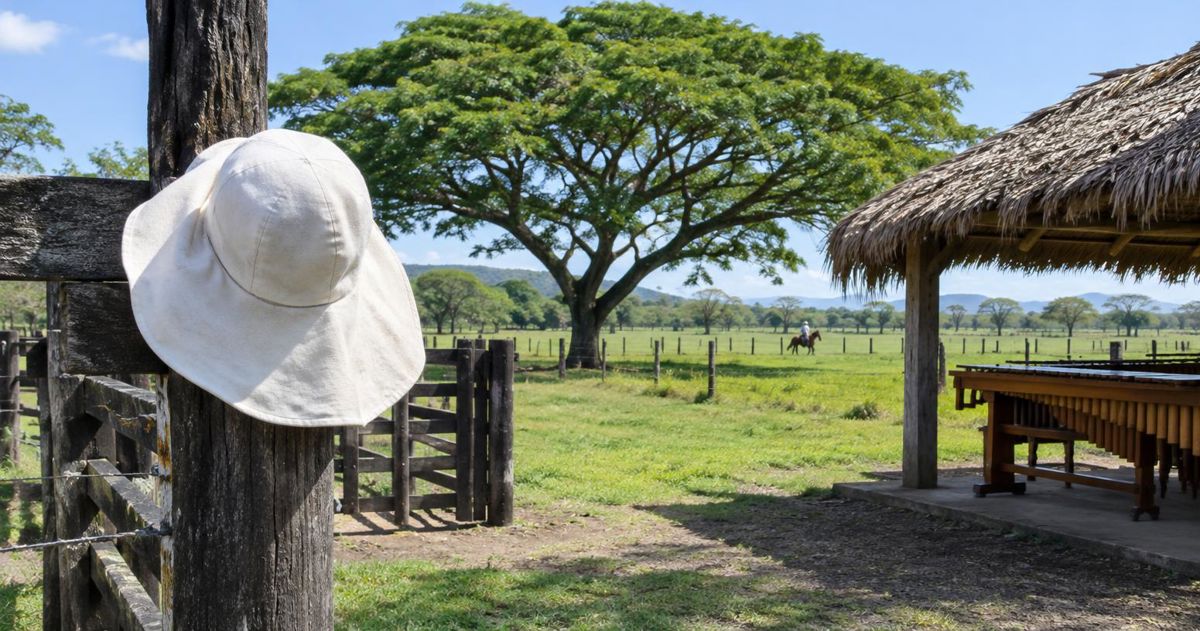
Every 25 July, Costa Rica celebrates that in 1824 the Partido de Nicoya chose to join its territory. Here is what happened that day according to the original record, how it was confirmed in the years that followed and why the holiday no longer moves.
How Nicoya became part of Costa Rica
It was not a single day but a process. According to the National Archive and historians at the University of Costa Rica, these were the steps:
- Colonial times. From 1527, and possibly until 1548, Nicoya was part of the province of Nicaragua; in 1787 it stopped being a corregimiento.
- Early 1824, the first no. Costa Rica invites Nicoya, Santa Cruz and the Villa de Guanacaste, today Liberia, to join; the invitation is turned down.
- 25 July 1824, the yes. In the town of Nicoya, the council, the political chief, the soldiers and the residents agree to “the union and joining” with Costa Rica; the Santa Cruz council joins in. The villa of Guanacaste stays out.
- The reasons. The record speaks of trade through the port of Punta de Arena, prompt justice and security against the conflicts in Nicaragua.
- 1826 and 1828, the confirmation. The federal authorities of Central America accept the joining provisionally in 1826, and in 1828 the district's three main towns ratify it in open town meetings.
- 1956, a national celebration. Law 2034 declares 25 July a national holiday, “as Costa Rica's just recognition of the peoples of the former Partido de Nicoya”.
Advertisements
Timeline
| Year | What happened |
|---|---|
| 1527 | Nicoya becomes part of the province of Nicaragua |
| 1787 | Nicoya stops being a corregimiento |
| Early 1824 | Nicoya, Santa Cruz and the Villa de Guanacaste turn down a first invitation from Costa Rica |
| 1824 | On 25 July, Nicoya signs the record of “union and joining” and Santa Cruz joins in |
| 1826 | The federal authorities accept the joining provisionally |
| 1828 | The three main towns ratify it in open town meetings |
| 1956 | Law 2034: 25 July becomes a national holiday |
| 1999 | Law 7937: the official seat of the celebration is Nicoya, “Cradle of the Annexation” |
| 2020-2023 | In 2020, 2021 and 2023 the holiday is moved to a Monday |
| 2024 | Law 10438: the holiday is always held on 25 July, never moved |
| 2026 | Nicoya's Municipal Council rejects a bill to move it back to Mondays |
| 2027 | 25 July falls on a Sunday and is held that same day |
Guanacaste and its holiday, in figures
Guanacaste is the least populated province, but the fastest-growing: according to the preliminary 2022 Census results, its population grew 2.12 % a year, ahead of Puntarenas (1.79 %) and far ahead of Heredia, the slowest (0.91 %).
| Year | Weekday | When it was taken |
|---|---|---|
| 2020 | Saturday | Monday 27 July (moved) |
| 2021 | Sunday | Monday 26 July (moved) |
| 2023 | Tuesday | Monday 24 July (moved) |
| 2024 | Thursday | The day itself: Law 10438 was in force |
| 2026 | Saturday | The day itself |
| 2027 | Sunday | The day itself |
Curious facts
- The record of 25 July 1824 never uses the word “annexation”: it speaks of “union and joining”. Even Law 2034 speaks of the date of “incorporation”.
- Nicoya's military chiefs warned that they had only “twenty-six useless rifles” and asked Costa Rica for protection from the conflicts in Nicaragua.
- The record asked for tobacco shops in Nicoya and Santa Cruz and for support to create schools, “so important for the education and enlightenment of the young”.
- Law 2034 orders a book on the history of the annexation to be published for every school in the country.
- Real heat: at Liberia airport, April has an average high of 37.9 °C (IMN, 2005-2025).
Frequently asked questions
Is 25 July a public holiday in Costa Rica?
Yes, with mandatory pay, under article 148 of the Labour Code. If someone works that day, articles 149 and 152 require double the ordinary wage.
Is it moved to a Monday?
No. Since Law 10438 of 1 February 2024, article 148 says it will be held “always on the respective date” and will not be moved. In 2027 it falls on a Sunday. Bill 25.593 proposes moving it to Mondays, but it is not law.
Why is it called “annexation” if the record never uses the word?
By custom. The record speaks of “union and joining” and Law 2034 of “incorporation”; the 1999 amendment called Nicoya the “Cradle of the Annexation”, and that is how it is known today.
Sources
- National Archive of Costa Rica: record of the annexation of the Partido de Nicoya to Costa Rica, 25 July 1824 (ANCR, Gobernación, 8445), with transcription.
- University of Costa Rica, Faculty of Social Sciences: opinion FCS-356-2023 (9 May 2023), with the History School (Luis Fernando Sibaja Chacón) and Anthropology School reports.
- Law 2034 of 18 July 1956, amended by Law 7937 of 15 November 1999 (text on Justia).
- Labour Code, articles 148, 149 and 152, with the Law 10438 amendment of 1 February 2024 (SINALEVI).
- El Observador: “The secrets of the Partido de Nicoya record: the document that never mentioned the word ‘annexation’” (25 July 2024).
- El Observador: “Nicoya council rejects moving the Annexation holiday to create a long weekend” (25 May 2026).
- CRHoy: “San José and Alajuela have the largest population” (20 July 2023), with INEC's preliminary 2022 Census results.
- IMN: 2005-2025 Aeronautical Climatology of Daniel Oduber International Airport (table 1).
Advertisements
More in Costa Rica calendar
Lifestyle, Costa Rica calendar
International Men's Day: history and figures for Costa Rica

Lifestyle, Costa Rica calendar
Blue November in Costa Rica: origin, history and figures

Lifestyle, Costa Rica calendar
Black Friday in Costa Rica: housing, loans and renting

Lifestyle, Costa Rica calendar
Costa Rica's Army Abolition Day: history and key facts
Most viewed in Lifestyle

Lifestyle, Urban and Suburban Spaces
Create an urban space that celebrates cultural diversity.
Lifestyle, Families and Housing
Find your ideal home with advice from local experts.

Lifestyle, Families and Housing
Discover how to choose a home that enhances your family happiness.

Lifestyle, Urban and Suburban Spaces
Urban refuge: spaces that promote social connection at home