


International Women's Day in Costa Rica: history and figures
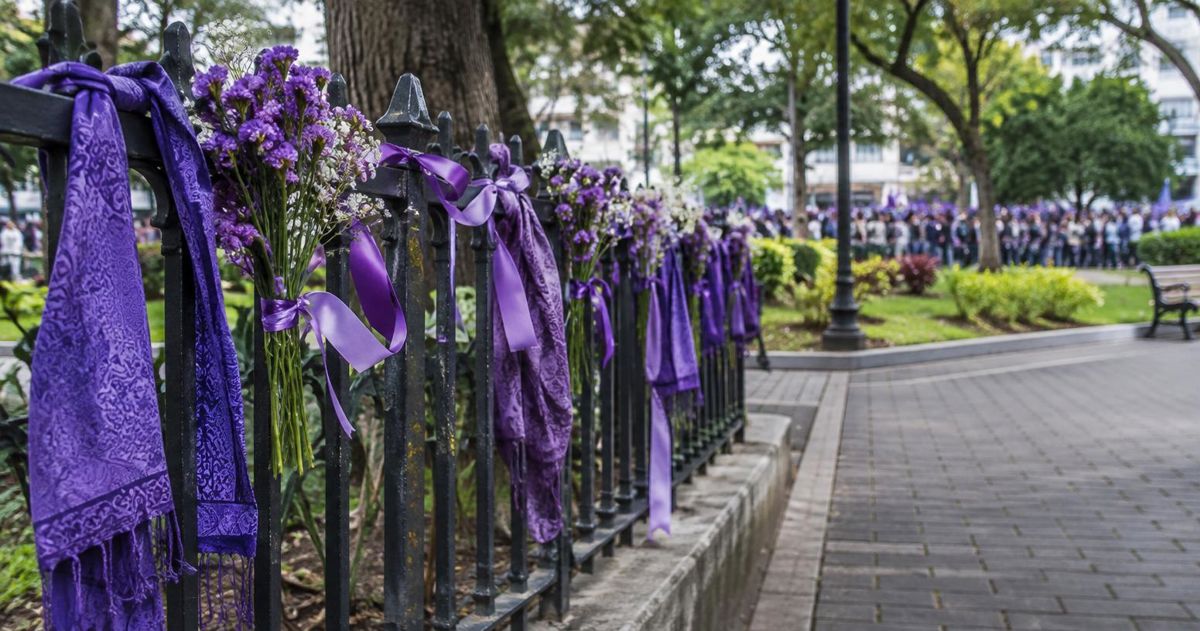
Every 8 March is International Women's Day. Here is where the date comes from, how Costa Rican women came to vote and govern, and what today's official figures say.
From 8 March to Costa Rican women's vote
According to the United Nations, 8 March is closely linked to the women's movements of the 1917 Russian Revolution, and the UN officially recognised it in 1977. In Costa Rica, the debate on women's suffrage began in the second half of the 19th century and took almost sixty years to become law.
- 1890, the first voice. In a speech on 4 June, José Joaquín Rodríguez says that “women are endowed with the same faculties and feelings as men”.
- 1949, the vote. The Constituent Assembly approves women's suffrage, but not unanimously: 8 of its 45 members oppose it.
- 30 July 1950, the first ballot. Costa Rican women vote for the first time in the La Tigra and La Fortuna plebiscite; Bernarda Vásquez Méndez is recognised as the country's first woman voter.
- 1953, the first deputies. Of almost 200 candidacies, only 6 are women's; María Teresa Obregón Zamora, Ana Rosa Chacón González and Estela Quesada Alvarado are elected.
- 1996 and 2009, the rules. Law 7653 requires parties to field at least 40 % women, and the 2009 Electoral Code moves to parity: lists half and half, alternating.
- 2026, the majority. Women hold 30 of the 57 seats, and Laura Fernández is the second woman elected President of the Republic.
Advertisements
Timeline
| Year | What happened |
|---|---|
| 1890 | José Joaquín Rodríguez links the progress of democracy with the inclusion of women |
| 1917 | Women's movements of the Russian Revolution, to which the UN links 8 March |
| 1949 | The Constituent Assembly approves women's suffrage, with 8 votes against out of 45 |
| 1950 | On 30 July, women's first vote, in La Tigra and La Fortuna |
| 1953 | First national elections with women: three women deputies are elected |
| 1977 | The UN officially recognises International Women's Day |
| 1990 | Law 7142 on the Promotion of Women's Social Equality, dated 8 March |
| 1996 | Law 7653 sets a minimum quota of 40 % women on ballots |
| 2009 | The new Electoral Code requires parity and alternation on the lists |
| 2010 | Costa Rica elects its first woman president, Laura Chinchilla |
| 2026 | 30 women deputies out of 57 and the second woman president, Laura Fernández; UN theme: “Rights. Justice. Action. For ALL women and girls” |
Women in Costa Rica, in figures
| Indicator | Women | Men |
|---|---|---|
| People on the electoral roll, December 2025 | 1,881,567 | 1,850,221 |
| Assembly seats, 2026-2030 | 30 | 27 |
| Net labour participation rate, June-August 2026 | 41.9 % | 66.9 % |
| Employment rate, June-August 2026 | 38.8 % | 62.7 % |
| Unemployment rate, June-August 2026 | 7.3 % | 6.4 % |
| Life expectancy at birth (years) | 83.3 | 78.4 |
There are more women than men on the electoral roll, but fewer in the labour market: between June and August 2026, 41.9 % of women aged 15 or over were working or looking for work, against 66.9 % of men. That quarter there were 835,000 women in work and 1.35 million men.
Curious facts
- At women's first vote, in La Tigra and La Fortuna in 1950, the list of voters had 349 women and 426 men.
- Law 7142 on the Promotion of Women's Social Equality is dated 8 March, in 1990.
- In 1953, Estela Quesada Alvarado was the only woman nominated in Alajuela, and she headed her party's list.
- Every 30 July, La Tigra remembers women's suffrage with an event at the monument in front of the school.
- As early as 1990, women were 49.8 % of the roll: 843,322 against 848,728 men. By 2025 they were the majority.
Frequently asked questions
Is 8 March a public holiday in Costa Rica?
No. It is not among the public holidays of article 148 of the Labour Code, according to the Ministry of Labour's official 2026 calendar. In 2027, 8 March falls on a Monday.
Since when have women voted in Costa Rica?
The 1949 Constitution gave them the right. They first voted on 30 July 1950, in the La Tigra and La Fortuna plebiscite, and in a national election in 1953.
What was the UN theme in 2026?
“Rights. Justice. Action. For ALL women and girls”.
Sources
- United Nations: International Women's Day, background and 2026 theme.
- Eugenia María Zamora Chavarría: “TSE: 75 years of contributions to women's political participation”, Electoral Law Journal no. 38 (2024).
- Supreme Electoral Tribunal: key events of the TSE, 1946-2009 (30 July 1950).
- Supreme Electoral Tribunal: 2025 Statistical Bulletin (electoral roll by sex, December 2025).
- Delfino: “TSE officially declares Laura Fernández Delgado president-elect” (3 March 2026); El Observador: the new Legislative Assembly in figures (1 May 2026).
- INEC: Continuous Employment Survey, June-August 2026 quarter (1 October 2026).
- Ministry of Health: 2024 Epidemiological Profile; Ministry of Labour: 2026 holiday calendar.
Advertisements
More in Costa Rica calendar
Lifestyle, Costa Rica calendar
International Men's Day: history and figures for Costa Rica

Lifestyle, Costa Rica calendar
Blue November in Costa Rica: origin, history and figures

Lifestyle, Costa Rica calendar
Black Friday in Costa Rica: housing, loans and renting
Lifestyle, Costa Rica calendar
Costa Rica's Army Abolition Day: history and key facts
Most viewed in Lifestyle
Lifestyle, Urban and Suburban Spaces
Create an urban space that celebrates cultural diversity.
Lifestyle, Families and Housing
Find your ideal home with advice from local experts.

Lifestyle, Families and Housing
Discover how to choose a home that enhances your family happiness.

Lifestyle, Urban and Suburban Spaces
Urban refuge: spaces that promote social connection at home