


How much it costs to rent a house in Costa Rica
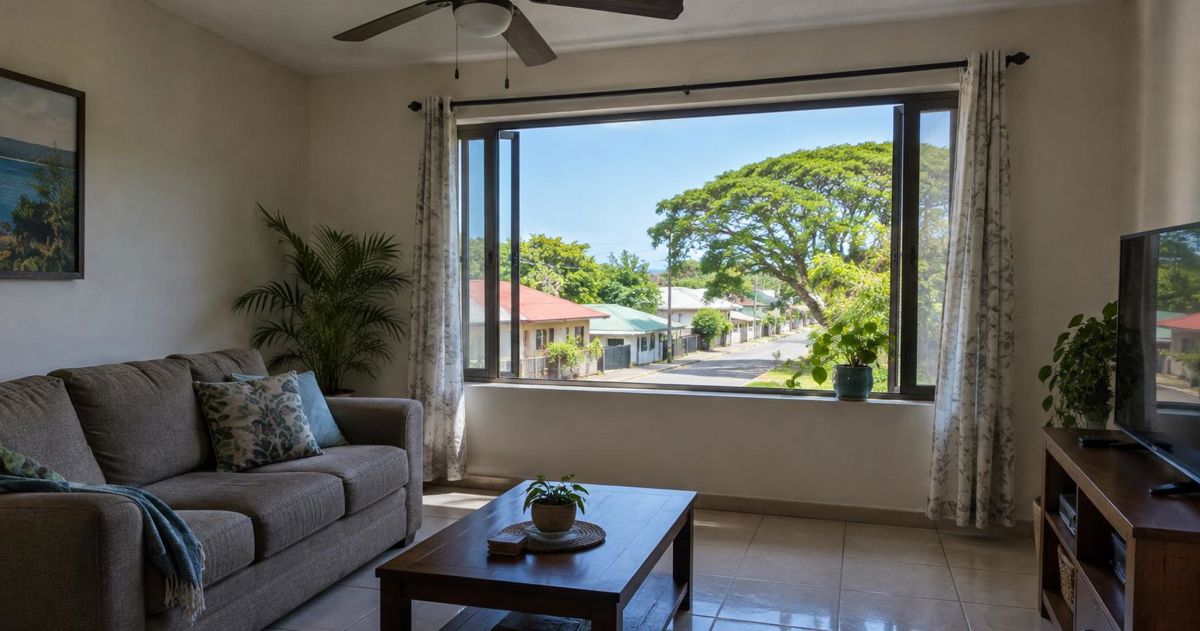
Renting a house or an apartment in Costa Rica costs more than the rent shown in the listing. This guide is for anyone looking for a home who wants to know what drives the price, which expenses are added each month, how much the rent can rise each year under the law and how to negotiate before signing.
What determines the price of a rental?
| Type | Median | Typical range | Listings |
|---|---|---|---|
| Houses | US$1,800 | US$1,304 – US$2,700 | 1,206 |
| Apartments | US$1,196 | US$950 – US$1,400 | 1,870 |
The table in this section shows the monthly rent being asked this month for houses and apartments across the country. Those figures are asking prices in listings, not signed rents, and they work as a starting point to tell whether a listing is in line with what is being asked or well above it. What moves the price of a specific home is a combination of location, size, condition, included services and contract terms.
Location weighs more than any other factor. In the Central Valley, cantons close to the job centres of San José, Escazú, Santa Ana or Heredia usually ask for more than those an hour of traffic away. On the coasts, as in Guanacaste, tourism pushes prices up in beach areas, while a service city such as Liberia works under a different logic, closer to local employment. When browsing homes for rent in Costa Rica, always compare within the same canton before drawing conclusions.
Next come size, number of bedrooms and bathrooms, parking and the condition of the home. A furnished house, or one inside a condominium with security, common areas and maintenance, asks for more than a stand-alone house without those services. Term and season also count: in tourist areas, a long lease usually gets a better price than a short stay in high season, and an owner who needs to fill the home soon is more willing to adjust the rent.
Advertisements
Which expenses come on top of the rent each month?
The real cost of renting is the rent plus everything the contract places on the tenant. The tenant almost always pays the basic utilities: electricity, billed by ICE, CNFL or a cooperative depending on the area; water, charged by AyA, the municipality or an ASADA; internet and cable, and gas if the stove uses it. In hot areas such as Guanacaste, air conditioning can weigh heavily on the power bill, so it is worth asking about typical consumption.
In a condominium there is the maintenance fee, which covers security, cleaning of common areas and building repairs. There is no single rule on who pays it: in many contracts the owner covers it and builds it into the rent, and in others it is passed on to the tenant. Before comparing two listings, ask whether the fee is included, because two similar rents can end up as very different monthly costs. Ask about VAT too: if the monthly rent exceeds one and a half base salaries, VAT applies to the whole amount, not just the difference. Check whether the listed price already includes it.
On signing you also pay the security deposit, which the owner holds to cover damage or debts at the end of the lease, and usually the first month in advance. The deposit amount is negotiable and must be written down, together with the conditions for returning it. Take photos of the condition of the home on handover day and attach an inventory to the contract: it is the best evidence for getting the deposit back without disputes.
| Expense | Who usually pays | What to ask |
|---|---|---|
| Electricity | Tenant | Typical consumption and whether the meter is separate |
| Water | Tenant | Who provides it and whether the bill is up to date |
| Internet and cable | Tenant | Which providers serve the area |
| Condo fee | Depends on the contract | Whether it is included in the rent |
| Security deposit | Tenant, on signing | Amount and conditions for its return |
| Structural repairs | Owner | Whom to notify and how fast they respond |
| Minor maintenance | Depends on the contract | Which repairs fall to the tenant |
How much can the rent go up each year?
In Costa Rica the increase in residential rent has a legal cap. Under article 67 of the Ley General de Arrendamientos Urbanos y Suburbanos (Law 7527), the rent is updated at the end of each year of the contract: if inflation over the previous 12 months was 10% or less, the landlord may raise it by up to that same inflation rate, measured with INEC's consumer price index, unless there is an agreement more favourable to the tenant. It is a ceiling, not an obligation: the owner may raise it less or not at all.
If inflation over the previous 12 months exceeds 10%, the same article 67 of that law provides that MIVAH sets the percentage increase, which cannot be lower than that 10% nor higher than the annual inflation rate. These rules apply since June 2016, and under the sole transitional provision of Law 9354, leases already in force at that time are governed by the previous rules. If your contract is older, consult a lawyer before accepting an increase.
Nor is the increase automatic. Under articles 67 and 68 of Law 7527, it applies from the payment period after the landlord notifies the tenant, together with INEC's certification or a certified copy of the publication in the official gazette, and any increase above what the law allows is null and void. If you receive a notice of increase without that support, ask for the document in writing before paying the new amount.
Is it better to rent in colones or in US dollars?
In Costa Rica many homes are rented in US dollars, especially in condominiums and tourist areas, and the currency changes the rules. Under article 67 of Law 7527, if the rent for a home was agreed in a foreign currency, for example US dollars, the agreed amount stays the same for the whole term of the contract, with no right to an increase. In exchange, the tenant bears the exchange-rate risk: if the dollar rises against the colón, the same rent costs more colones each month.
Paying in dollars does not require a dollar account. Article 57 of that law allows that, if the rent was agreed in a foreign currency, the tenant may pay it in colones, at the Banco Central de Costa Rica selling exchange rate in force on the payment date. A clause requiring payment only in dollars or at a different exchange rate deserves a consultation with a lawyer before signing.
The decision depends on the currency you earn in. If your salary is in colones, a lease in colones gives you predictable payments, with an annual increase capped by inflation. If you earn in dollars, a lease in dollars freezes the rent for the whole term. In both cases, compare the total cost in the currency in which you receive your income.
How do you negotiate the price and compare areas?
A listing price is an asking price, and there is almost always room to talk. The strongest position belongs to whoever arrives informed: they know what is asked for similar homes in the same canton, offer a good payment record and can commit to a long term. Negotiating is not only about lowering the rent: you can also ask the owner to paint, make repairs or include the condo fee.
- Compare at least three similar homes in the same canton before making an offer.
- Work out the total monthly cost: rent, utilities, condo fee and commute.
- Inspect the house calmly and note what needs repair.
- Make a specific offer and justify it with what you found on the visit and in the listings.
- Offer a longer term, on-time payment or references from previous leases in return.
- Put in the contract the rent, the currency, who pays each expense and the agreed repairs.
To compare areas, compare like with like: the same type of home, a similar size and the total monthly cost, not only the rent. A cheaper house far from work can be expensive in time and transport, and one in a hot area, in electricity. If your budget is tight, the cheap homes for rent in Costa Rica show which cantons offer more options, and from there you can narrow the search by district.
What we would do
- We would ask in writing, before signing, for the list of expenses that fall on the tenant and whether the condo fee is included.
- We would choose the contract currency according to the salary currency, knowing that in dollars the rent does not rise but the exchange rate does move.
- We would demand INEC's certification with any notice of increase and would not pay more than the law allows.
- If the rent approaches what a mortgage payment would cost, we would compare with home prices in Costa Rica and with homes for sale in Costa Rica before renewing.
- For anyone thinking of buying on a tight budget, we would also look at cheap homes for sale in Costa Rica.
Frequently asked questions
Can the owner raise the rent in the middle of a contract year?
In a residential lease in colones, the law provides for the update at the end of each year of the contract, not at any time. In addition, the increase only applies from the payment period after notice with INEC's certification or the copy of the official publication. If the owner asks for an increase early or above the cap, that excess is null. If the lease is in dollars, the agreed amount is not adjusted during the term.
What happens if my lease was signed before June 2016?
Leases already in force when the current rules took effect are governed by the previous rules, under the sole transitional provision of Law 9354. That means the increase may be calculated differently from what this guide describes. Before accepting or disputing an increase on an old lease, it is worth reviewing the document with a lawyer familiar with rental law in Costa Rica.
How do I get the deposit back when the lease ends?
The deposit is meant to cover damage or outstanding debts, not the normal wear of the home. To get it back, hand over the house clean, with the utility bills paid and in the condition shown in the photos and inventory from the start. Ask for the move-out inspection to be done with you present and for the return agreement to be put in writing. If a disagreement arises, a lawyer can advise you on how to claim it.
This guide summarises common practice for residential rentals in Costa Rica and the legal rules cited, in force in November 2026. It does not replace the advice of a lawyer or a notary, who should review your contract and your specific case before you sign or dispute an increase.
Advertisements
More in Types of Rentals

Rental Guides, Types of Rentals
Tips for choosing a rental that guarantees your investment in Costa Rica

Rental Guides, Types of Rentals
Aspects that ensure a safe and reliable rental in Costa Rica

Rental Guides, Types of Rentals
Aspects to evaluate for a rental that guarantees your peace of mind

Rental Guides, Types of Rentals
Essential aspects to choose a rental that ensures your peace of mind
Most viewed in Rental Guides

Rental Guides, Requirements for Renting
How to rent a house in Costa Rica: steps and requirements

Rental Guides, Rental Contracts
Rental deposit: what it covers and how it is agreed

Rental Guides, Rights and Obligations
Tenant rights regarding repairs not made by the landlord

Rental Guides, Rights and Obligations
Tenant rights in Costa Rica: what to know before signing