


Buying to rent: long-term or seasonal lets
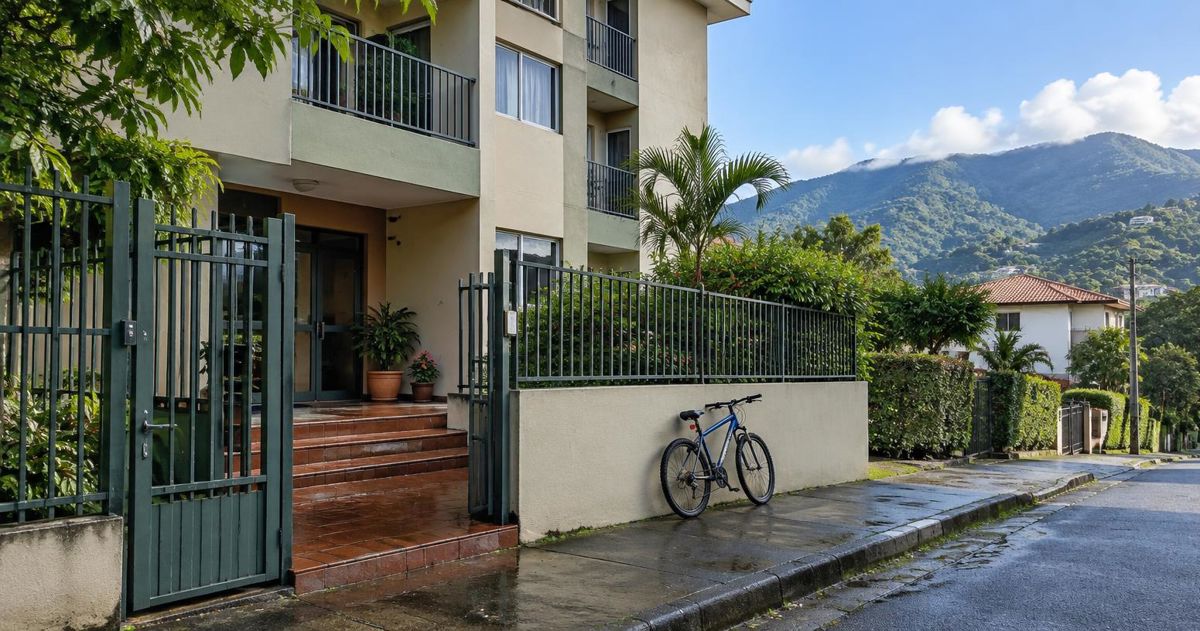
Buying a house or an apartment to rent out in Costa Rica opens two paths with different rules, costs and workloads: long-term residential letting and seasonal or nightly letting to tourists. This guide is for anyone weighing that purchase: it helps you choose the property, calculate the return with all its costs and understand which rules govern each path before you sign.
Long-term or seasonal letting: which works better as an investment?
| Type | Median | Typical range | Listings |
|---|---|---|---|
| Houses | US$1,800 | US$1,304 – US$2,700 | 1,206 |
| Apartments | US$1,196 | US$950 – US$1,400 | 1,870 |
Long-term letting puts a tenant in the house who lives there, pays a monthly rent and usually stays for years. You receive predictable income, with little turnover, less wear and almost no spending on furniture or utilities. In exchange, the residential lease protects the tenant's stability: the minimum term is long and the rent is adjusted only once a year, as explained below. It is the path for someone who wants steady income and few hours of work a month.
Seasonal letting, by the week or by the night to tourists, charges a higher nightly rate, but only when the property is occupied. It depends on the high and low seasons, on competition on digital platforms and on the listing's reputation. You also take on costs that do not exist in long-term letting or that the tenant pays: furniture, utilities, internet, cleaning and commissions. In areas with sustained tourist demand, such as the beaches of Guanacaste or the central Pacific, it can earn more than a residential lease; in residential areas of the Central Valley the difference tends to be smaller and the extra work weighs more.
The table in this section shows the monthly rents being asked this month for houses and apartments across the country: it is the starting point for estimating long-term income. The guide on how much it costs to rent a house in Costa Rica explains what a tenant pays on top of the rent. Before buying, compare in the listings of homes for rent in Costa Rica what is asked for a similar property in the same area, and also look at the cheap homes for rent in Costa Rica: if cheap supply nearby is plentiful, your house will compete on price.
Advertisements
Which property is worth buying to rent out: type, size and location?
Location matters more than finishes. For long-term letting, look for proximity to jobs, universities, hospitals and public transport, as in much of San José, Heredia, Alajuela and Cartago: there, demand comes from families and workers who stay for years. For seasonal letting, the question is different: how close the beach, volcano or national park that draws visitors is, and how easy it is to get there from the airports in Alajuela or Liberia.
As for type and size, a house or apartment with two or three bedrooms usually rents more easily than a very large property, because it suits couples and small families, and its fixed costs are lower. A condominium apartment offers security and shared areas that tenants and guests value, but it comes with a monthly fee and internal bylaws; read those bylaws before buying, because some condominiums restrict nightly rentals. A detached house gives more freedom and fewer shared expenses, but exterior maintenance is up to you.
To compare options, the listings of homes for sale in Costa Rica let you filter by area, size and number of bedrooms. Cheap homes for sale in Costa Rica may look like the fastest route to a good return, but it is wise to order an inspection of the roof, the wiring, the plumbing and any damp. A major repair in the first year can wipe out the advantage of having paid less.
How is the return calculated and which costs must be subtracted?
The gross return is the quick calculation: multiply the monthly rent by 12, divide the result by the purchase price and multiply by 100. It is useful for comparing properties with one another, but it overstates the real return, because it does not deduct expenses, taxes or months without a tenant. For the purchase price, the page on home prices in Costa Rica shows what is being asked by area; remember these are asking prices and the final price can be negotiated.
The net return is the one that matters for deciding. These are the steps:
- Estimate a realistic monthly rent using listings of similar properties in the same area, not the highest price you find.
- Multiply that rent by the months you expect the property to be occupied in the year, not by 12.
- Subtract the annual costs: property tax, income tax on the rent, maintenance, condominium fee, insurance, utilities you pay and management.
- Divide the result by the total cost of the purchase, including transfer costs and improvements, and multiply by 100.
- Compare that figure with what the same money would earn in another investment of similar risk.
In a seasonal rental the second step changes: multiply the nightly rate by the nights you expect to sell and subtract the platform commission and the cleaning for each stay.
Among the fixed costs is the property tax. Under articles 3, 22 and 23 of the Property Tax Law (Law 7509), it is an annual tax equal nationwide to 0.25% of the property value recorded by the Tax Administration; the municipality administers and collects it, and it is paid in one, two or four instalments as each municipality decides. Check the exact amount with the municipality before finalising your numbers. The rental income also pays income tax, and tourist lodging, or a home whose monthly rent exceeds the legal cap, pays VAT: run that calculation with an accountant.
| Cost | Long-term letting | Seasonal letting |
|---|---|---|
| Property tax | Annual, to the municipality | Annual, to the municipality |
| Maintenance | Normal wear and repairs between tenants | More frequent due to guest turnover |
| Condominium fee | Monthly, if the property is in a condominium | Monthly, and the bylaws may restrict use |
| Furniture and equipment | Usually not applicable | Furnishing and replacing bedding and utensils |
| Utilities | Usually paid by the tenant | Usually paid by the owner |
| Cleaning and commissions | Low or none | Cleaning per stay and platform commission |
| Months without income | Between one tenant and the next | Low season and empty nights |
Months without a tenant are the most forgotten cost. Each empty month is a month without income in which the tax, the condominium fee and maintenance still have to be paid. That is why it is wise to run the numbers with a prudent scenario and keep a fund for repairs and for the time it takes to find the next tenant.
Which rules change between residential and seasonal letting?
The first difference is which law governs the contract. Article 7 of the Ley General de Arrendamientos Urbanos y Suburbanos (Law 7527) provides that the law does not apply to hotels, guesthouses and similar establishments, nor to tourist homes let by the season in areas that the ICT declares suitable for tourism through a resolution published in the official gazette.
Nightly lodging adds another layer. According to opinion AL-A-0173-2024 of the ICT legal office, when a tourist rental for periods of between 24 hours and 1 year falls within articles 2 and 3 of the framework law on non-traditional lodging (Law 9742), the parties' rights and obligations are those of that law and not those of Law 7527, and the providers' register of Law 9742 is the procedure by which the ICT carries out the exclusion in article 7 of Law 7527.
In practice, before listing your property by the night or by the week, the prudent step is to have a lawyer check whether your case fits that exclusion and guide you on the ICT providers' register. It is not a formality: that answer determines which rules govern your relationship with whoever occupies your property.
If you let for housing, Law 7527 sets the pace of the investment. Under article 70 of that law, a lease cannot last less than 3 years: if it sets a shorter term or none at all, it is deemed agreed for 3 years, counted from the day the tenant receives the property. Article 71 adds that if the landlord does not notify the tenant, at least 3 months before the term ends, that the lease will not be renewed, it is extended for a new 3-year period on the same terms.
The tenant, by contrast, has more flexibility: under article 72 of Law 7527, unless otherwise agreed in writing, the tenant may end the lease by giving the landlord 3 months' notice, without changing the other obligations the lease created. For anyone buying with a view to selling the house empty or using it later, these terms and notices are part of the plan, not a detail.
The rent also has rules. Under article 67 of Law 7527, in a residential lease the rent is updated at the end of each year of the contract: if inflation over the previous 12 months was 10% or less, the landlord may raise it by up to that same inflation rate, measured with INEC's consumer price index, unless there is an agreement more favourable to the tenant. That rule applies to rent agreed in colones: if it was agreed in a foreign currency, the agreed amount stays the same for the whole contract, with no adjustment.
If you buy a property that is already rented, article 75 of that law states that the lease stays in force, and that the tenant must pay the rent to you once you notify him of the transfer by handing over the certificate that proves it. Before signing with a tenant, read the guide on the rental agreement in Costa Rica, which details what it should include.
How do you estimate occupancy, income and workload for a seasonal rental?
Occupancy for a seasonal rental is estimated in nights, not months. In Guanacaste and the Pacific, the dry season, from December to April, concentrates demand, along with the year-end and mid-year holidays and public holidays; in the rainy months occupancy tends to drop, while the Caribbean follows its own rhythm. To estimate, check the calendars and rates of listings similar to yours on the platforms, in the same area and with the same capacity, and note how many nights show as booked in high and low season.
With those notes, build three scenarios: a prudent one, a middle one and an optimistic one. The income of each is the nightly rate multiplied by the booked nights, minus the platform commission, cleaning for each stay, utilities and wear. Decide with the prudent scenario: if the numbers only work with the optimistic one, the property is not a good candidate for seasonal letting.
A rental on Airbnb or another platform is, in practice, a small lodging business. These are the tasks it demands every week:
- Full cleaning and laundry after each checkout, with spare bedding and towels.
- Handing over and receiving keys, or a code lock that is changed between guests.
- Quick replies to messages and questions, including at night and on weekends.
- Urgent repairs: a leak, a broken air conditioner or an internet outage cannot wait.
- Restocking soap, paper, coffee and utensils, and checking the inventory.
Reviews are the listing's main asset: platforms rank results largely by ratings, and a few bad reviews at the start can sink occupancy for an entire season. Describe the property accurately, with real photos, and solve any problem quickly during the stay: a guest who is looked after in time rarely leaves a bad rating.
Manage the rental yourself or hire a property manager?
Managing it yourself saves the commission and gives you control over whom you rent to and how the property is cared for. In long-term letting it is manageable: choosing the tenant, signing the lease, collecting each month and handling occasional repairs. In seasonal letting the work is daily and requires living nearby or having someone you trust in the area.
A property manager charges a commission on income and handles the day-to-day: listing, attending to guests or tenants, coordinating cleaning and repairs, and collecting payments. It makes sense if you live in another province or outside Costa Rica, or if the property is a seasonal rental you cannot look after. Include the commission in the return calculation from the start, not afterwards.
Before hiring, ask in writing which services the commission includes, who approves expenses and up to what amount, how often you will receive an income and expense report, how the money will be transferred to you and how the agreement ends. Ask for references from other owners and visit a property the manager runs. Even if someone else runs the rental, you remain the owner and answer for the property.
What we would do before buying to rent
- Decide the path before choosing the property: residential for steady income, seasonal only where tourist demand is proven.
- Run the net return calculation with a prudent scenario that includes tax, maintenance, condominium fees and months without a tenant.
- Read the condominium bylaws and order a technical inspection before signing the purchase.
- Consult a lawyer if the property will be let by the night, to confirm which law governs your case and how to register with the ICT.
- Compare the cost of a property manager with the value of your own time before taking on a seasonal rental.
Frequently asked questions
What should you watch for before renting out part of your own home?
The first thing is living together: a separate entrance, a private bathroom and a lock on the area you rent out prevent most friction. Set out in writing which areas are shared, which utilities the price includes and the house rules, such as hours, visitors and pets. If you live in a condominium, read the bylaws. To know which legal rules govern that rental in your case, consult a lawyer before receiving the first guest or tenant.
Can you raise the rent every year in a residential lease?
Yes, if the rent is in colones and within the limit already explained: at the end of each year of the contract, if inflation over the previous 12 months was 10% or less, the landlord may raise the rent by up to that same rate, measured with INEC's consumer price index, unless there is an agreement more favourable to the tenant. If the rent was agreed in a foreign currency, you cannot raise it while the contract lasts. That is why your long-term numbers should assume moderate increases, not price jumps.
What happens if you buy a house that already has a tenant?
The lease stays in force: you do not receive the house empty, but with the tenant and the agreed terms. The tenant must pay the rent to you once you notify him of the transfer by handing over the certificate that proves it. Before buying, ask for a copy of the lease to know the rent the tenant pays and since when he has occupied the house.
This guide summarises the practice of residential and seasonal letting in Costa Rica and does not replace the advice of a lawyer or a notary: before buying, signing a lease or listing a property by the night, have your specific case reviewed.
Advertisements
More in Types of Rentals

Most viewed in Rental Guides

Rental Guides, Requirements for Renting
How to rent a house in Costa Rica: steps and requirements

Rental Guides, Rental Contracts
Rental deposit: what it covers and how it is agreed
Rental Guides, Rights and Obligations
Tenant rights in Costa Rica: what to know before signing

Rental Guides, Rights and Obligations
Tenant rights regarding repairs not made by the landlord