Quality of life
Cascajal, Vázquez de Coronado, San José is an inland district, not on the coast, and the fifth district of its canton. Its area is large for a district, which suggests a mix of village centers and rural land rather than one continuous built-up area. For sale, the pack shows houses and farms, so expect residential and agricultural properties rather than commercial space.
Before moving, check the things that vary from one street to the next: water supply, road condition and access in the rainy season, noise, and how far the nearest everyday services are from the property you are considering.
Cost of living
For most households housing is the largest cost, and it depends on the property type, size and exact location within the district. Beyond rent or the mortgage, a realistic budget adds electricity, water, internet and phone, and daily transport, which can weigh more in a hilly, spread-out district where many people drive.
If you buy, add the annual property tax paid to the municipality and notary and registry costs at purchase. Condo fees apply only to properties in managed developments. When there are enough listings, this page shows above the typical prices for rent and purchase by property type.
Advertisements
Lifestyle
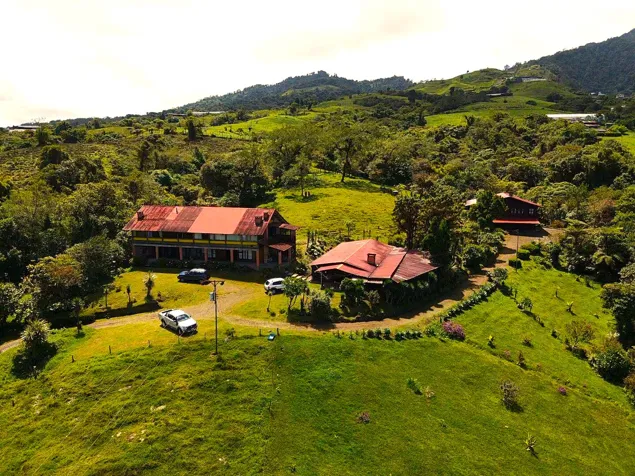
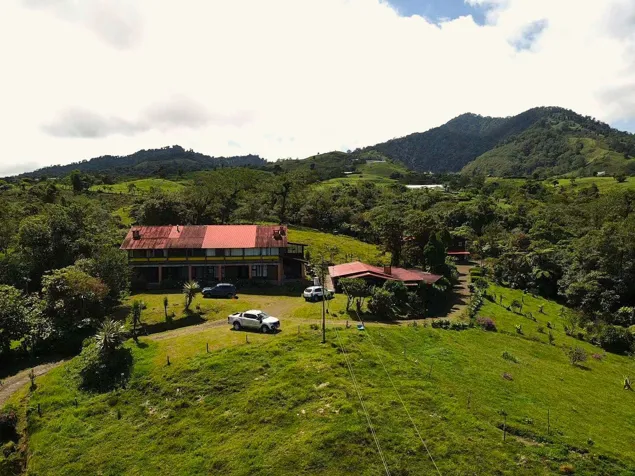
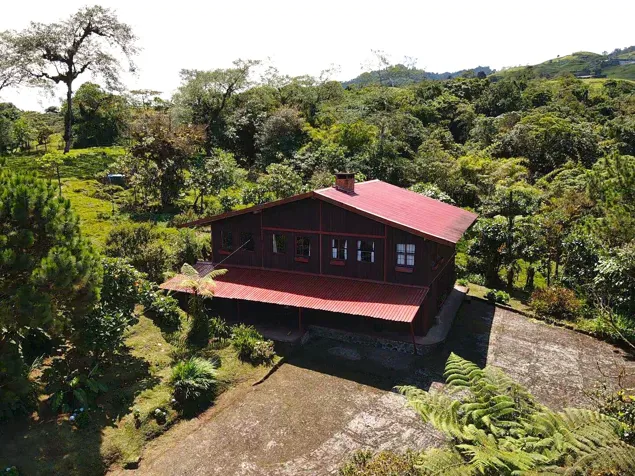
With farms among the listed property types and a district made up of many villages, daily life here leans rural to semi-rural. Households usually organize errands around a car, since stores, banks, and offices are concentrated in the larger centers rather than in each village.
The canton seat, San Isidro, is the closest town for administrative matters and larger shopping trips, and the district seat village is San Pedro. Rural living usually means more space and a quieter setting, but also planning trips ahead and checking how services reach the specific property.
Climate and nature
Cascajal is inland, in the highlands north of the Central Valley, so it follows the country's two-season pattern: a drier season roughly from December to April and a rainy season for the rest of the year. Areas on the slopes toward the Caribbean side tend to be wetter and cloudier than the valley floor.
The district is large, so conditions can differ between its lower and higher parts. Ask neighbors about mist, wind, and rain on the specific property, since these affect drainage, road upkeep, and farming.
Economy and opportunities
The regional economy mixes farming and livestock with services and commuting to jobs in the San José metro area. Since farms are among the listed property types, agricultural use is part of the local profile, while many residents work in nearby towns or the capital.
Being relatively close to San José, and to the main international airport, helps those who work in the metro area, travel often, or study in the capital. Remote workers should confirm internet service at the exact address, because coverage can vary in rural parts of the district.
Accessibility and location
Cascajal is district number 5 of the canton of Vázquez de Coronado, in the province of San José. Its postal code is 11105 and its area is 132.1 km² (51.0 sq mi). Its local authority is the Municipalidad de Vázquez de Coronado.
It borders Rancho Redondo (canton of Goicoechea), San Rafael, Dulce Nombre de Jesús, Tierra Blanca (canton of Cartago), Llano Grande (canton of Cartago), Potrero Cerrado (canton of Oreamuno), Santa Rosa (canton of Oreamuno) and Guápiles (canton of Pococí).
In a straight line, it is 9.6 km (6.0 mi) from the canton seat, San Isidro, 18.7 km (11.6 mi) from downtown San José, and 30.9 km (19.2 mi) from Juan Santamaría International Airport (SJO). The official neighbourhoods and villages, from Costa Rica's official territorial division (Decree 44882-MGP), are Cerro Indio, Guaba, y Sinaí, Canoa, Cascajal, Choco, Isla, Monserrat, Patillos, Rodeo, Santa Rita de Casia, Tierras Morenas, Vegas de Cajón and Venita. Real travel time depends on the hour and the road.
History
Located in the canton of Vázquez de Coronado, Cascajal has evolved from a small agricultural settlement in the 19th century into a community in the 21st century. In 1940, the arrival of basic services such as water and electricity boosted its development, facilitating the migration of families seeking better opportunities.
The culture of Cascajal is reflected in its festivities, such as the celebration of the Virgen de los Ángeles, which brings the community together in an atmosphere of tradition and faith. Today, it offers a peaceful environment and a family-oriented lifestyle.
Tips
Drive the daily commute at different hours, including rush hour and rainy afternoons, to see what the trip is really like. Visit the property at different times of day to judge noise, access, and lighting.
- Ask how the property gets water and electricity, and request recent bills.
- Check that the property is registered and free of liens at the National Registry.
- If renting, sign a written lease under Costa Rica's General Law of Urban and Suburban Leases, Law 7527.
You can also save listings in this zone on Anuntico to compare options over time.
In summary
Living in Cascajal is an ideal choice for those looking to establish their home or invest in Costa Rica. This charming district offers a tranquil and safe environment, surrounded by nature and with easy access to essential services. Cascajal is a large, inland, mostly rural district of Vázquez de Coronado where houses and farms are the listed property types. It makes sense for buyers who want more space and a country setting while staying within reach of San José. Visit in person and verify services at each property before deciding.