


How to finance a house in Costa Rica: banks, bonus and more
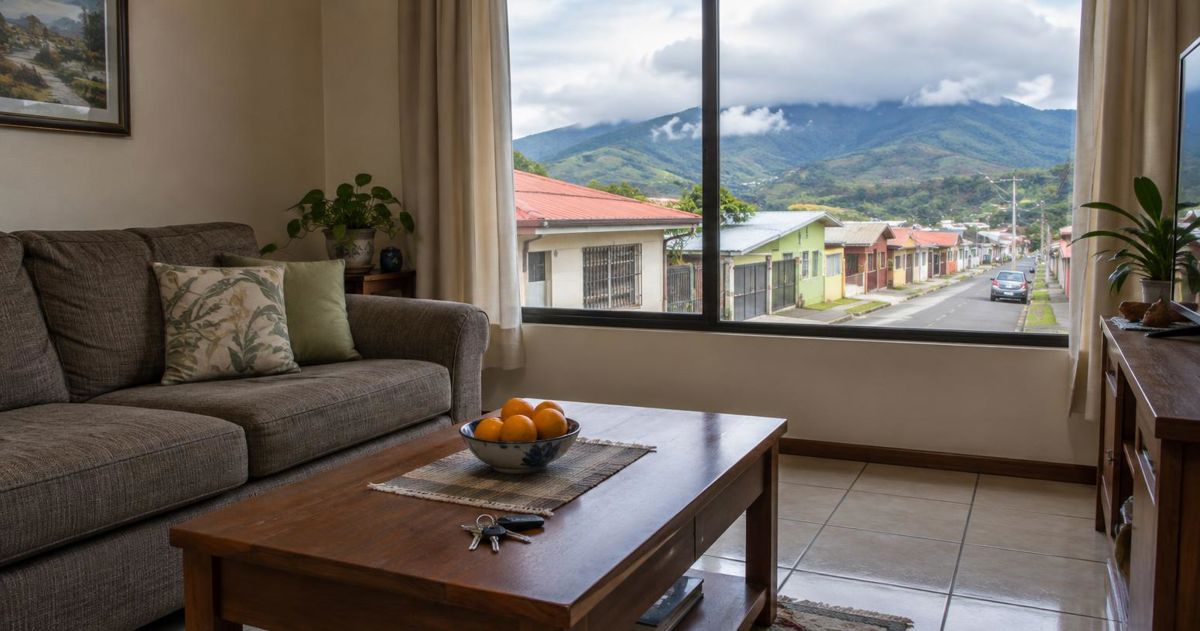
In Costa Rica, a house is almost never paid for with a single source of money. This guide is for people buying their first home or planning to build on their own lot: it explains how loans from banks, mutuals and cooperatives work, along with the family housing bonus, INVU's savings and loan system and worker funds, and how they combine to close a purchase.
What options are there to finance a house in Costa Rica?
| Type | Median | Typical range | Price per built m² | Listings |
|---|---|---|---|---|
| Houses | US$285k | US$190k – US$480k | US$1,271 | 8,495 |
| Apartments | US$190k | US$145k – US$290k | US$2,049 | 2,618 |
There are five main routes. The mortgage loan from public and private banks, mutuals and savings and credit cooperatives, which is the most common source. The family housing bonus, a subsidy for low-income families and, under certain conditions, middle-income ones. INVU's savings and loan system, which rewards steady saving. Worker funds: the CCSS, solidarity associations and the cooperatives or funds of each profession. And direct financing from the developer or the owner who sells.
Whatever the route, the lender looks at the same things: verifiable and stable income, a credit history without arrears, the ratio between the payment and what you earn, the down payment you can provide and the property appraisal, which sets how much it lends. The currency also matters. A loan in dollars may carry a lower rate, but if your salary is in colones, a rise in the exchange rate makes the payment more expensive. Before signing, ask each lender for the full payment with insurance included, and compare whether the rate is fixed or variable, and for how long.
The amount you need depends on the house you are looking for. The table in this section shows the asking prices this month for houses and apartments for sale across the country, and the detail of home prices in Costa Rica by province and canton helps set a realistic target. With that figure in mind, the listings of homes for sale in Costa Rica help you check what your budget buys before asking the bank for pre-qualification.
Advertisements
What is the housing bonus, who receives it and how is it processed?
The family housing bonus is a contribution from the State that the family does not have to repay, as long as it meets the conditions under which it was granted. It can be used to buy an existing house, buy a lot and build, build on a lot the family already owns, or repair, expand or finish the home it already has. The amount varies with the family's income and the type of bonus, and the current figures are set by the system each year, so it is wise to confirm them with the lender before running numbers.
It can be received by Costa Rican family units, or those of foreigners with the immigration status the system requires, whose income is below the cap set by the system, who do not own a home and who have not received the bonus before. Elderly people living alone, people with disabilities and families in extreme poverty also qualify, under their own rules. In exchange, the house carries restrictions for several years: it cannot be sold, rented or mortgaged again without authorization. That condition matters if you plan to move soon.
BANHVI, the Mortgage Housing Bank, does not serve the public directly: it is the governing body that approves and disburses the funds. The family applies for the bonus at an authorized entity of the housing finance system, such as banks, mutuals, cooperatives or foundations, which builds the file, checks the requirements and sends it to BANHVI. If the family also needs a loan, the usual approach is to process both at the same entity. If you are looking for homes within reach of the bonus, the listings of cheap homes for sale in Costa Rica are a starting point.
- Choose an authorized entity and request an appointment for pre-qualification.
- Gather the ID card or residence document of each family member, salary or income certificates and the marital status certificate.
- Provide the cadastral map and the registry certificate of the property or lot, plus the budget or plans if you are going to build.
- Wait for the appraisal and the entity's review of the file.
- The entity sends the case to BANHVI, which approves it and disburses the funds.
- Sign the deed before a notary, where the bonus restrictions are registered.
How do the bonus, the loan and savings combine, and what is there for the middle class?
The logic of almost every program is savings, bonus and loan: the family contributes part with its savings, the State another part with the bonus, and the rest is covered by a loan in the family's name. The more the family saves, the smaller the loan and the lower the payment. The bonus does not replace the ability to pay; the lender still checks whether the payment fits your income. That is why, before choosing the house, it helps to know each of the three pieces separately and add them up afterwards.
For the middle class there is a type of bonus designed for families whose income is above the traditional cap but who cannot finance a home on their own. In it, the bonus is smaller and always comes with a loan, so it reduces the debt or the down payment. Some public banks and mutuals also offer social-interest or middle-class housing lines, with lower down payments or longer terms. Ask for them by that name: they do not always appear in advertising.
| Source | What it is for | What to check |
|---|---|---|
| Personal savings | The down payment and closing costs | That it is available on signing day |
| Family housing bonus | Reducing the debt or completing the purchase | The income cap and the restrictions on the house |
| Mortgage loan | The main share of the price | The currency, whether the rate is fixed or variable, and insurance |
| Worker funds | The down payment or a supplementary loan | Whether it requires its own collateral or is deducted from salary |
Do not forget closing costs, which are paid apart from the price: the appraisal, the notary's fees, stamp duties and registration fees, the loan origination fee and life and property insurance. Many families plan for the down payment and fall short on this part. Ask the lender for a written breakdown before committing to the seller.
What do INVU, the CCSS and worker funds offer?
INVU's savings and loan system works by contract. You choose a contract amount, save a fixed monthly installment and, once you meet the minimum savings and time the plan requires, you can request a loan to buy, build, buy a lot or improve the home. Its advantage is that the savings themselves prove ability to pay and the terms tend to be accessible. Its drawback is the wait: it suits people who plan ahead, not those who need to buy this year.
The CCSS lends for housing with funds from its pension scheme, to insured people who meet its requirements, to buy a house or lot, build or pay off a mortgage held by another lender. Each company's solidarity associations lend to their members based on their savings and the employer's contribution, often with quick processing and a payment deducted from payroll; they are usually ideal for the down payment or a supplementary amount.
There are also profession-based funds: the teachers' cooperatives and funds, those of professional associations and those of public sector workers, and Banco Popular, linked to workers' mandatory savings. Our reading: before going to the bank, check what your own employer or profession offers, because those terms can improve the down payment or the final payment, and take them as a reference when negotiating with the bank.
Is direct financing from the developer or the seller a good idea?
In direct financing, the seller receives a down payment and the rest of the price in installments, with no bank involved. It is offered by condominium or subdivision developers and also by private owners, especially with lots and houses that take time to sell. The safe arrangement is for the sale to be deeded in your name and for the debt to be recorded as a registered mortgage in favor of the seller, all before a notary.
Its advantages are real: fewer requirements, quick approval and the possibility of buying for people who are self-employed and cannot prove income to a bank. Many people use it as a bridge and later move the debt to a bank with a better rate. If you plan to do this, ask from the start whether the contract allows early repayment without penalty.
The risks are real too. The rate is usually higher than a bank's, and in informal contracts the seller keeps the property until the last payment, so falling behind can cost you what you have already paid. In projects under construction, the risk is that the work is never finished. Our reading: do not hand over money without checking in the National Registry that the property is in the seller's name and free of liens, that the project has municipal permits and that the contract is drafted or reviewed by a notary you trust.
How do you finance construction on your own lot?
Owning the lot makes the loan easier, because the land serves as collateral and as part of your own contribution. Banks, mutuals, cooperatives and INVU have construction lines; the difference from a purchase loan is that the money is not handed over at once, but in disbursements according to the progress of the work, which the lender's inspector verifies at each stage. Families that qualify can apply for the bonus in its construction-on-own-lot modality.
- Confirm the lot is registered in your name, with a cadastral map and free of liens.
- Request the land use certificate from the municipality and verify access to water and electricity.
- Hire a professional for the plans and budget, and process their approval at the Federated Association of Engineers and Architects.
- Apply for the municipal building permit.
- Submit plans, budget and permits to the lender for appraisal and loan approval.
- Build in stages and request each disbursement when the inspector approves the progress.
The most common mistake is starting the work with your own savings and applying for the loan halfway through: many lenders will not finance what was built without permits or without their initial inspection. Also leave a margin for contingencies, because material prices can change between approval and the last disbursement.
What we would do
- Request pre-qualification from at least two lenders before negotiating with a seller, and compare the full payment with insurance.
- Ask an authorized entity first whether the family qualifies for the bonus, even if you think your income is above the cap.
- Check what the solidarity association, the CCSS or your profession's fund offers to cover the down payment.
- If the down payment still falls short, stay in one of the homes for rent in Costa Rica while saving, instead of accepting informal financing.
- Sign any direct financing only in a deed before a notary, with the mortgage recorded in the National Registry.
Frequently asked questions
Can someone who already owns a property receive the bonus?
As a general rule, no: the bonus is for families without a home of their own. The most common exception is someone who owns an unbuilt lot, who can apply to build on it, and someone whose house is in poor condition, who can opt for the repair or expansion modality. The authorized entity reviews the requirements of the file.
Is a dollar loan a good idea if you earn in colones?
Only if you understand the currency risk. The dollar rate may be lower, but the payment is made in a currency different from your salary, and if the exchange rate rises, the payment in colones rises with it. For most families earning in colones, a colón loan offers more predictability.
What should you do if you do not yet qualify for any loan?
First sort out your credit history: bring overdue debts up to date and reduce card balances. If you are self-employed, formalize your income with tax returns and steady bank activity. Meanwhile, an INVU contract or savings in your association build the down payment. Renting with a low payment helps you save more; the listings of cheap homes for rent in Costa Rica show options for that stage.
This guide summarizes common practice for financing a house in Costa Rica in November 2026. The requirements, caps and amounts of each program change, so confirm them with the entity before deciding. It does not replace the advice of a lawyer or a notary, whom you should consult before signing any contract.
Advertisements
Most viewed in Finance and Planning
Finance and Planning, Taxes and Expenses
What buying a house costs on top of the price in Costa Rica
Finance and Planning, Housing Costs
Where US$100,000 buys a lot in Guanacaste
Finance and Planning, Financial Planning
Dollars or colones: where colón buyers face less competition
Finance and Planning, Housing Costs
Where US$200,000 buys a house in Alajuela