


Cultures Day in Costa Rica: history and key facts
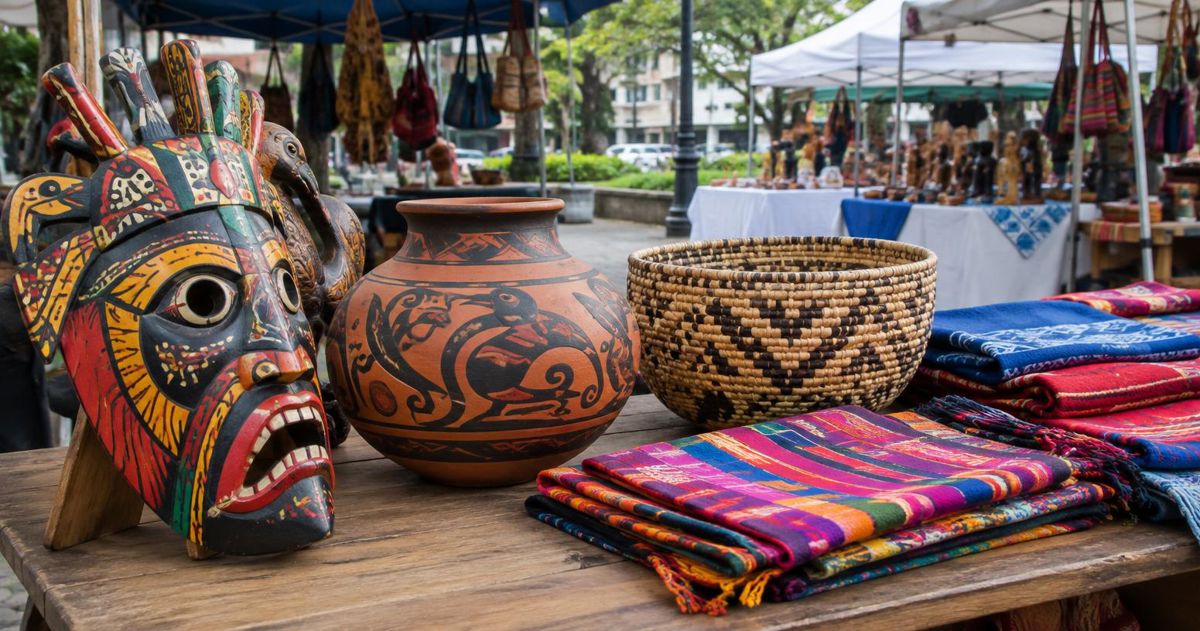
12 October is no longer a public holiday in Costa Rica, but schools must still mark it on the day itself. Here is how it went from Día de la Raza to Cultures Day, why it left the list of holidays and what the official figures say about the country's Indigenous peoples.
From Día de la Raza to Cultures Day
12 October is tied to the arrival of Europeans in the Americas. In Costa Rica, first contact came a decade later: in September 1502 Christopher Columbus reached the country's Caribbean coast, as the University of Costa Rica historian Elizet Payne recalls. The way the date is named and marked has changed twice by law.
- 1502, Columbus in the Caribbean. In September, Columbus reaches the Caribbean coast of what is now Costa Rica.
- 1994, a new name. Law 7426, known as the Cultures Day Law, leaves the name Día de la Raza behind.
- 2015, a multi-ethnic republic. Law 9305 amends article 1 of the Constitution: Costa Rica becomes “multi-ethnic and multicultural”.
- 2019, the last holiday. 12 October falls on a Saturday and, as the Labour Code then required, the holiday is taken on Monday 14 October.
- 2020, no longer a holiday. Law 9803, passed on 5 December 2019 and published on 2 July 2020, removes 12 October from the list and creates the 1 December holiday in its place.
- Today, in the classroom. Article 148 of the Labour Code requires all schools to mark it with civic and educational activities on the day itself.
Advertisements
Timeline
| Year | What happened |
|---|---|
| 1502 | In September, Christopher Columbus reaches Costa Rica's Caribbean coast |
| 1994 | Law 7426 changes the name from Día de la Raza to Cultures Day |
| 2001 | The Indigenous territories of China Kichá and Altos de San Antonio are created |
| 2011 | The Census counts 104,143 Indigenous people and, for the first time, traditional Indigenous dwellings |
| 2015 | Law 9305 writes into the Constitution that Costa Rica is multi-ethnic and multicultural |
| 2019 | Last 12 October holiday: it falls on a Saturday and is taken on Monday the 14th |
| 2019 | On 5 December, the Legislative Assembly passes Law 9803 |
| 2020 | Law 9803 is published on 2 July; on 8 October, the Ministry of Labour reminds that 12 October is no longer a holiday |
| 2024 | Law 10438 rewrites that paragraph of the Labour Code and keeps 12 October as a non-holiday |
| 2026 | 12 October falls on a Monday and is a working day |
| 2027 | 12 October falls on a Tuesday and is also a working day |
Costa Rica's Indigenous peoples, in figures
According to INEC's 2011 Census, 104,143 people identified as Indigenous, 2.4 % of the 4,301,712 inhabitants at the time. The country has eight Indigenous peoples and 24 Indigenous territories, home to 48,500 people; of them, 35,943 identified as Indigenous and the rest, 25.9 %, did not.
| People | Indigenous people | % who speak an Indigenous language |
|---|---|---|
| Bribri | 12,785 | 54.7 |
| Cabécar | 12,707 | 87.6 |
| Ngöbe or Guaymí | 3,654 | 77.7 |
| Brunca or Boruca | 2,593 | 5.6 |
| Huetar | 1,354 | 0.7 |
| Teribe or Térraba | 1,267 | 9.9 |
| Chorotega | 1,085 | 0.4 |
| Maleku or Guatuso | 498 | 67.5 |
Language survives very differently from one people to another. In the Cabécar territories, 87.6 % of Indigenous people speak an Indigenous language; in the Chorotega territory of Matambú, just 0.4 %. Within the Cabécar people, the Chirripó territory reaches 96.7 %.
Curious facts
- In 2019, the Labour Code said the 12 October holiday was taken on the following Monday and that, if the date fell on a Monday, schools held their events on the Friday before.
- Matambú, the Chorotega territory in Guanacaste, had a density of 103.8 inhabitants per square kilometre in 2011, above the national average (84.2).
- The Bribri people have four territories; the Brunca or Boruca, only two: Boruca and Curré.
- The 2011 Census was the first to count traditional Indigenous dwellings.
- The holiday taken from 12 October did not vanish: the same Law 9803 created the 1 December holiday, Army Abolition Day.
Frequently asked questions
Is 12 October a public holiday in Costa Rica?
No. Since Law 9803, article 148 of the Labour Code says that 12 October “shall not be a public holiday”, and it is not on the Ministry of Labour's 2026 holiday calendar. It is an ordinary working day and is not paid as a holiday.
So is it no longer marked?
It is, but in the classroom: the same article 148 makes civic and educational activities on 12 October compulsory in all schools, on the day itself.
Why is it called Cultures Day?
Because Law 7426 of 1994, known as the Cultures Day Law, provided so and left the name Día de la Raza behind.
Sources
- Semanario Universidad: “El 12 de octubre, la efeméride esencial desde hace cinco siglos… y 30 años”, by Manuel Bermúdez, with the historian Elizet Payne (12 October 2022).
- Ministry of Public Education: circular DM-0033-10-2019, “Celebración del Día de las Culturas” (4 October 2019).
- Law 9803, La Gaceta 159 (2 July 2020), and Ministry of Labour: press release CP-042-2020 (8 October 2020).
- Labour Code, article 148 (current text in the Costa Rican Legal Information System).
- Political Constitution, article 1, amended by Law 9305 (24 August 2015).
- INEC: 10th National Population and 6th Housing Census 2011, Indigenous Territories.
- Ministry of Labour and Social Security: 2026 holiday calendar (4 December 2025).
Advertisements
More in Costa Rica calendar
Lifestyle, Costa Rica calendar
International Men's Day: history and figures for Costa Rica

Lifestyle, Costa Rica calendar
Blue November in Costa Rica: origin, history and figures

Lifestyle, Costa Rica calendar
Black Friday in Costa Rica: housing, loans and renting
Lifestyle, Costa Rica calendar
Costa Rica's Army Abolition Day: history and key facts
Most viewed in Lifestyle
Lifestyle, Urban and Suburban Spaces
Create an urban space that celebrates cultural diversity.
Lifestyle, Families and Housing
Find your ideal home with advice from local experts.

Lifestyle, Families and Housing
Discover how to choose a home that enhances your family happiness.
Lifestyle, Urban and Suburban Spaces
Urban refuge: spaces that promote social connection at home