


How to assess a property as an investment in Costa Rica
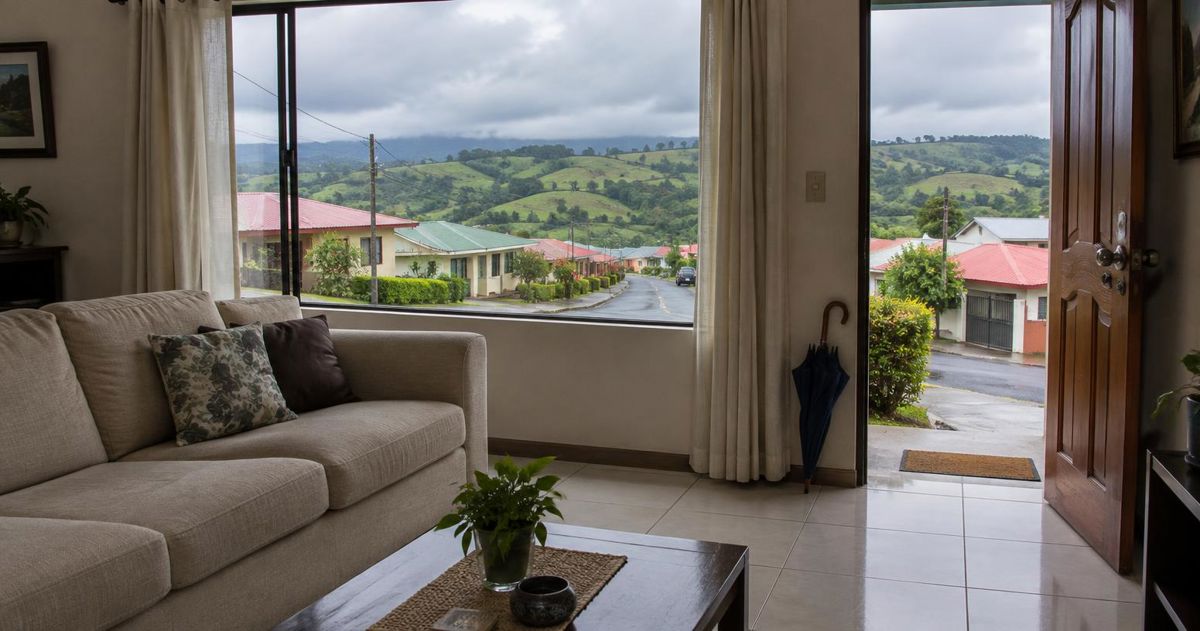
Buying a house or an apartment to rent out or resell in Costa Rica is a financial decision, not just a home purchase. This guide is for anyone who wants to compare a property with other ways of investing: which costs are paid when buying, how the net return is calculated, what it costs to keep the property and which risks can change the result.
What makes a property a good investment?
| Type | Median | Typical range | Price per built m² | Listings |
|---|---|---|---|---|
| Houses | US$285k | US$190k – US$480k | US$1,271 | 8,495 |
| Apartments | US$190k | US$145k – US$290k | US$2,049 | 2,618 |
A property is a good investment when the money it brings in, through rent or a future sale, makes up for everything it costs to buy it, keep it and wait. A price that looks low is not enough: what matters is real demand in the area, the condition of the property, what it costs to get it ready to rent and how easy it would be to sell if you ever need to. In Costa Rica, location weighs as much as construction: closeness to work, transport, schools and services, and the safety of the neighborhood. The guide on how to choose a neighborhood before buying or renting helps you review those factors before visiting.
The entry price also matters. The table in this section shows the prices being asked this month for houses and apartments for sale across the country; they are asking prices in listings, not closed sale prices, and they work as a starting point for negotiation. To see how they change by province and canton, the detail is on the page of home prices in Costa Rica.
Compared with a fixed-term deposit or an investment fund, a property has clear differences. A fixed-term deposit gives a return known in advance, requires no work and is paid back at maturity; a property requires management, pays taxes every year and takes time to sell, but it can generate monthly income and gain value over time. The sensible approach is to compare the property's net return, after costs, with the rate financial institutions offer today for a similar term, and to ask the property for something more because of the effort and risk it adds.
Advertisements
House, apartment or commercial space, and pre-construction or finished?
A house tends to attract families who rent for long periods, which brings stability, but it carries all the upkeep: roof, paint, garden and plumbing. An apartment in a condominium spreads part of that upkeep through the fee and usually rents well near workplaces and universities, although the fee is paid whether it is occupied or not. A commercial space can ask a higher rent, but it depends on the area's economic activity and can stay empty longer when a business closes.
No single type always works best: the right one is the type with demand where you are buying and the one you can manage. Reviewing the supply of homes for sale in Costa Rica together with the rental supply in the same area gives an idea of how much competition the property will face when you look for a tenant.
Buying pre-construction usually allows a lower entry price and payment in stages while the building goes up. The risk lies in construction delays, changes in finishes or design, and the developer not finishing. Before signing, the prudent step is to review with a lawyer who the developer is, which permits the project has, how the money you pay in advance is protected and what happens if delivery is delayed.
A finished property costs more, but you see what you are buying, you can rent it out right away and the income starts sooner. For someone investing for rental income, those months of income not lost waiting for construction also count in the return.
How is a property's return calculated?
The return has two sources: rental income and appreciation, which is the value the property gains between purchase and sale. Appreciation is not guaranteed and only materializes when you sell, so a prudent calculation rests mainly on the rent and treats appreciation as a possible benefit, not as the main reason for the purchase.
To estimate the rent, compare properties similar to the one you plan to buy, in the same area and with the same number of bedrooms, among the homes for rent in Costa Rica. Remember that the published price is an asking price: the lease may be signed for less.
- Estimate a realistic monthly rent and multiply it by the months you expect it to be occupied in the year.
- Subtract the annual expenses: property tax, income tax on the rent, condominium fees, insurance, upkeep and management.
- Add up everything invested: the price, the purchase taxes and fees, and the repairs before renting.
- Divide the annual net income by the total invested: that is the net return.
- Compare that result with the rate of a fixed-term deposit and decide whether the difference makes up for the risk.
The difference between gross and net return is the one most often overlooked. The gross return only compares annual rent with the price; the net return deducts expenses, taxes and empty months, and it almost always turns out quite a bit lower. To decide on an investment, the net return is the one that counts.
Which costs cut the return from day one, and what does upkeep cost?
The first cost is the transfer tax. Under articles 1 and 8 of the Real Estate Transfer Tax Law (Law 6999), the transfer of real property, under any title, pays a tax of 1.5%, except for the exemptions the law itself lists. On top of that come the notary's fees, the registration costs at the National Registry and, if there is a loan, the bank's closing costs. That money is not recovered when you sell, so it goes into the total invested in the calculation.
Who pays each purchase expense is negotiated between buyer and seller; the prudent step is to put it in writing in the purchase option or the promise of sale and to ask the notary for a breakdown before signing.
Next comes the cost of owning the property. Under articles 3, 22 and 23 of the Property Tax Law (Law 7509), the property tax is annual and equals 0.25% nationwide of the property value recorded by the Tax Administration; the municipality administers and collects it, and it is paid in one, two or four instalments as each municipality decides. It is worth asking the canton's municipality for the recorded value and whether the property is up to date before buying.
On top of that tax come condominium fees if there are any, upkeep (paint, roof, plumbing and appliances if it is rented furnished), insurance, utilities while the property is empty and, if you do not manage it yourself, the fee of whoever does. A repair reserve keeps a leak or a water heater from eating up several months of rent.
| Cost | When it is paid | What to check |
|---|---|---|
| Transfer tax | On purchase | The 1.5% rate and its exemptions |
| Fees and registration costs | On purchase | The notary's breakdown before signing |
| Property tax | Every year, in instalments | The recorded value and payments up to date at the municipality |
| Condominium fees | Every month | The amount, arrears and the condominium rules |
| Upkeep and repairs | While you own it | The condition of the roof, wiring and plumbing |
| Insurance and management | Every month or every year | The coverage and the manager's fee |
Loan or cash, and which risks can change the result?
Buying with cash gives the easiest return to calculate: there is no interest and all the net rent stays with you, but it ties up a large sum that stops earning elsewhere. With a loan, you put in part and the bank the rest; if the net rent covers the payment with something left over, the return on your own money can be higher. If it does not cover it, you pay the difference every month, and an empty period weighs more.
A loan adds costs that must go into the calculation: interest, fees, the insurance the bank requires and closing costs. Before deciding, compare the monthly payment with a realistic rent, not with the highest one you see published, and ask whether the rate is fixed or variable.
Vacancy is the first risk: every month without a tenant is a month of expenses with no income. It is worth calculating the return with a few empty months a year and looking at how much similar supply competes for the same tenants, including the cheap homes for rent in Costa Rica in the area, which set the floor of what people are willing to pay.
The exchange rate is the second. Many properties are listed in dollars and many rents are charged in colones, or the other way around. If you borrow in one currency and collect in another, a shift in the exchange rate can raise the payment or lower the income without anything else changing. The prudent approach is to keep the debt and the rent in the same currency.
The third is liquidity: a property can take months to sell, and selling in a hurry usually means accepting less. And if you are thinking of renting by the season to tourists, keep in mind that article 7 of the Ley General de Arrendamientos Urbanos y Suburbanos (Law 7527) says that law does not apply to hotels, guesthouses and similar establishments, nor to tourist homes let by the season in areas that the ICT declares suitable for tourism through a resolution published in the official gazette. Which rules govern that rental is a question for a lawyer before buying.
What we would do before buying to invest
- Calculate the net return with a realistic rent and a few empty months, and compare it with a fixed-term deposit.
- Add the transfer tax, the fees and the repairs to the price, and ask the notary for a written breakdown.
- Check the recorded value at the municipality and that the property tax is up to date.
- Borrow in the same currency in which the rent will be collected.
- Start with the supply of cheap homes for sale in Costa Rica if the goal is a lower entry price, and inspect the property before making an offer.
Frequently asked questions
How long should you keep the property before selling?
There is no fixed term. Since the transfer tax, the fees and the initial repairs are not recovered when you sell, selling early usually leaves little margin; appreciation, when it comes, builds up over the years. The reasonable approach is to buy with a horizon of several years, review the net return every year and sell when the rent no longer makes up for the expenses or when a better alternative appears, without depending on a hurried sale.
How often is the property tax paid?
It is an annual tax that the municipality administers and collects. As the costs section explains, it is paid in one, two or four instalments as each municipality decides, so it is worth asking the municipality of the canton where the property is located for the payment schedule and the recorded value. That amount goes into the expenses of the return calculation every year.
Is it better to count on appreciation or on rent?
For investing, the prudent approach is for the rent to support the investment and for appreciation to be an additional benefit. The rent can be estimated by comparing similar properties in the same area; appreciation depends on location, demand and the timing of the sale, and it is not guaranteed. If a purchase only makes sense because the price is expected to rise, the risk is greater.
This guide summarizes practice for buying property as an investment in Costa Rica and does not replace the advice of a lawyer, a notary or a financial adviser. The figures in the table are asking prices in active listings on Anuntico in November 2026, not closed sale prices.
Advertisements
More in Financial Planning

Most viewed in Finance and Planning
Finance and Planning, Taxes and Expenses
What buying a house costs on top of the price in Costa Rica
Finance and Planning, Housing Costs
Where US$100,000 buys a lot in Guanacaste

Finance and Planning, Financial Planning
Dollars or colones: where colón buyers face less competition

Finance and Planning, Housing Costs
Where US$200,000 buys a house in Alajuela