


What to check before buying a lot or a farm
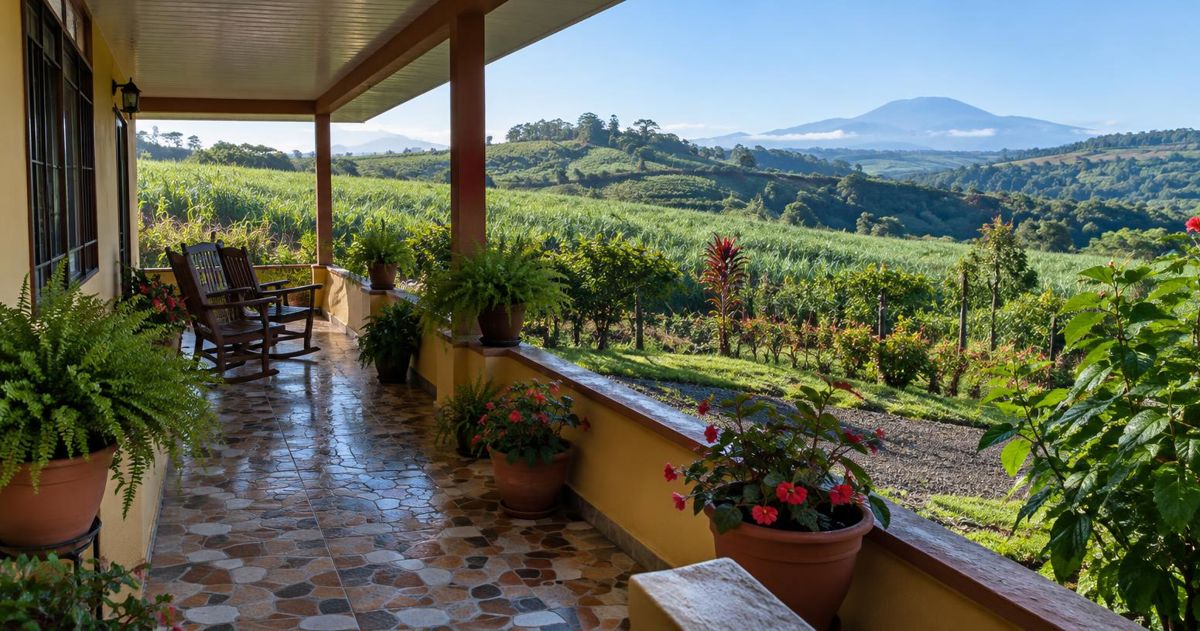
Buying a lot or a farm in Costa Rica can be a way to hold savings or to prepare a future home, but a piece of land is worth what it allows you to do on it. This guide is for anyone looking for a first lot or comparing farms: what to check on zoning, access, water, boundaries and the registry before signing and paying.
Why buy land as an investment, and what are the risks?
| Type | Median | Typical range | Price per m² of land | Listings |
|---|---|---|---|---|
| Lots | US$167k | US$87k – US$400k | US$110 | 3,383 |
Land is attractive for concrete reasons: there are no tenants to manage, it barely deteriorates and it leaves the decision to build open for later, when the budget or the family calls for it. In Costa Rica many buyers see it as a way to hold savings in a physical asset or to secure a spot in an area they like before it fills up. None of that guarantees the lot will be worth more over the years: its value depends on what the land allows you to do and on how its surroundings change.
The risks are just as concrete. A lot produces no income until something is built or it is rented out, and selling it can take longer than selling a house, because the next buyer will ask the same questions you do. Restrictive zoning, access that is not a public road, a lack of water or a badly measured boundary can turn an apparent bargain into land nobody can use. That is why the prior review matters more than the asking price.
The table in this section shows the prices being asked this month for lots across the country; they are a starting point, not the value of any specific piece of land. The breakdown by province and canton is on the page of land prices in Costa Rica, and it is worth comparing it with what each plot offers in services, access and topography before forming an idea of what it is worth.
Advertisements
Urban lot, condominium lot or rural farm: what changes in practice?
An urban lot usually fronts a public road, with water, electricity and garbage collection close by, inside a canton that already has clear building rules. In exchange, it tends to be smaller, has neighbours nearby and offers less privacy. A condominium lot adds internal roads, security and common areas, but also internal bylaws that define what may be built and how, and a maintenance fee that is paid even while the lot stays empty.
A rural farm offers what many people are after: quiet, distance between houses, views and room for a vegetable garden or animals. What it gains in privacy it may lose in services: water may come from an ASADA with limited capacity, electricity may require extending the grid and the road can become difficult in the rainy season. Distance to schools, clinics and shops also counts; the guide on how to choose a neighborhood before buying or renting helps sort out those questions about the surroundings.
| Type | Services | Access | What to check first |
|---|---|---|---|
| Urban lot | Usually in front of the lot | Public road | Zoning and building setbacks |
| Condominium lot | Provided by the condominium | Internal condominium roads | Internal bylaws and maintenance fee |
| Rural farm | To be confirmed case by case | Public road, easement or private road | Water, electricity and road condition |
The listing of land & lots for sale in Costa Rica mixes all three types, and the same price can buy very different things. Our recommendation is to decide first which type of land your plan needs —building soon, holding the lot for a few years or producing on it— and only then compare listings within that type.
What can be built on the land, and how do you reach it?
Zoning is the first answer. It is requested from the municipality of the canton where the land is located, with the cadastral plan number, and it states which activities are allowed —housing, commerce, agriculture or others— and under what conditions, such as height, coverage or setbacks. Where the canton has a zoning plan (plan regulador), the certificate is based on it; where it does not, the municipality applies other general rules. In both cases, request the document before committing money and do not rely only on what the listing says.
If the land borders a national road, the future width of the road can reduce the usable frontage, so it is worth checking the road alignment with the relevant institution before designing. Also ask whether the lot comes from an approved subdivision or whether it can be split, because land that cannot be used as you plan loses much of its usefulness.
Access is the second answer. A lot on a public road is the simplest case. If it is reached through an easement, verify that it is recorded in the Registro Nacional and appears on the plan, with its width and route; a verbal agreement with the neighbour gives no security to you or to whoever buys from you later. A private road, or a street the municipality has not taken over, can complicate building permits and the arrival of services, so ask the municipality about its status before signing.
Does it have water and electricity, and is the land safe to build on?
Water availability is never assumed: it is confirmed in writing with whoever provides the service in that area, which may be AyA, the municipality or an ASADA. Request the availability letter for the land's plan number, because building permits usually require it. Do the same with electricity: ask the local distributor, whether ICE, CNFL, a municipal utility or a cooperative, whether the grid reaches the front of the lot or will have to be extended, and who covers that cost.
A lot offered well below its neighbours sometimes has its explanation here. Among the cheap land & lots for sale in Costa Rica there are real opportunities, but it pays to ask first about water, electricity and slope, which are often the reasons behind a low price.
Walk the land, ideally after a heavy downpour. A steep slope makes construction more expensive because of earthworks and retaining walls. A river, a stream or a spring on or near the lot means protection strips where nothing is built; ask a surveyor or an engineer to locate them on the plan. Also check the hazard maps of the Comisión Nacional de Emergencias and ask the municipality whether the area has a history of flooding or landslides.
Do the boundaries match the plan, and why insist on a public deed?
The cadastral plan describes the land on paper; what matters is that it matches what you see. On site, look for the corner markers, compare the front and back measurements with those on the plan and confirm that the adjoining owners are the ones the plan shows. If fences have been moved, a neighbour has built inside the lot or the area differs, stop and hire a surveyor before going any further.
- Ask the seller for the property number and the cadastral plan of the land.
- Check in the Registro Nacional who the owner is and whether there are mortgages, embargoes or other notes.
- Visit the land with a surveyor and check markers, measurements and adjoining owners.
- Confirm that the area on the plan and the area in the Registry match, or clear up the difference before signing.
- Sign the purchase in a public deed before a notary and make sure it is presented to the Registry.
That last step is the one that protects your purchase. Under article 450 of the Código Civil, to record a sale in the Registry the title must be in a public deed, a final judgment or another authentic document expressly authorised by law. A private document signed between the parties does not meet that condition: with it the purchase cannot be recorded and the land still appears in the seller's name.
Recording promptly matters too. Article 455 of that code provides that an unrecorded purchase does not affect third parties until the date it is presented to the Registry, and that if the deed is presented more than 3 months after execution and an embargo or attachment is already noted, that note prevails unless the buyer proves in ordinary proceedings that his right is genuine and not simulated. In practice, ask your notary to present the deed as soon as possible.
If you hand over money as earnest money (señal or arras) before the deed, article 1058 of that code provides that this money is always deemed paid on account of the price and as ratification of the contract, and that neither party may back out by forfeiting it unless that was expressly agreed. Put in writing, with your notary's help, what happens if the purchase falls through.
What does land cost to hold while nothing is built?
An empty lot is not free. The municipality charges property tax (impuesto de bienes inmuebles) on the land, and in many cantons there are added fees for services such as garbage collection or street cleaning, depending on what the municipality provides in that area. If the land is in a condominium, the maintenance fee runs from the purchase, even when there is no house yet.
Then there is the cost of looking after it: cutting the grass regularly, maintaining the fence and, in some cases, paying a neighbour or a caretaker to keep an eye on it. Neglected land becomes overgrown, invites squatters and can lead to complaints from neighbours and notices from the municipality. Add these costs to the price before deciding how many years you plan to wait before building.
Also set money aside for the prior checks: the registry report, the surveyor, perhaps a soil study, the notary's fees and the recording costs. Ask the notary what they will come to before signing, because they are paid once and are part of the real cost of the land.
What we would do before buying land
- Request the zoning certificate, the water availability letter and the registry report before handing over any advance.
- On a tight budget, start with the lots for sale in Costa Rica under US$50,000 and rule out those without water or clear access.
- With a bit more room, compare the lots for sale in Costa Rica under US$100,000 by services and topography, not only by area.
- Walk the land with a surveyor and lean on one of the real estate agents in Costa Rica who knows the area.
- Sign only in a public deed and ask the notary to present it to the Registry as soon as possible.
Frequently asked questions
Can I buy land with a private document and do the deed later?
With a private document the purchase cannot be recorded, because to record it the title must be in a public deed, a final judgment or another authentic document expressly authorised by law. An unrecorded purchase does not affect third parties except from the date it is presented to the Registry, and if the deed is presented more than 3 months after execution and an embargo or attachment is already noted, that note prevails, unless the buyer proves in ordinary proceedings that his right is genuine and not simulated. The prudent course is to sign a public deed and present it promptly; a notary can advise you on your case.
Is an urban lot or a rural farm the better choice?
There is no single answer. An urban lot usually has services and a public road, but less space and privacy; a rural farm offers quiet and land, but requires confirming water, electricity and the road case by case. What settles the decision is your plan: building soon, holding the lot for a few years or producing on it. In none of these cases can you take it for granted that the value will rise: the value depends on what the land allows you to do.
What happens to the earnest money if the purchase falls through?
Money handed over as earnest money (señal or arras) is always deemed paid on account of the price and as ratification of the contract, and neither party may back out by forfeiting it unless that was expressly agreed. What specifically happens if the purchase falls through depends on what the contract says and on each case, so it is best to put it in writing and consult a lawyer or a notary.
This guide summarises common practice when buying a lot or a farm in Costa Rica and the Código Civil rules it cites; it does not replace the advice of a lawyer or a notary, who can review the registry report, the plan and the contract for your case.
Advertisements
Most viewed in Location and Value
Location and Value, Best Areas
House rents in October: what rose and what fell
Location and Value, Best Areas
The housing market in October: what rose and what fell
Location and Value, Emerging Areas
Where each house draws the most interest in Alajuela
Location and Value, Best Areas
The lot market in October: what rose and what fell