


How to check a house at the Registry before buying it
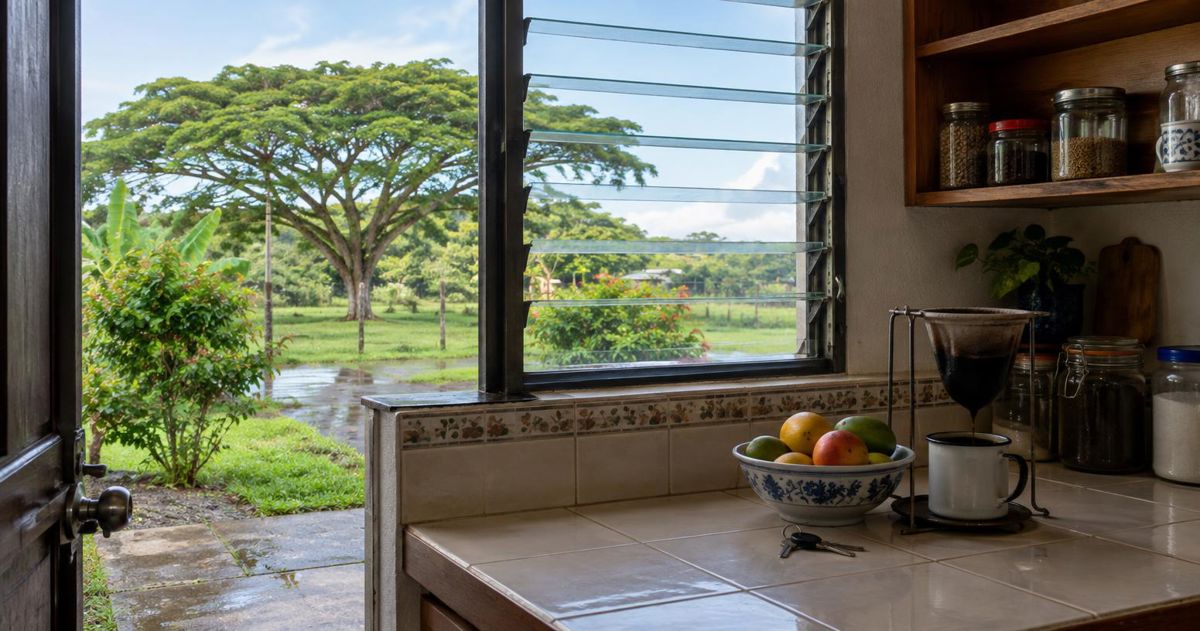
Before paying for a house in Costa Rica, it pays to confirm at the Registro Nacional who the owner is, what debts or restrictions weigh on the property and whether the survey plan matches the land. This guide explains, for first-time buyers and buyers from abroad, how to carry out that check, which documents to request and which risks do not show up in the Registry.
How do you check a property's legal status and how does the Registro Nacional work?
In Costa Rica every recorded property has a property number tied to its province, and the Registro Inmobiliario, part of the Registro Nacional, keeps in that file everything that matters to a buyer: who the owner is, how the property is described, which mortgages or easements it carries and which documents have been filed against it. Alongside it works the Catastro, which keeps the survey plans that map the land. The Registry offers online searches and certificates, so the information is public and anyone can review it before committing money.
Checking a house's legal status is not limited to the Registry. You need to cross-check four sources: the property's real folio, the cadastral survey plan, the municipality of the canton (property tax, building permits and zoning) and, in a condominium, the management. The best moment for the first check is when one of the homes for sale in Costa Rica genuinely interests you, before you sign a purchase option or hand over a deposit. The practical order is this:
- Ask the seller for the property number with its province and the cadastral plan number.
- Look up the property in the Registry and confirm that the recorded owner is the person selling to you.
- Compare the plan with the land: size, street frontage and boundaries.
- Request from the municipality a certificate showing the property tax is paid up and review the zoning.
- In a condominium, ask the management for a certificate showing fees are paid up.
- Have the notary run an updated title search on the day of signing.
Advertisements
What does a title search reveal about the title and the liens?
The title search is an orderly reading of the property's file. It can be a simple lookup, useful for a first review, or a literal certificate, which is the official document and the one you should hold before signing. A notary or lawyer interprets it, but you can and should read it: the table sums up which sections it contains and what to look for in each.
| Section | What it shows | What to check |
|---|---|---|
| Owner | Name and ID number of the recorded owner | That it matches the seller and the person signing |
| Nature and size | Description, area and location of the property | That it says house or land with a building and that the area matches the plan |
| Liens | Mortgages and easements | Which mortgage must be cancelled at signing and which easement stays |
| Notes | Embargoes, lawsuits and documents filed but not yet recorded | That there are none, or that the notary explains each one |
| Protections and restrictions | Family-home protection and other restrictions | Who must sign or what must be cancelled before the sale |
| Plan | Number of the linked cadastral plan | That it is the same plan the seller gave you |
Liens do not prevent a purchase, but they change how it is done. A mortgage is normally cancelled with part of the price, in the same act, and the deed must make that clear. A right-of-way or water easement stays with the property and you inherit it. Notes are the most serious signal: an embargo or a lawsuit noted on the file can compromise the house even if the seller assures you the matter is settled. Be wary of the price too: when a listing asks much less than home prices in Costa Rica in the same area, the title search often explains why.
What happens if the deed is not recorded at the Registro Nacional?
Signing the deed is not enough: the purchase has to reach the Registry. Under article 450 of the Código Civil, to record a sale in the Registry the title must be in a public deed, a final judgment or another authentic document expressly authorised by law. A private document, a bill of sale or a contract signed between the parties cannot be recorded, which is why you should always buy before a notary and ask for proof that the document was presented to the Registry.
The risk of not recording is concrete. Article 455 of that code states that an unrecorded purchase does not affect third parties until the date it is presented to the Registry, and that if the deed is presented more than 3 months after execution and an embargo or attachment is already noted, that note prevails unless the buyer proves in ordinary proceedings that his right is genuine and not simulated. In practice, until your deed is filed, a creditor of the seller can get ahead of you.
The deed must also describe the property correctly. Article 88 of the Código Notarial (Law 7764) requires the deed for a property to be recorded to state the province and the property number, and expressly its nature, size, location and boundaries. Check that those details match the title search and the plan. Offers of unrecorded rights or of properties without their own file often show up among cheap homes for sale in Costa Rica: the price may be attractive, but without recording you are not protected against third parties.
What should you check in the cadastral survey plan?
The cadastral survey plan is the official drawing of the land recorded in the Catastro: it shows the shape, area, boundaries, neighbours and location of the property. The Registry says who owns the house; the plan says what you are actually buying. Many problems in a Costa Rican purchase are not about title but about the plan: a wall moved a few metres, a frontage that really opens onto an easement, or an area smaller than advertised.
- That the plan number is the same one listed in the title search.
- That the area on the plan matches the recorded size of the property.
- That the land fronts a public street or a recorded easement that gives it access.
- That walls, fences and markers on site match the boundaries drawn.
- That the plan carries municipal approval where the municipality requires it to build or subdivide.
If something does not match, do not settle it with a verbal promise. A surveyor can measure the land and tell you whether the difference is minor or whether a new plan is needed before the deed. That work has a cost, but it costs far less than discovering after the purchase that part of the building sits on the neighbouring property.
What is family-home protection and how does it affect a sale?
Family-home protection is a safeguard the owner records on the house where the family lives. Under article 42 of the Código de Familia (Law 5476), once the protection is recorded in the Registry the property cannot be sold or mortgaged without the consent of both spouses, if the owner is married, or without court authorisation, and the owner's personal creditors cannot pursue it, except for debts of both spouses or debts incurred before registration.
For you as a buyer, the consequence is simple: if the title search shows the protection, the sale needs the signature of both spouses or court authorisation. The Registry does not record a deed that breaches that protection, so a sale signed by only one of them will not put the house in your name. Ask the notary to verify the seller's marital status and to make sure the deed records the required consent.
Another situation the Registry does not show is a lease. Under article 75 of the Ley General de Arrendamientos Urbanos y Suburbanos (Law 7527), if you buy a rented property the lease stays in force, and the tenant must pay the rent to you once you notify him of the transfer by handing over the certificate that proves it. If you plan to live in the house, ask whether there is a tenant and request the lease; in the meantime you may need to look among homes for rent in Costa Rica.
How do you know whether a condominium house has unpaid fees?
In a condominium, fee debt travels with the unit. Article 20 of the Condominium Property Law (Law 7933) provides that unpaid condominium fees, with their fines and interest, form a mortgage-type lien on the unit, ranking behind only the property tax lien, and that the certificate of the debt issued by an authorised public accountant is an enforceable mortgage title. If the seller owes fees, the condominium can collect them against the house you have just bought.
That lien does not always appear in the title search, so the certificate must be requested from the condominium management, signed and dated close to the deed. Also ask for the condominium bylaws, recent assembly minutes and details of any special assessment approved, because a common-area project already voted is charged to whoever owns the unit when it falls due. Do the same at the municipality for the property tax, which ranks ahead of the fees.
What we would do before signing
- Ask for the property and plan numbers from the first visit, including when browsing homes for sale in Costa Rica under US$120,000, where the title search matters as much as on an expensive house.
- Budget the title search, the notary and the recording fees together with the price, as the guide what buying a house costs on top of the price in Costa Rica explains.
- Require the seller's mortgage to be cancelled in the same act as the deed, especially for homes for sale in Costa Rica under US$200,000 bought with a loan.
- Have a surveyor compare the plan with the land before handing over money, particularly for homes for sale in Costa Rica under US$300,000 on a large lot.
- Ask the notary for an updated title search on the day of signing and for proof of presentation to the Registry.
Frequently asked questions
How do you check a property's legal history?
The literal certificate shows the property's current status; its history is requested separately from the Registro Nacional, through the certificates of the property's historical entries and ownership history. Ask the notary to review that history and not just the current status. Several transfers in a short time, a special power of attorney used to sell, or a recently merged or subdivided property are not illegal, but they deserve an explanation before signing, because they are patterns that show up in problematic sales.
Can you run the title search yourself?
Yes. Looking up a property at the Registro Nacional is available online and lets you see the owner, the liens and the notes without intermediaries. It is a good first check to rule out a house. Even so, the technical reading of the notes, verifying the seller's identity and drafting the deed are the notary's job, and the notary should run the final search on the day of signing.
When should the deed be presented to the Registry?
As soon as possible after signing. As article 455 of the Código Civil states, the purchase only takes effect against third parties from its presentation, and once 3 months have passed since execution an embargo already noted prevails over your right unless ordinary proceedings say otherwise. Ask the notary for the proof of presentation and follow up until the property appears in your name. If the Registry flags a defect, it must be corrected right away.
What should you do if the search shows a lien or a note?
Do not sign until you understand it. A mortgage can be cancelled with the price in the same act; an easement may be acceptable if it does not limit how you want to use the house. An embargo, a lawsuit or a document filed by someone else are reasons to halt the purchase until they are cancelled. Ask for any condition to be written into the purchase option and for the deposit to be returned if the seller fails to meet it.
This guide sums up common practice in Costa Rica for checking a property at the Registro Nacional before buying it. It does not replace the advice of a lawyer or notary, who should review your specific case and the property's documents.
Advertisements
More in Legal Verification

Most viewed in Buying Process

Buying Process, Common Mistakes
Frustrating purchases due to ignoring return policies
Buying Process, Common Mistakes
Mistakes when overlooking the extended warranty in your purchases

Buying Process, Advice
How to build a priority system for your household purchases
Buying Process, Procedures
How to buy a house in Costa Rica, step by step