


How to buy a house in Costa Rica, step by step
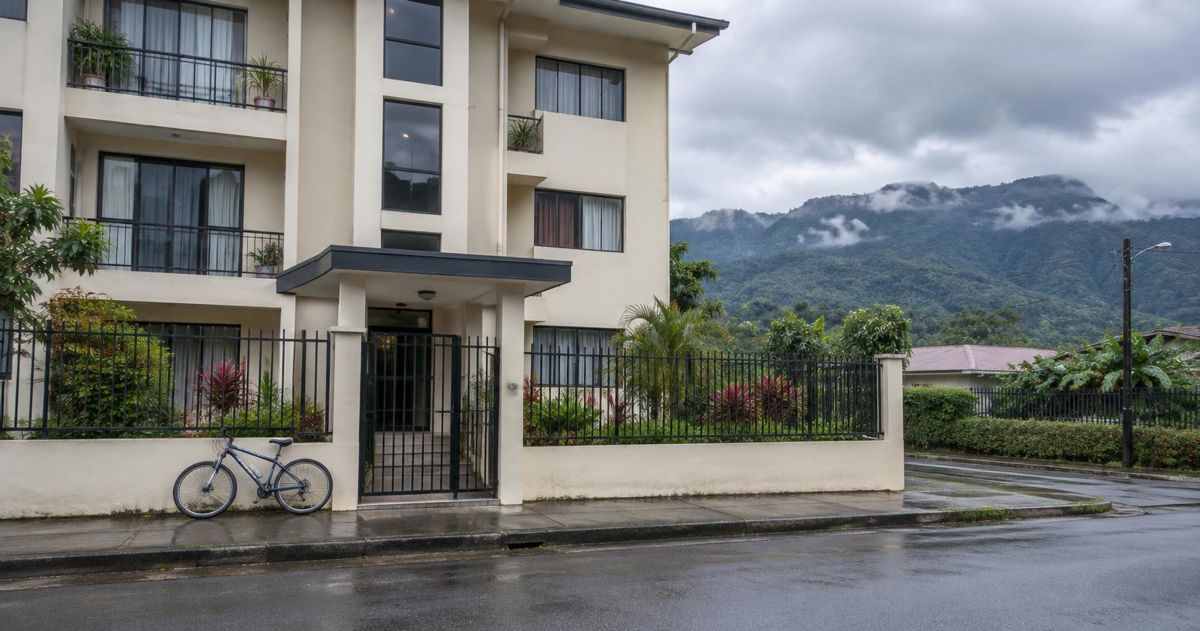
Buying a house in Costa Rica is a chain of steps that runs from the search to the recording in the National Registry, and each link has its own document and its own responsible party. This guide is for first-time buyers and for those buying from abroad: it explains what to check before making an offer, what to sign, what the notary does, who pays the transfer tax and when the house is truly in your name.
What are the steps to buy a house in Costa Rica?
| Type | Median | Typical range | Price per built m² | Listings |
|---|---|---|---|---|
| Houses | US$285k | US$190k – US$480k | US$1,271 | 8,495 |
| Apartments | US$190k | US$145k – US$290k | US$2,049 | 2,618 |
A purchase follows a logical order: first the money, then the house, then the paperwork and finally the signing and the recording. Skipping a step tends to be costly, especially paying a deposit before studying the property's title. The table in this section shows this month's asking prices for houses and apartments for sale across the country; it helps you place your budget before browsing the homes for sale in Costa Rica. Remember these are asking prices in listings, not closed sale prices: negotiation starts there.
- Define your budget and your financing, including the costs added on top of the price.
- Search for and visit houses; compare location, state of the building and documents.
- Study the property in the National Registry and its cadastral map.
- Make a written offer and sign a purchase option or a reciprocal promise of sale.
- Meet the agreed conditions: loan approval, appraisal and technical inspection.
- Sign the deed before a notary and pay the price, the taxes and the fees.
- Check that the deed is recorded in the Registry and take possession of the house.
Each step has a different lead player. The bank or lender decides how much it will lend you; the National Registry and the Cadastre say who owns the property and what encumbrances it carries; the notary drafts the deed, collects the taxes and presents it to the Registry. You coordinate all of them and decide when to move forward. In Costa Rica it is common for the seller to propose their own notary; nothing stops you from choosing one you trust or asking for two notaries to work on the deed together.
Advertisements
How do you define the budget and the financing before searching?
The real budget is not the price you can pay, but the price plus everything the purchase brings with it. If you are financing, ask the bank for a pre-qualification before visiting houses: it will tell you how much they lend, in which currency, over what term and what share you must contribute as a down payment. With that figure in hand, compare areas and house types on the home prices in Costa Rica page, where the breakdown by province and canton shows where your amount fits.
On top of the price come the transfer tax, stamp duties, registration fees, the notary's fees and, if there is a loan, the appraisal, the mortgage set-up and insurance. These amounts change with the price and the bank, so it is wise to set them aside from the start. The breakdown of each cost is in the guide what buying a house costs on top of the price in Costa Rica.
If your budget is tight, the temptation is to go straight to the cheap homes for sale in Costa Rica. It is a valid search, with a warning: a house priced far below its neighbours may have a reason, such as an outstanding mortgage, a map that does not match, a building without permits or an access problem. A low price justifies studying the property more carefully, not less. And if the bank is lending, the house must pass its appraisal: a property with messy paperwork may end up without a loan.
What should you check in the National Registry before making an offer?
In Costa Rica every recorded property has a property number in the National Registry, and its certificate is public: anyone can look it up. Before making an offer, ask for the property number and the cadastral map number and study both documents, ideally with your notary. The certificate says who the recorded owner is, how large the property is and what encumbrances weigh on it; the map says where it is and what its boundaries are. If the seller cannot give you those numbers, that is the first warning sign.
| What to check | Where | Why it matters |
|---|---|---|
| Recorded owner | Property certificate | Only the owner or their attorney-in-fact can sell |
| Mortgages and liens | Property certificate | They must be cancelled or assumed in the deed |
| Embargoes and notes | Property certificate | An earlier note may take priority |
| Size and boundaries | Cadastral map | What you buy must match what you see |
| Easements | Property certificate | They may limit use or access |
| Zoning | Municipality | Confirms what may be built |
| Municipal taxes | Municipality | Debts must be paid up before signing |
Paper does not replace the visit. Compare the map with the land: the fence, the entrance and the building must lie within the boundaries. Ask whether extensions have a municipal permit and request up-to-date water, power and tax receipts. If the house is in a condominium, ask for the bylaws and a statement that the fees are paid. A technical inspection of the roof, wiring, plumbing and damp, done by an engineer or an architect, gives you arguments to negotiate the price or to withdraw in time.
How do you make the offer and what do you sign: option, promise and earnest money?
The offer should be made in writing, with the price, the payment method, the deadline to sign the deed, what is included in the sale and which notary will execute it. If the seller accepts, the usual practice in Costa Rica is to formalise it in one of two documents. A purchase option, which the Código Civil governs as a promise to sell, reserves for you the right to buy within a period, usually in exchange for a payment; the seller is bound, but you decide whether to buy. A reciprocal promise of sale (promesa recíproca de compraventa), by contrast, binds both sides: one promises to sell and the other promises to buy.
Under articles 1053, 1054 and 1055 of the Código Civil, an accepted promise to sell gives the right to require that the sale be carried out; ownership passes on the day of the sale and not on the day of the promise, and if performance is not sued for within one month from when it becomes due, the promise lapses. In practice, the promise does not make you the owner: it gives you a right you must exercise in time. Note carefully the date on which the deed becomes due.
A deposit is usually paid with the promise. Article 1058 of the Código Civil says that money handed over as earnest money (señal or arras) in a sale is always deemed paid on account of the price and as ratification of the contract, and that neither party may back out by forfeiting it unless that was expressly agreed. If you want the deposit to work as an exit, with the rule of losing it or returning it doubled, the contract has to say so explicitly. It is advisable for the deposit to be held by the notary and not by the seller.
Conditions precedent are your safety net: they make the obligation to buy depend on a future event. The most common in Costa Rica are that the bank approves the loan, that the appraisal reaches the price, that the property certificate comes back free of embargoes, or that the seller cancels a mortgage before signing. Each condition should have a deadline and state what happens to the deposit if it is not met. Drafting them well is the notary's or lawyer's job; asking for them is yours.
What does the notary do and when is the house in your name?
The notary is the one who gives the purchase its public form. Under article 450 of the Código Civil, to record a sale in the Registry the title must be in a public deed, a final judgment or another authentic document expressly authorised by law. The notary studies the property, verifies the identity and capacity of the parties, drafts the deed, reads it to the signers, collects taxes and fees, and presents the certified copy to the Registry. If the seller is a company, the notary also checks that the signer has sufficient authority to sell.
The notary's fees are not free-form. Under articles 1 and 62 of the fee schedule for legal and notarial services (Decreto Ejecutivo 41457-JP), the schedule is mandatory and fees cannot be lower than the minimum percentages or amounts it sets. Be wary of a discount that sounds too good and ask in writing, before signing, for the breakdown of fees, taxes and charges the notary will collect, stating which part falls on each party.
Signing does not close the matter. Under articles 480 and 1049 of the Código Civil, between buyer and seller the sale is complete as soon as they agree on the thing and the price, and ownership passes between them by that agreement alone, regardless of its recording. But towards everyone else, article 455 of that code says an unrecorded purchase does not affect third parties until the date it is presented to the Registry, and if the deed is presented more than 3 months after execution and an embargo or attachment is already noted, that note prevails unless the buyer proves in ordinary proceedings that his right is genuine and not simulated.
- The notary presents the certified copy of the deed to the National Registry with taxes and fees paid.
- The Registry reviews the document and, if it finds defects, points them out for the notary to correct.
- Once the defects are corrected, the Registry records the purchase and the property passes into your name.
- Ask for an updated property certificate to confirm the recording and file it with your deed.
What we would do
- We would get the bank's pre-qualification and set aside the purchase costs before visiting the first house.
- We would study the property certificate and the cadastral map before handing over any deposit.
- We would sign a reciprocal promise of sale with clear conditions precedent, deadlines and the fate of the deposit in writing.
- We would require the notary to present the deed to the Registry as soon as it is signed, without waiting weeks.
- If the purchase is not ready yet, we would first compare the homes for rent in Costa Rica or the cheap homes for rent in Costa Rica to live in the area before buying there.
Frequently asked questions
What transfer costs are paid and who pays them?
The main one is the transfer tax, plus stamp duties, registration fees and the notary's fees. Under article 6 of the Real Estate Transfer Tax Law (Law 6999), the tax is owed by seller and buyer in equal parts, as jointly liable parties, except in a court auction or a transfer in payment of a debt, where the acquirer is liable for all of it. The parties may agree a different split between themselves, but it is wise to put it in writing in the promise.
What happens if the house you buy is rented out?
The tenant does not leave because of the sale. Under article 75 of the Ley General de Arrendamientos Urbanos y Suburbanos (Law 7527), if you buy a rented property, the lease stays in force, and the tenant must pay the rent to you once you notify him of the transfer by handing over the certificate that proves it. Before making an offer, ask for a copy of the lease, check its term and amount, and confirm whether the security deposit will be handed to you.
Can you buy without being in Costa Rica?
Yes. Foreigners can buy houses in Costa Rica on the same general terms as nationals. In special areas, such as the coastal strip and the border strip, specific rules apply to everyone, with additional limits for foreigners, which are worth checking with a lawyer. If you cannot attend the signing, you can grant a special power of attorney to a trusted person to sign on your behalf. Because the purchase is recorded in the Registry, that power must be in a public deed: from abroad, the safe route is to grant it before a Costa Rican notary, who may act outside the country, or before the Costa Rican consul. A power signed before a US notary public is not valid to record the purchase, even with an apostille.
Should you pay earnest money before studying the property?
We do not recommend it. Since earnest money is deemed paid on account of the price and as ratification of the contract, once paid you are already committed to that house. If a mortgage, an embargo or a mismatched map turns up later, getting the money back may require negotiating or going to court. The prudent course is to study the certificate and the map first, then sign the reciprocal promise of sale with conditions precedent and the deposit held by the notary.
This guide summarises common practice for buying a house in Costa Rica as of October 2026 and cites the rules in force noted in each section. It does not replace the advice of a lawyer or a notary, who should study your case, the specific property and the documents before you sign or hand over money.
Advertisements
More in Procedures

Buying Process, Procedures
Keys to understanding financing in your home purchase

Buying Process, Procedures
Navigating the complexities of financing in your home purchase

Buying Process, Procedures
Make La Fortuna your Family Sanctuary with High Added Value.

Buying Process, Procedures
Take Advantage of the Natural Charm of La Fortuna to Invest in Your Future
Most viewed in Buying Process

Buying Process, Common Mistakes
Frustrating purchases due to ignoring return policies
Buying Process, Common Mistakes
Mistakes when overlooking the extended warranty in your purchases

Buying Process, Advice
How to build a priority system for your household purchases
Buying Process, Procedures
Keys to understanding financing in your home purchase