


How to choose a house in Costa Rica: what to check before buying
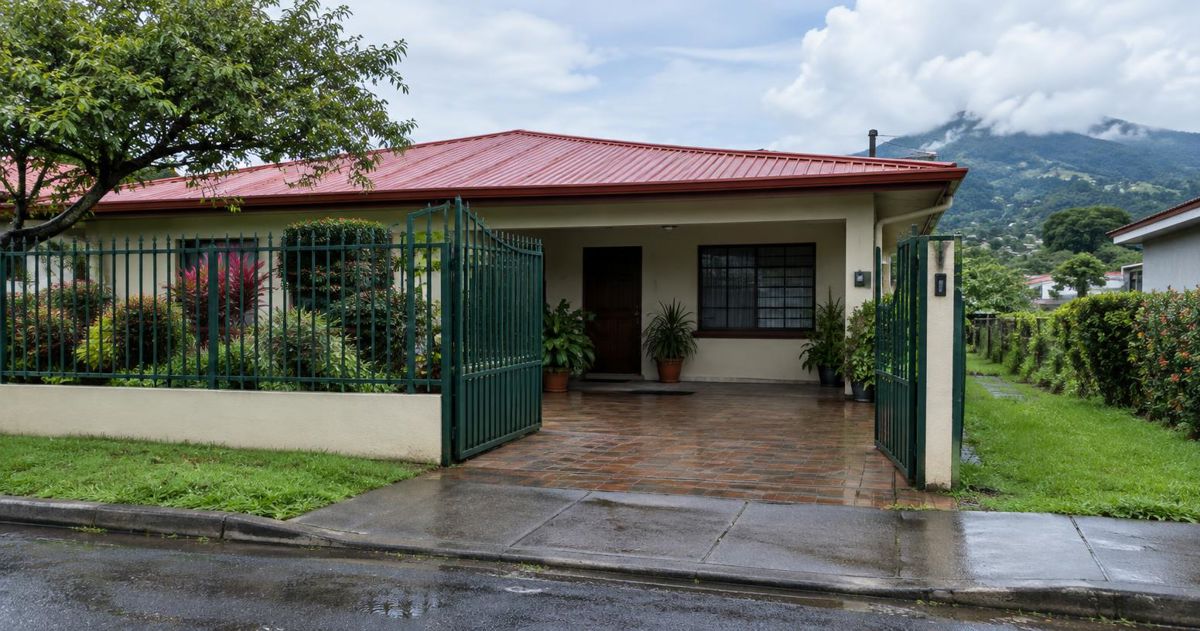
Choosing a house in Costa Rica is more than comparing photos and asking prices: the decision rests on the structure, the damp, the light, the security and the daily life the surroundings allow. This guide sets out what to check on the first visit, how to read the layout and the neighborhood, and how to compare several options before making an offer among the homes for sale in Costa Rica. It is meant for first-time buyers and for those moving to a new home.
Where do you start when choosing a house?
The most common mistake is to start with the listings. Before booking visits, it pays to write down who will live in the house, how many bedrooms and bathrooms they really need, where they work, where the children study and how much time they are willing to spend on the road each day. In the Central Valley, distance in kilometers is misleading: a house that looks close on the map can be far away at rush hour. That short list of real needs is what later lets you rule options out quickly and not fall for a nice kitchen in an area that does not work for you.
The second step is the full budget. On top of the loan payment or the savings for the down payment come notary fees, transfer taxes, the appraisal, insurance and the move; the details are in the guide what buying a house costs on top of the price in Costa Rica. With that amount clear, check home prices in Costa Rica by province and canton to see in which areas your budget has real options and in which you will only find listings out of reach.
Finally, separate the essential from the desirable. Essential is what cannot be changed later: the location, the lot, the orientation, the access and the structure. Desirable is what can be improved over time: the paint, the kitchen cabinets, the floor or the garden. A house in a good location with old finishes is often a better decision than a freshly remodeled one on a street that floods or far from everything. That distinction helps you negotiate and avoid paying for cosmetic fixes that hide deeper problems.
Advertisements
What should you check in the house on the first visit?
The first visit is not for imagining the decor but for looking for signs of problems. Bring a flashlight, a notebook and, if you can, someone who is not excited about the house. Ask to see every space, including the laundry area, the storage room and the backyard. If the seller or the agent limits the tour, write it down. This order helps you not to forget anything:
- Look at the roof from outside and inside: loose or rusted sheets, complete gutters and downspouts, stains on the ceiling.
- Look for damp on the walls, especially at the base, behind furniture and in closets; a musty smell also counts.
- Check for cracks in walls, floors and door frames; diagonal ones or those that run all the way through deserve an engineer's opinion.
- Turn on the taps, flush the toilets and check the water pressure; ask whether the supply comes from AyA, an ASADA or a well, and whether there is a reserve tank.
- Ask to see the breaker box, ask how old the wiring is and test outlets and switches.
- Inspect the wood of doors, frames and roof trusses for termites and check that the windows close properly.
- Walk the lot: the slope, where rainwater runs, the retaining walls and the condition of the drains.
On the same visit, think about maintenance. A large house with a big garden, wooden floors and a complicated roof demands time and money every month; a more compact house with ceramic floors, a simple roof and good gutters is cleaned and maintained with much less effort. Ask when it was painted, when the roof was replaced and whether there are invoices for recent repairs. In Costa Rica, the rainy season punishes roofs, gutters and exterior paint, so those three elements account for much of the yearly expense.
Do the layout, light and ventilation work for your daily life?
The layout is assessed with your routine in mind. Walk through the house as if it were a normal day: coming in with the groceries, cooking, doing laundry, working from home, sleeping. Notice whether the bedrooms are away from the street and the living area, whether there is a bathroom near the living room for guests, whether the laundry area has room to hang clothes and whether the kitchen connects with the dining room. A long hallway or a bedroom reached only through another one is hard to fix without major work.
Natural light and orientation vary a lot by area. In low, hot areas, such as much of Guanacaste or the Pacific, the afternoon sun on the facade heats the house and forces the use of air conditioning; in high, cool areas, such as Cartago or the upper parts of Heredia, the morning sun helps dry the house and fight damp. Ask which way the facade faces and come back at another time if you can, to see how the light enters the living room and the bedrooms.
Cross ventilation, with windows on opposite walls, is the best defense against heat and mold. Check that bathrooms and the kitchen have a window or an extractor fan, that closets are not against damp walls and that windows have screens. A dark, closed house may feel cozy on a short visit, but in the middle of the rainy season it accumulates damp, bad smells and clothes that do not dry. If the house feels hot or stuffy on the visit, it will feel more so once you live in it.
How secure is the house and what do the surroundings offer?
Security starts with the house: a gate in good condition, solid locks, windows that close properly and an entrance visible from the street. But the surroundings weigh more. Visit the block at night and on a weekend, see whether there is street lighting, whether the neighbors are around and whether there is a community security committee or, in a gated community, access control. Talk to a neighbor about burglaries, flooding and noise; in a few minutes you get information no listing provides. A street where every house has bars enclosing the porch is also telling you something.
Next come everyday services. Make the real trip you will repeat: to your job at rush hour, to the school, to the supermarket, to the pharmacy, to the CCSS clinic assigned to the area. Check whether a bus passes nearby and how often, whether the street is paved or gravel, and whether fiber or cable internet is available. It is also worth asking the municipality which uses the zoning allows, to know whether a workshop or a bar could open next door. This list sums up what is worth locating on the map:
- Bus stops and routes to your job or place of study.
- Supermarket, corner store, pharmacy and nearby clinic or EBAIS.
- Schools, high schools and daycare centers, if there are children in the family.
- Nearby rivers, streams and slopes that could flood or slide in the rain.
- Sources of noise: main roads, bars, churches, workshops or factories.
How do you compare several houses before deciding?
After the third or fourth visit, the houses blur together in your memory. That is why it pays to use the same sheet for all of them, with the same criteria and a simple rating: good, fair or poor. Take photos of the weak points, not only the attractive ones, and write down the same day how each space felt. This table works as a template:
| Criterion | What to look at | How to record it |
|---|---|---|
| Location | Real travel time to work and school | Good, fair or poor |
| Structure | Cracks, damp, roof and gutters | Good, fair or poor, with photos |
| Utilities | Wiring, water, pressure and drains | Good, fair or poor |
| Layout | How it fits your daily routine | Good, fair or poor |
| Light and ventilation | Orientation, windows and cross ventilation | Good, fair or poor |
| Maintenance | Garden, materials and pending repairs | List of repairs |
| Security | Gate, locks, street lighting and neighbors | Good, fair or poor |
| Surroundings | Services, transport, noise and flood risk | Good, fair or poor |
With the sheets filled in, compare the essentials first and the desirables afterwards. Add to each asking price the cost of the repairs you noted: a cheaper house whose roof and wiring need replacing can end up costing the same as another one that is ready to move into. Before making an offer on your favorite, go back once more in the rain, have an engineer or an inspector check it and ask a notary for the registry search, to confirm that the property is in the seller's name and free of hidden liens.
What we would do before making an offer
- Write down the household's needs and the total budget before opening a single listing.
- Filter first by location and daily commute, and only then by photos and finishes.
- If the budget is tight, also look at cheap homes for sale in Costa Rica, knowing they usually need more repairs.
- Visit your favorite at least by day, at night and in the rain, and talk to a neighbor.
- Hire an engineer or inspector and ask a notary for the registry search before signing a purchase option.
Frequently asked questions
House or apartment: which suits your lifestyle?
A house offers more space, a yard, room to expand and freedom to keep pets, in exchange for more maintenance and handling security on its own. An apartment is usually closer to shops and transport, takes less maintenance time and shares security, but it has a condominium fee and common rules. For a family with children or pets, a house usually fits better; for someone who travels a lot or lives alone, an apartment. If you are unsure, living for a while in one of the homes for rent in Costa Rica in the area helps you decide.
Is it worth renting in the area before buying?
When the area is new to you, yes. Renting for a few months lets you learn the real traffic, the noise, how the neighborhood behaves in the rainy season and which services you actually use. It also gives you time to view houses without rushing. If your monthly budget is limited, among the cheap homes for rent in Costa Rica you can find a temporary option while you compare. The cost of that rent is usually lower than the cost of choosing the wrong area in a purchase.
Do you need an engineer to inspect the house?
It is not mandatory, but it is advisable when there are cracks, persistent damp, additions built without plans, retaining walls or a sloped lot. An engineer or a home inspector reviews the structure, roof, wiring and drains with technical judgment and gives you a report that helps you decide or negotiate the price. The bank's appraisal does not replace that inspection: its purpose is to estimate the value of the collateral, not to find defects.
How many houses should you see before deciding?
There is no correct number, but there is a signal: when the new houses you visit no longer teach you anything different about the area and your budget, you have enough information to compare. Seeing very few houses makes it impossible to know whether an offer is reasonable; seeing too many without a common sheet only confuses. What matters is that the finalists are compared with the same criteria and that your favorite passes the second visit in the rain and the technical inspection.
This guide summarizes common practice when choosing a house in Costa Rica and does not replace the advice of a lawyer, a notary or an engineer on a specific property.
Advertisements
More in Checklist

Buying Process, Checklist
Factors to consider before making home purchases
Buying Process, Checklist
Ultimate guide to effectively plan home shopping
Buying Process, Checklist
Tips for understanding financing in home buying

Buying Process, Checklist
Emotional aspects that influence your home purchases
Most viewed in Buying Process

Buying Process, Common Mistakes
Frustrating purchases due to ignoring return policies

Buying Process, Common Mistakes
Mistakes when overlooking the extended warranty in your purchases

Buying Process, Advice
How to build a priority system for your household purchases
Buying Process, Procedures
How to buy a house in Costa Rica, step by step