


Costa Rica pensionado residency: requirements and process
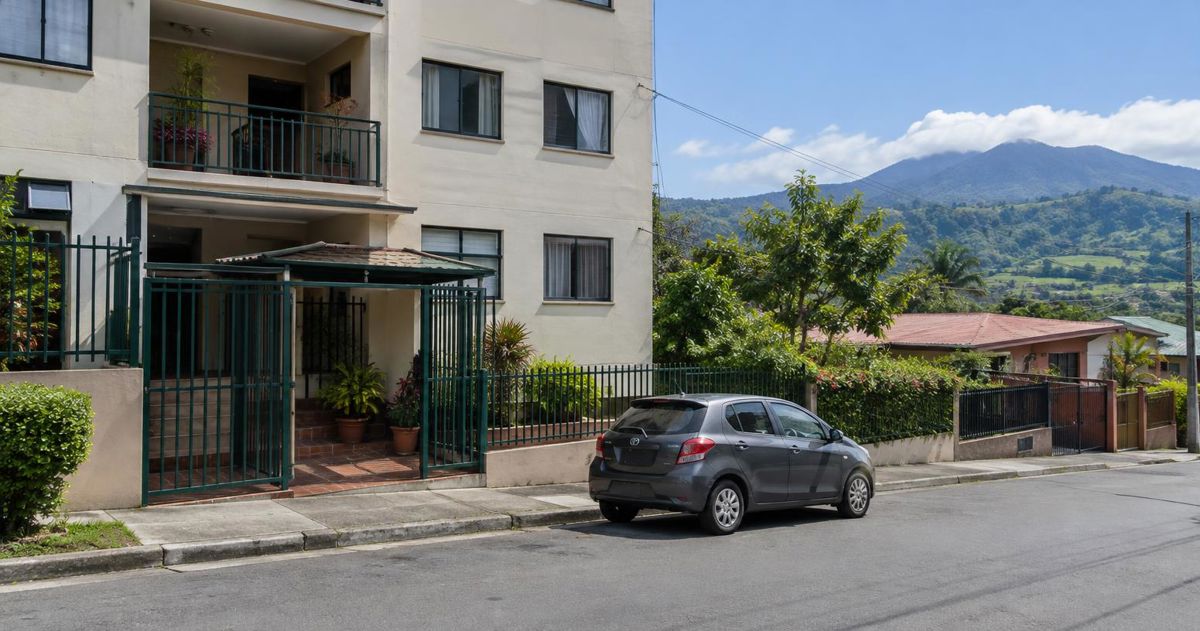
This guide is for the foreign retiree who wants to live in Costa Rica on the pension received from home. It explains what the pensionado residency is, what income must be shown, which documents to prepare before travelling and how the application is filed with the Dirección General de Migración y Extranjería. At the end it compares this category with the rentista and investor categories, so you can choose the one that fits your situation.
What is the pensionado residency and who is it for?
In Costa Rica, the pensionado residency is not a separate category: it is a subcategory of temporary residence, alongside the rentista and investor categories. Under Article 79 of the Ley General de Migración y Extranjería (Law 8764), Migración grants temporary residence for more than 90 days and up to two years, extendable for an equal period. In practice, this means you do not receive an open-ended permit, but a status that remains in place as long as you meet the conditions and renew it on time.
It suits someone who is already retired and receives a pension from abroad: from a public social security system, a company retirement fund or a military pension, for example. Residence lets you live in the country legally and makes everyday procedures easier, such as opening a bank account or signing a lease with your resident document. It is not citizenship and does not give you a Costa Rican passport, and the requirement the law sets for this subcategory is the pension, not the purchase of a property.
Residence can extend to your family. Article 82 of Law 8764 allows a rentista, with the same income amount, to apply for residence for a spouse, children under 25 and adult children with a disability, and articles 99 and 100 of the Reglamento de Extranjería (Executive Decree 37112-GOB) extend residence to those same dependants in the pensionado case. If you plan to come with your partner or a child, prepare each person's documents from the start, because it is best to build the family file together.
Advertisements
What pension must you show, and with which document?
The central requirement is income. Article 81 of Law 8764 and article 100 of the Reglamento de Extranjería require you to prove a monthly, permanent and stable pension from abroad of at least US$1,000 or its equivalent, and the regulation also requires it to be for life and shown by a document from the competent authority. Every word matters: monthly means it arrives each month; permanent and stable, that it does not depend on a contract that ends; lifelong, that it is paid for as long as you live.
The document from the competent authority is the certificate issued by the entity that pays your pension: your country's social security office, the fund administrator or the body that manages your retirement. Request it with your full name, the monthly amount, the currency and an express statement that the pension is for life. A bank statement showing the deposits helps prove the money arrives, but on its own it does not say who pays or for how long, so it does not replace the certificate.
If your pension is paid in another currency, the requirement is stated in dollars or its equivalent, so what counts is the amount shown on the certificate. If your pension is close to the minimum, consult an immigration lawyer before filing: an exchange-rate swing can leave it below the threshold, and it is better to know that before paying the fees and apostilling the documents.
Which documents are prepared at home and how are they apostilled?
Most of the file is prepared before you travel, in your own country, and the reason is the apostille. Under articles 2 and 3 of the Apostille Convention, approved by Law 8923, a public document from another party State no longer needs legalization by Costa Rican consuls: the only formality that may be required to certify its signature, the signer's capacity and its seal is the apostille. That simplifies the process, because you no longer need to go through a Costa Rican consulate.
The apostille is not requested in Costa Rica. Articles 3 and 5 of that convention provide that it is issued by the competent authority of the State the document comes from, at the request of the signer or any bearer. If your country is party to the Convention, the pension certificate, the birth certificate or a power of attorney signed there are apostilled there. In Costa Rica, the authority that apostilles Costa Rican documents is the Authentications Department of the Ministry of Foreign Affairs and Worship, but that office does not apostille a paper issued in another country.
Documents that are not in Spanish are filed, in practice, with an official translation. Confirm with your lawyer which translation Migración accepts and in what order it is done, because the usual sequence is to apostille the original document first and translate it afterwards. Check the issue dates too: an old certificate can be questioned, so it is best to request them close to the date you will file. The table summarizes what is usually prepared in the country of origin.
| Document | Who issues it | Formality |
|---|---|---|
| Lifelong pension certificate | Entity that pays the pension | Apostille and official translation |
| Birth certificate | Civil registry of your country | Apostille and official translation |
| Criminal record certificate | Police or judicial authority of your country | Apostille and official translation |
| Marriage certificate, if your spouse is included | Civil registry of your country | Apostille and official translation |
| Power of attorney for a representative in Costa Rica | Notary in your country | Apostille in your country |
How is the application filed with Migración?
With the documents apostilled and translated, the application is filed with the Dirección General de Migración y Extranjería. You can do it yourself or through a representative; if you choose that route, remember that a power of attorney signed in your country is apostilled there before you travel. The usual steps are these:
- Obtain the lifelong pension certificate from the entity that pays it.
- Apostille in your country the certificate, the birth certificate, the criminal record and, if applicable, the marriage certificate.
- Have the documents that come in another language translated into Spanish.
- Gather your valid passport and the copies that Migración or your lawyer indicate.
- File the application and pay the fees set by law.
- Follow up on the file and answer any request for information within the stated deadline.
- Once residence is approved, apply to join the CCSS.
The official costs are set by law. Under articles 33 and 255 of Law 8764 and articles 40 and 41 of the Reglamento de Extranjería, the first application for temporary or permanent residence costs US$50, each grant and each renewal also pays US$25 to the Fondo Social de Migración, and if you apply while in the country as a non-resident you pay US$200 for the change of category. On top of those amounts come the apostille and translation costs and, if you hire one, your lawyer's fees, which the law does not set.
While the file is being processed, keep a copy of everything you filed and of the payment receipt. If Migración asks for an additional document, answer within the deadline stated in the request: a file stalled by a missing paper is one of the easiest delays to avoid. Also keep your passport valid throughout the process, because it is the document that identifies your application.
Why is the Caja a requirement and how is residence renewed?
Insurance with the Caja Costarricense de Seguro Social is not optional. Under articles 7, 80 and 86 of Law 8764 and articles 31 and 210 of the Reglamento de Extranjería, as a temporary resident you must be insured with the CCSS from the day residence is granted and without interruption, because Migración checks it before each renewal and the extension requires that insurance. Falling behind on contributions is not only a health issue: it can stop your renewal.
The moment to enrol is defined. Articles 32 and 34 of the Reglamento de Extranjería provide that, once you are notified that your residence was approved, you must apply to join the CCSS, and if you are a pensionado you must show the card stating that you are insured as a pensioner. Keep that card with your residence documents: it is the proof you will be asked for when renewal comes. If you included your spouse, also confirm their standing with the Caja.
Renewal is periodic. Under articles 207, 227 and 228 of the Reglamento de Extranjería, a pensionado or rentista temporary residence is renewed every two years, together with the dependants' residence. To renew, you show again that you still meet the conditions: the pension in force and the Caja insurance up to date, plus the Fondo Social payment that applies to each renewal. Note the expiry date and start gathering the documents in good time.
Pensionado, rentista or investor: which one suits you?
If you do not receive a lifelong pension, the closest alternative is the rentista category. Article 82 of Law 8764 and article 99 of the Reglamento de Extranjería require proof of a monthly, permanent and stable income of at least US$2,500, and the regulation requires a bank document showing that you will receive it for a period of no less than two years. It is a higher figure than the pensionado one and a different kind of proof: having savings is not enough; you must show income that arrives every month.
This is where the rentista's most common mistake appears. Some people deposit a sum in a bank and ask for it to be paid back in monthly instalments, thinking that counts as income. It does not: under article 2 of the Reglamento de Extranjería, a bank deposit that the bank pays back to you in monthly instalments does not count as income, because what you receive is the return of your own money. Before moving your savings for that purpose, ask a lawyer what type of income Migración accepts.
The investor category has its own change. Under articles 4 and 31 of the regulation of Law 9996 (Executive Decree 43926-MGP-H-TUR) and article 8 of the Código Civil, the US$200,000 that the Immigration Regulation required for investor residence was repealed in February 2023, and today the only figure in force in any regulation is the US$150,000 of the Law 9996 regulation. Much information online still repeats the old figure; confirm the current one with your lawyer.
| Subcategory | What you prove | Amount in the rules | It suits you if |
|---|---|---|---|
| Pensionado | Lifelong pension from abroad | At least US$1,000 a month or its equivalent | You already receive a lifelong pension |
| Rentista | Stable monthly income for at least two years | At least US$2,500 a month | You have fixed income that is not a pension |
| Investor | Investment in the country | US$150,000 in the Law 9996 regulation | You invest in Costa Rica and can prove it |
Our reading: for someone who already receives a lifelong pension, the pensionado residency is usually the most direct route, because the proof is a single official document and the threshold is the lowest of the three. The rentista category serves someone living on different fixed income, and the investor category, someone who plans to invest in the country anyway. None of them locks you in for life: after a period as a temporary resident, the door to permanent residence opens.
What we would do
- We would first ask the entity that pays the pension for the official certificate that it is lifelong, and apostille it in the country of origin before travelling.
- We would rent before buying: homes for rent in Costa Rica let you get to know the area, the climate and the services while Migración decides.
- If the monthly budget is tight, we would also compare cheap homes for rent in Costa Rica in cantons away from the centre.
- Before visiting properties, we would review home prices in Costa Rica by province to know what sellers ask in each area.
- Once residence is approved and the Caja is up to date, we would go through homes for sale in Costa Rica with a trusted notary in charge of checking the property.
Frequently asked questions
Can you apply for residence if you are already in Costa Rica as a tourist?
Yes, but it carries an extra cost. Under articles 33 and 255 of Law 8764 and articles 40 and 41 of the Reglamento de Extranjería, if you apply while in the country as a non-resident you pay US$200 for the change of category, on top of the application fees. Even so, the documents from your country must come apostilled from there, so it is best to bring them ready and avoid a return trip just to complete them.
When can you move to permanent residence?
Under Article 78 of Law 8764 and article 208 of the Reglamento de Extranjería, after three consecutive years of temporary residence you can apply for permanent residence by meeting the requirements for a change of category. The key word is consecutive: if you let your residence lapse or interrupt your Caja insurance, the count becomes complicated. That is why it pays to renew on time and keep contributions up to date from the first month.
Do you need to buy a house to become a pensionado?
No. The requirement the law sets for this subcategory is a lifelong pension from abroad, not the purchase of a property. Many retirees prefer to rent at first and buy once they know the area. If you decide to buy, cheap homes for sale in Costa Rica are a starting point for comparison, and any purchase is best made with a notary who checks the property at the Registro Nacional before signing.
This guide summarizes the practice of the pensionado residency in Costa Rica under Law 8764, the Reglamento de Extranjería and the Apostille Convention, with the rules in force in November 2026. It does not replace the advice of an immigration lawyer or a notary, who can review your case, your documents and any changes Migración applies after publication.
Advertisements
More in Retiring in Costa Rica

Moving to Costa Rica, Retiring in Costa Rica
How to rent in Costa Rica as a foreigner

Moving to Costa Rica, Retiring in Costa Rica
Where to retire in Costa Rica: Central Valley or coast

Moving to Costa Rica, Retiring in Costa Rica
Costa Rica cost of living for retirees: how to budget

Moving to Costa Rica, Retiring in Costa Rica
Healthcare for foreign residents: the Caja and private cover
Most viewed in Moving to Costa Rica

Moving to Costa Rica, Investing as a foreigner
Can foreigners buy property in Costa Rica?

Moving to Costa Rica, Relocating to Costa Rica
Costa Rica digital nomad visa: requirements and renting

Moving to Costa Rica, Investing as a foreigner
Buying a lot to build in Costa Rica: what to check

Moving to Costa Rica, Investing as a foreigner
Renting to tourists in Costa Rica: a guide for foreign owners