


How to move your household to Costa Rica after Law 9996
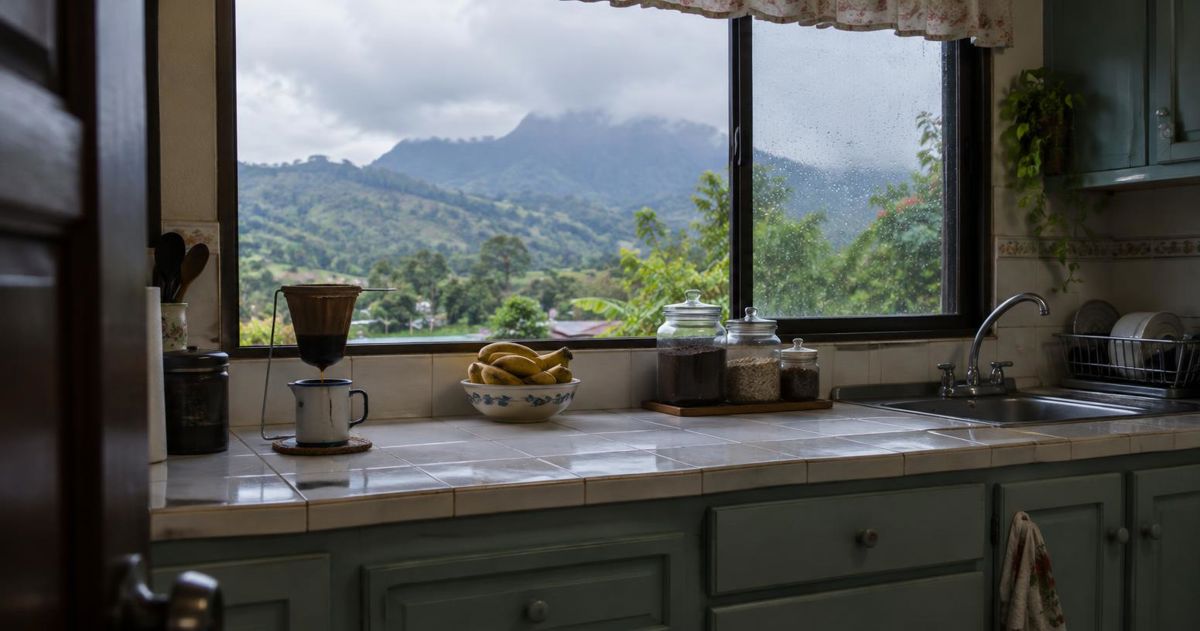
Bringing a whole household to Costa Rica is still possible, but the household-goods exemption granted by the Ley para la atracción de inversionistas, rentistas y pensionados (Law 9996) closed in July 2026: anyone arriving today pays the import taxes customs sets. This guide is for people planning their move: it explains what customs treats as household goods, who still keeps the benefit, when a container makes sense or when to bring things piece by piece, and what is better bought here.
What customs considers household goods
For Costa Rican customs, household goods are the domestic belongings of a person or family moving their home to the country: furniture, clothing, bedding, kitchenware, dishes, books, decorations, appliances and personal items. The underlying idea is that these are used things, in quantities that match a household, and not brought in to be sold. If the boxes contain repeated new items still in their packaging, or a volume that looks like a store's, customs may treat them as a commercial import, with a different inspection and different taxes.
Not everything that travels in a move counts as household goods. Vehicles are declared separately, with their own procedure and taxes, even if they come in the same container. Work tools and instruments are also handled separately. And some goods need a permit from another institution before they can leave customs: plants, seeds, food, medicines, animal products or weapons. It pays to know this before packing, because a single item without a permit can hold up the inspection of the whole shipment.
| Item | How customs treats it |
|---|---|
| Used furniture, clothing, dishes and books | Household goods |
| Home appliances | Household goods, reviewed for their value |
| Repeated or bulk new items | Possible commercial import |
| Vehicles | Separate procedure and taxes |
| Work tools and instruments | Separate declaration |
| Plants, food, medicines or weapons | Require a permit from another institution |
The tool that helps most is the inventory. Make a numbered list by box, describing what each contains and an estimated value for each item, ideally in Spanish. Keep the receipts for appliances and higher-value items. That inventory is the basis of the declaration your customs broker files, and a vague list ("kitchen", "misc.") is the fastest way to have customs order boxes opened and set the value on its own.
Advertisements
Why someone arriving today no longer gets the Law 9996 exemption
For years, many pensionados, rentistas and investors brought their households without paying taxes thanks to Law 9996. But that benefit had a closing date. Under articles 5 and 12 of Law 9996 and article 22 of the regulation of Law 9996 (Executive Decree 43926-MGP-H-TUR), the Article 5 incentives (household goods, vehicles, income-tax exemption, transfer-tax reduction and professional instruments) could only be requested during the first 5 years after the law took effect, which was on its publication.
That window has run out. Counted date to date from its entry into force on 14 July 2021, the 5-year window to opt for those incentives ended on 14 July 2026, as follows from articles 5 and 12 of Law 9996 and article 15 of the Código Civil. So anyone who obtains residence today as a pensionado, rentista or investor can live in Costa Rica with that status, but can no longer ask for their household goods to enter tax-free through that route.
Those who did apply in time keep what they obtained. Under articles 5 and 12 of Law 9996, for those who requested them within the 5-year window the law allowed a one-time import of household goods free of tariffs and import taxes, and up to two land, air or sea vehicles free of import taxes, tariffs and VAT. To request it in EXONET, articles 18 and 19 of that regulation required an approved residence as a pensionado, rentista or investor that was still in force, and Hacienda had up to two months to decide.
That benefit comes with obligations. Article 12 of Law 9996 and article 22 of that regulation provide that anyone who obtained the incentives within the first 5 years keeps them for 10 years from the date they were granted, must keep the exempted goods for at least 10 years, and may transfer the vehicles only after that period and the tax-release procedure. If you hold a granted exemption you have not used, review with your lawyer how and when to apply it before shipping.
Is a container better, or bringing the house piece by piece?
The decision depends on how much you want to bring and how much those things are worth compared with replacing them here. A dedicated container makes sense when you bring the furniture of a whole house: everything travels together, sealed, and is declared at once. A shared container, where your cargo takes only part of the space, works for a mid-sized move, although it usually takes longer because it is consolidated and separated in a warehouse. Bringing things piece by piece, in luggage or by courier, works for personal and small items.
| Option | Makes sense when | What to keep in mind |
|---|---|---|
| Dedicated container | You bring the furniture of a whole house | A single declaration; high cost even if half empty |
| Shared container | You bring part of the house | Longer wait for warehouse consolidation |
| Piece by piece | You bring clothing, personal items and small things | Each courier shipment is declared separately |
Also ask whether the service is port to port or door to door. In the first, you or your broker handle everything from the moment the container reaches the dock in Limón or Caldera; in the second, the company delivers to your house, but the price usually includes customs clearance and inland transport, and it is worth checking what is left out. Bringing things piece by piece avoids paying for a container, but it multiplies the paperwork: each courier shipment is declared separately; ask your customs broker how what you carry in your luggage is handled.
What to bring and what to buy in Costa Rica
Without an exemption, every piece of furniture and every appliance pays taxes, so the question stops being "what fits" and becomes "what is worth it". It makes sense to bring what has sentimental value, the good-quality furniture you want to keep, clothing, books, the tools you know and what is hard to find in the country. It is usually better to buy mattresses, inexpensive furniture and large appliances here: they have a local warranty, spare parts and a technician nearby, and they run on Costa Rica's electrical grid, which is the North American one; European appliances need a transformer.
Think about the climate where you will live. On the coasts and in the Caribbean, humidity and salt damage fine wood, leather, pianos and electronics; across the country, termites attack untreated wood. A piece of furniture that lasted decades in your previous home may need care here you did not expect. Before paying to ship it, ask yourself whether it will withstand the place and whether it fits the house you will live in.
That is why many people rent first and decide on the big move later. The homes for rent in Costa Rica let you get to know an area before buying, and the cheap homes for rent in Costa Rica work for waiting on the container without paying for two expensive homes at once. If you plan to buy, review the homes for sale in Costa Rica and the home prices in Costa Rica to gauge the space you will have: the size of the house defines how much is worth bringing.
What procedures follow when the container arrives
The procedure starts before shipping and ends when the empty container goes back to the shipping line. The person who coordinates it in Costa Rica is a licensed customs broker, who files the declaration in the customs computer system. These are the usual steps:
- Before shipping, prepare the box-by-box inventory with values, your passport, your immigration document and the bill of lading in your name.
- When the ship arrives, the shipping line gives notice and the container moves to a bonded warehouse, where storage fees start.
- Your customs broker files the customs declaration with the inventory, the bill of lading and any receipts you have.
- Customs decides whether a document review is enough or whether it carries out a physical inspection, opening boxes.
- The import taxes customs sets on the declared value, or the value it determines, are paid.
- If some goods require a permit from another institution, it is processed before release.
- Once released, the cargo is collected, transported to the house, and the empty container is returned within the time the shipping line sets.
The cost that surprises people most is time: every day the container waits in the bonded warehouse adds storage fees, and the shipping line charges if the container is not returned on time. That is why it pays to hire the customs broker before shipping, not once the ship has arrived, and to have the house where it will be unloaded ready. If the inspection is physical, you or someone you trust can be present; ask your broker.
What we would do
- Confirm with a lawyer whether a Law 9996 exemption was granted in your name; if not, budget for the taxes on everything that travels.
- Make the box-by-box inventory with values and receipts before sealing the first box.
- Compare, item by item, the cost of shipping and paying taxes against buying it in Costa Rica.
- Rent first in the chosen area and bring the big move once you know the size of the house.
- Hire the customs broker and the moving company with written quotes detailing what each includes.
Frequently asked questions
How do you choose a customs agency and an international moving company?
These are two different roles. The moving company packs, loads and transports; the customs broker, who must be licensed by the national customs service, declares the cargo and gets it out of the bonded warehouse. Some companies offer both services with a local partner. Ask for written quotes, ask who your broker in Costa Rica will be, what the price includes (storage, inspection, inland transport, unpacking) and what insurance covers the cargo. Be wary of anyone who promises the move will enter without paying taxes.
If I already have residence as a pensionado, can I request the exemption today?
Not under Law 9996. The window to opt for its incentives ended on 14 July 2026, regardless of when you obtained residence. Your residence remains valid and lets you live in the country, but the household goods you bring now pay import taxes like any other move. If you filed a request within the window and are unsure of its status, review it with a lawyer before shipping, so you do not count on a benefit you do not have.
Can I sell the car or furniture that came in under the exemption?
Not freely. Anyone who obtained the incentives must keep the exempted goods for at least 10 years, and vehicles can only be transferred after that period and the tax-release procedure. Selling earlier means, in practice, having to settle the taxes that were not paid. If your plans change and you need to part with an item, first consult a lawyer or your customs broker on how to do it without problems with Hacienda.
Is it worth bringing appliances?
In most cases, no. Large appliances take up a lot of container space, pay taxes on their value and may not be compatible with the country's grid if they come from Europe. Bought in Costa Rica, they come with a local warranty and spare parts. The exception is high-end or professional equipment that is not available here; in that case, keep the receipt so customs has a reference value.
This guide summarizes common practice for bringing household goods to Costa Rica and the Law 9996 rules in its context; it does not replace the advice of a lawyer, a notary or a licensed customs broker, who can review your specific case before shipping.
Advertisements
More in Relocating to Costa Rica

Moving to Costa Rica, Relocating to Costa Rica
Costa Rica digital nomad visa: requirements and renting

Moving to Costa Rica, Relocating to Costa Rica
Bringing pets to Costa Rica: requirements step by step

Moving to Costa Rica, Relocating to Costa Rica
Driving in Costa Rica with a foreign license: the rules
Most viewed in Moving to Costa Rica

Moving to Costa Rica, Investing as a foreigner
Can foreigners buy property in Costa Rica?
Moving to Costa Rica, Relocating to Costa Rica
Costa Rica digital nomad visa: requirements and renting

Moving to Costa Rica, Investing as a foreigner
Buying a lot to build in Costa Rica: what to check

Moving to Costa Rica, Investing as a foreigner
Renting to tourists in Costa Rica: a guide for foreign owners