


Can foreigners buy property in Costa Rica?
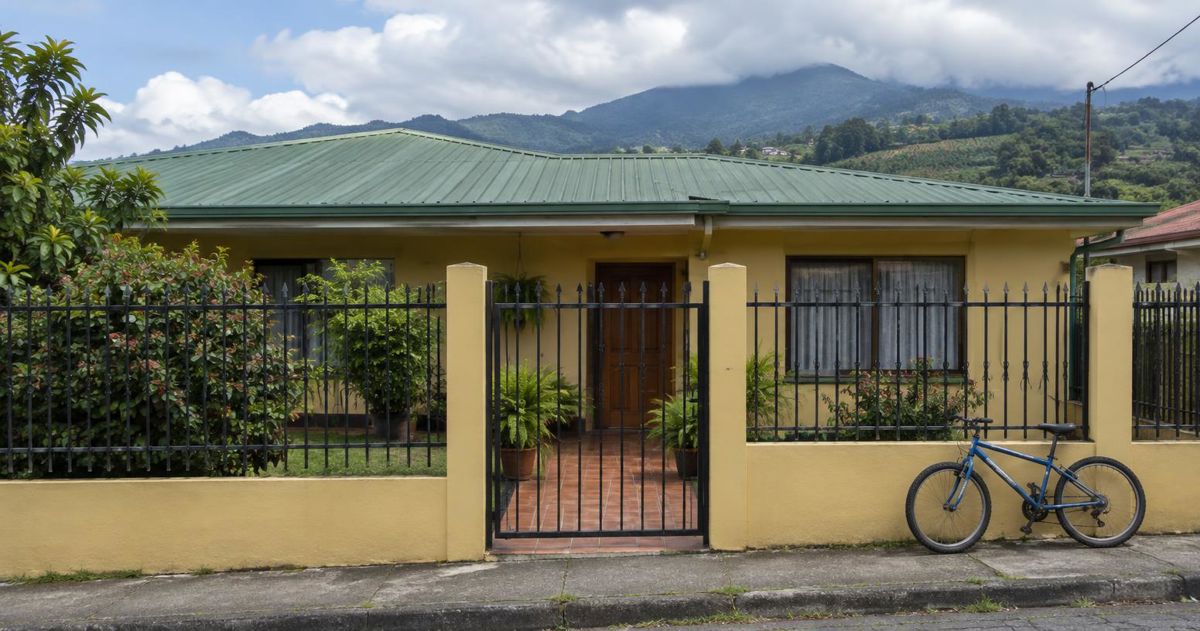
Yes: in Costa Rica a foreigner can buy a house, an apartment or a lot with a registered title, and the Constitution grants them the same rights as a Costa Rican. This guide is for those buying from abroad or who have just arrived: it explains where the exceptions lie, the beach and the border, whether to buy in your own name or through a company, how the purchase is recorded and which mistakes to avoid.
Does a foreigner have the same rights as a Costa Rican to buy?
The foundation is article 19 of the Constitución Política: it grants you, as a foreigner, the same individual and social rights and duties as a Costa Rican, subject to the exceptions and limits set by the Constitution itself and by law. In practice, a property registered with the National Registry, whether a house in Heredia, an apartment in San José or a lot in Pérez Zeledón, can be placed in your name just as in the name of a national. The homes for sale in Costa Rica that carry a registered title fall under this general rule.
The same provision carries a consequence that a buyer from abroad should keep in mind: it places them under the country's courts and authorities without recourse to diplomatic channels, except as international agreements provide. If a dispute arises with the seller, a neighbour or the municipality, it is settled in Costa Rica, under Costa Rican rules and before its judges, not through your embassy. That is why it pays to understand the local rules before signing, not afterwards.
Nor do you need to be a resident to buy a registered property: you can do so with your passport, even if you are in the country as a tourist, or sign through an attorney-in-fact. Residency does matter in two cases explained below: concessions at the beach and in the border strip. And it is best not to mix the procedures: buying a house does not by itself give you an immigration status. Residency is handled separately, before the Dirección General de Migración y Extranjería, with advice from a lawyer.
Advertisements
What changes at the beach: concession or ownership?
By the sea the rule changes completely. Under articles 1 and 7 of the Maritime-Terrestrial Zone Law (Law 6043), that zone belongs to the State, is inalienable and imprescriptible, and its land cannot be titled through a possessory proceeding or placed in private hands by any other means. This applies equally to foreigners and to Costa Ricans: in that coastal strip nobody buys property, not in Guanacaste, not in Puntarenas and not in Limón.
What does exist is the concession. Under articles 39, 40 and 41 of that law, only concessions may be granted in the restricted zone; only the local municipality grants them, and they give only the use and enjoyment of a defined area for the term and on the conditions set by law. Whoever "sells" you a house in the restricted zone is really transferring a concession, and that transfer depends on the municipality, not only on the agreement between the parties.
Here lies the most important limit for a foreign buyer. Article 47 of Law 6043 bars concessions to foreigners who have not resided in the country for at least 5 years, to corporations with bearer shares, to companies or entities domiciled abroad, to entities incorporated in Costa Rica by foreigners, and to entities more than 50% of whose capital belongs to foreigners. Moreover, neither a concession-holding entity nor its partners may transfer quotas or shares to foreigners, on pain of the transfer being void. Buying the shares of the company that holds the concession is not a way around it.
Not all of the coast is a concession. Article 6 of Law 6043 provides that the law does not apply to coastal city areas, to coastal urban zones, or to properties registered in accordance with the law in private names or whose legitimacy the law recognises. A coastal plot with a valid registered title is not a concession: it is bought like any other property. That the law does not apply to a coastal city or a coastal urban zone does not make the land private: what counts is the registered title. At the beach, the key question is just one: does the property have a registered title, or is it a concession?
| Aspect | Concession in the restricted zone | Registered property |
|---|---|---|
| Owner of the land | The State | The registered holder |
| Who grants or transfers it | Only the local municipality | The parties, by public deed |
| What it gives | Use and enjoyment for a term and on conditions | Ownership |
| Foreigner with under 5 years of residence | Cannot hold a concession | Can buy |
| Where it is checked | At the municipality | At the National Registry |
What about land near the border?
The second exception lies along the borders with Nicaragua and Panama. Article 7 of the Ley de Tierras y Colonización (Law 2825) provides that, until the State determines which land must remain in its ownership, land within a strip 2,000 metres wide along those borders is deemed inalienable and cannot be acquired by claim or possession. The exception is land already held in private ownership under a legitimate title: that land can be bought, including by a foreigner.
Outside those titles, what exists in the strip are INDER concessions. Article 5 of the regulation on border-strip concessions (Executive Decree 39688-MAG) provides that none are granted to foreigners who are not permanent residents allowed to carry out independent activities, to companies domiciled abroad, or to entities more than 50% of whose capital belongs to foreigners. If you are offered a property in Los Chiles, in Upala or near Paso Canoas, the first step is to find out whether it lies within the strip and whether it has a legitimate registered title.
Should you buy in your own name or through a company?
A foreigner can register the property in their own name, with their passport, or in the name of a Costa Rican company in which they are a partner. Both routes are legal; the difference lies in costs, administration and how the property is transferred later. In your own name, the procedure is simpler and the title clearly shows who the owner is. With a company, what is sold later may be the shares or quotas, which requires keeping the books and the shareholder register up to date.
A company has a cost the buyer should know about. Under article 1 of the Tax on Legal Entities Law (Law 9428), if you hold your property through a company, that company pays the tax, which falls on every commercial company, branch of a foreign company and sole-proprietor limited-liability company registered with the Registry of Legal Entities. That payment adds to the costs of the property, and it is worth planning for before setting up a company just to buy a house.
A company, moreover, does not get around the exceptions: in the maritime-terrestrial zone, an entity incorporated by foreigners or with most of its capital in foreign hands cannot hold a concession, as explained above. For a house with a registered title in the Central Valley or in any province, choosing between your own name and a company is a matter of convenience, best decided with your lawyer before signing the deed.
How is the purchase recorded in the National Registry?
The purchase is completed at the National Registry, not at payment. Under article 450 of the Código Civil, to record a sale in the Registry, the title must be in a public deed, a final judgment or another authentic document expressly authorised by law. When buying a house, that document is the deed executed by a Costa Rican notary public, who also presents it to the Registry. The usual order is this:
- Ask the seller for the property number and check at the National Registry the owner, liens, annotations and the cadastral survey.
- If the property is on the coast or near the border, confirm it has a registered title and is not a concession.
- Choose your own notary and review the purchase option or preliminary contract with them.
- Sign the public deed before the notary, in person or through an attorney-in-fact with sufficient power.
- Ask the notary to present the deed to the Registry immediately and follow up until it is recorded.
- Check in the Registry search that the property now appears in your name or your company's.
The urgency to record has a legal reason. Article 455 of the Código Civil provides that an unrecorded purchase does not affect third parties until the date it is presented to the Registry, and that if the deed is presented more than 3 months after execution and an embargo or attachment is already noted, that note prevails unless the buyer proves in ordinary proceedings that his right is genuine and not simulated. Until the deed reaches the Registry, a seller's debt can reach the house you have already paid for.
Before reaching the deed, compare what is being asked for similar properties in the same area: home prices in Costa Rica by province and canton give you a reference for negotiating. Keep in mind these are asking prices in listings, not closed sale prices.
What mistakes do buyers from abroad make?
Most problems do not come from the law but from how the purchase is carried out. These are the most frequent mistakes made by buyers who come to Costa Rica from another country:
- Buying a "beach house" without knowing it is a concession and not registered property.
- Signing with the seller's notary or lawyer, without your own advice.
- Paying without a deed, or letting weeks go by before presenting it to the Registry.
- Buying a company's shares without checking its debts, its books or the tax on legal entities.
- Trusting boundaries or a survey without comparing them with the cadastre and what is visible on the ground.
Another common mistake is buying in a hurry, charmed by a place seen on holiday. Renting for a few months before deciding lets you get to know the area in the dry and the rainy season, the traffic and the services; homes for rent in Costa Rica serve for that trial period. And if the budget is tight, cheap homes for sale in Costa Rica deserve the same registry review as any other: a low price is sometimes explained by a problem with the title.
What we would do before buying
- Ask for the property number and review the registry report before handing over any deposit.
- On the coast, first ask whether it is a concession or registered property, and do not proceed with a concession if you do not meet the residency the law requires.
- Hire your own notary and insist that they present the deed to the Registry in the days after signing.
- Decide between your own name and a company with a lawyer, factoring in the tax on legal entities.
- Try out the area with a rental before buying; cheap homes for rent in Costa Rica let you do so without a long commitment.
Frequently asked questions
Do you need to be a resident to buy a house in Costa Rica?
No, if the house has a registered title and is not in the maritime-terrestrial zone or within the border strip without a legitimate title. You can buy with your passport, even if you are in the country as a tourist. Residency only becomes a requirement for concessions: at the beach, the law requires having resided in the country for at least 5 years; at the border, being a permanent resident allowed to carry out independent activities.
Does buying a property give you residency?
Not automatically. The purchase and your immigration status are separate procedures: the deed makes you an owner, but it does not change your status in the country. If you plan to live in Costa Rica, residency is handled before the Dirección General de Migración y Extranjería, with its own requirements. Ask an immigration lawyer which category applies to you before planning your purchase around it.
Can a foreigner own a titled house at the beach?
Yes, if the land has a valid registered title in private hands: then it is bought like any other property. What decides it is the registered title, not whether the land is in a coastal town. What a foreigner cannot do is obtain a concession in the restricted zone without meeting the residency requirements, or through a company of foreigners. A check at the Registry and at the municipality settles the question.
Can you sign the purchase from abroad?
Yes. The usual route is to grant a power of attorney to a trusted person in Costa Rica so they can sign the deed on your behalf. That power must meet the formalities the law requires to take effect in the country, so it is best drafted with your Costa Rican notary before you travel or sign it at a consulate. Also ask the notary to confirm in writing that the deed has been presented to the Registry.
This guide summarises practice in Costa Rica as of November 2026 based on the Constitución Política, Law 6043, Law 2825, its regulation, Law 9428 and the Código Civil. It does not replace the advice of a lawyer or a notary, who should review each case before signing.
Advertisements
More in Investing as a foreigner
Moving to Costa Rica, Investing as a foreigner
Buying a lot to build in Costa Rica: what to check
Moving to Costa Rica, Investing as a foreigner
Renting to tourists in Costa Rica: a guide for foreign owners

Moving to Costa Rica, Investing as a foreigner
What you actually buy near the sea in Costa Rica

Moving to Costa Rica, Investing as a foreigner
How to buy a house in Costa Rica without travelling
Most viewed in Moving to Costa Rica

Moving to Costa Rica, Relocating to Costa Rica
Costa Rica digital nomad visa: requirements and renting
Moving to Costa Rica, Investing as a foreigner
Buying a lot to build in Costa Rica: what to check
Moving to Costa Rica, Investing as a foreigner
Renting to tourists in Costa Rica: a guide for foreign owners
Moving to Costa Rica, Investing as a foreigner
What you actually buy near the sea in Costa Rica