


What you actually buy near the sea in Costa Rica
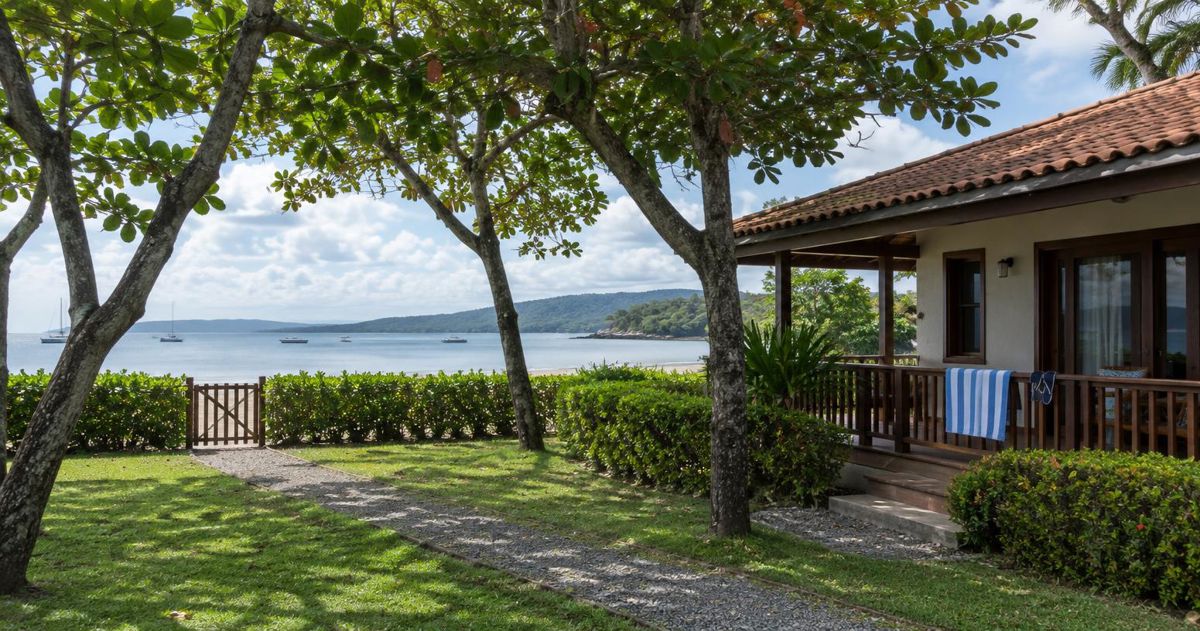
Near the sea in Costa Rica, not everything advertised as a beach house is a property. This guide explains which part of the coast belongs to the State, what is held in concession, which rules apply to foreign buyers and to companies, and how to check before paying whether what you are buying is registered in a private name or is a right of use granted by the municipality.
What the maritime-terrestrial zone is and which part no one may occupy
The maritime-terrestrial zone is the 200-metre strip along the Atlantic and Pacific coasts, measured horizontally from the ordinary high-tide line, under articles 9 and 10 of the Maritime-Terrestrial Zone Law (Law 6043). That strip is split in two: a 50-metre public zone and a restricted zone made up of the remaining 150 metres. The measurement does not start from wherever the water reaches on any given day, but from the ordinary high-tide line, so it is wise for the plot's position relative to that line to be shown on a survey plan and not only in the seller's word.
The whole strip belongs to the State. Articles 1 and 7 of Law 6043 declare it inalienable and imprescriptible, and its land cannot be titled through a possessory proceeding or placed in private hands by any other means. In practice, occupying a plot for years, fencing it or building on it does not make it the occupant's property, however much time goes by. Anyone offering «possession rights» inside the strip is offering something the law does not recognise as ownership.
The public zone is the strictest part. Save for the exceptions set by law, no one may occupy it under any title or claim any right over it, because it is dedicated to public use and free passage, as articles 11 and 20 of that law provide. All land covered by mangroves is also public zone, whatever its extent. For a buyer the consequence is direct: a house, a rancho or a wall within those 50 metres cannot be sold as a valid right, and that strip stays open to free passage for anyone.
Advertisements
What you hold in the restricted zone if it is not ownership
In the 150 metres of the restricted zone you do not buy land: you obtain a concession. Under articles 39, 40 and 41 of Law 6043, only concessions may be granted in that zone; only the local municipality grants them, and they give only the use and enjoyment of a defined area for the term and on the conditions set by law. The concession holder does not own the ground: they hold a conditional right of use, and what they pay the municipality for that use is a canon.
The concession is granted for a term of no less than 5 and no more than 20 years and must state the canon payable and how it is paid, under Article 48 of that law. It may be renewed successively for terms no longer than those, provided the holder applies within 3 months of the municipality's expiry notice, is up to date with the canon and their obligations, and the municipality agrees and the relevant institute approves, as articles 48 and 50 of Law 6043 set out. A late application is processed as a new concession.
The municipality does not decide alone. In tourist areas, the concession requires the ICT's approval, which the ICT may refuse only expressly and with reasons if it breaks the law; a concession on an island or islet needs the approval of the Legislative Assembly, under Article 42 of that law. In addition, articles 19 and 38 of Law 6043 provide that, until a declaration of tourist suitability exists, no works of any kind may be authorised in the maritime-terrestrial zone, and that in tourist zones the municipality may not grant concessions until the ICT and the INVU have approved or drawn up the zone's development plans.
So, before negotiating, ask whether that beach has a declaration of tourist suitability and approved development plans. Without them, anyone offering «a lot in concession» may be offering something the municipality cannot yet grant, and no works built there can be authorised.
| Situation | What you hold | Who decides |
|---|---|---|
| Public zone, first 50 metres | Nothing: public use and free passage | No one may occupy it |
| Restricted zone, next 150 metres | Concession of use and enjoyment for a term | Municipality, with ICT approval in tourist areas |
| Property validly registered in a private name | Ownership; Law 6043 does not apply | National Registry and ordinary property rules |
Which rules apply to foreigners and to companies with foreign capital
The rules for foreigners are in Article 47 of Law 6043. In the maritime-terrestrial zone no concession is granted to foreigners who have not resided in the country for at least 5 years, to corporations with bearer shares, to companies or entities domiciled abroad, to entities incorporated in Costa Rica by foreigners, or to entities more than 50% of whose capital belongs to foreigners. Nor may a concession-holding entity or its partners transfer quotas or shares to foreigners, on pain of the transfer being void.
Article 25 of the regulation of Law 6043 on the maritime-terrestrial zone (Executive Decree 7841-P) specifies that those 5 years of residence must be continuous and proven with a certificate from the immigration authorities. And under Article 47 of Law 6043, as read by the Constitutional Chamber in ruling 2010-11351, the requirement is constitutional and, once it is met, a foreigner has the same access to a concession in the restricted zone as a Costa Rican, without having to naturalise.
The company route has a limit that is often overlooked. Under Article 47 of Law 6043, as read by the ICT legal office in opinion AL-1427-2022, foreign partners' capital counts as foreign for the 50% limit even if they hold temporary or permanent residence, because the 5-year residence exception applies only to an individual applying for a concession in their own name. A Costa Rican company with more than half of its capital held by foreign partners, even resident ones, does not qualify.
These restrictions belong to concessions under Law 6043. A validly registered property, to which that law does not apply, follows other rules; confirm with your lawyer which ones apply to you given your immigration status and how you plan to buy, in your own name or through a company.
How to confirm a property near the sea is titled and not a concession
Article 6 of Law 6043 provides that the law does not apply to coastal city areas, to coastal urban zones, or to properties registered in accordance with the law in private names or whose legitimacy the law recognises, so a coastal plot with a valid registered title is not a concession. The key word is «valid»: since the strip cannot be titled through a possessory proceeding or by any other means, a title created over it without legal basis does not take it out of the State's domain.
The difference is confirmed in documents, not in the listing. A registered property has a property number at the National Registry and a cadastral survey plan; a concession appears as a concession, with its term and canon, and depends on a file at the municipality. These steps organise the review:
- Ask the seller for the property number and the cadastral plan, and check at the National Registry whose name it is registered in and whether it appears as a property or as a concession.
- Have a surveyor place the plan against the public-zone markers set by the National Geographic Institute: confirm whether the plot falls inside the strip and, if so, in which of the two zones.
- If it is inside the strip, ask the municipality for the concession file: holder, term, canon and payment status.
- Confirm with the municipality and the ICT that the beach has a declaration of tourist suitability and approved development plans.
- Have a lawyer or notary study the origin of the title if the property is registered very close to the sea.
Coastal city areas and coastal urban zones also fall outside Law 6043 under the same Article 6, but that does not make them ordinary purchases. In those cities and zones, only a property registered in a private name is bought like any other. And the law that regulates coastal urban zones keeps the coastal strip as State property: there, too, the municipality grants concessions for a term, with a canon and with limits for foreigners and for companies with foreign capital. Before signing, confirm at the National Registry whether the property appears as a registered property or as a concession.
What to check before paying for a beach house or lot
If what you are buying is a concession, the contract with the seller is not enough. Under Article 45 of Law 6043, the transfer, assignment or encumbrance of a concession, in whole or in part, needs the express authorisation of the municipality and of the relevant institute, and without it the act or contract is wholly invalid. Paying before that authorisation means paying for something that cannot yet pass into your name.
Nor is it enough for the concession to exist: it must be current and in good standing. Check how much of the term remains, whether the canon is up to date and whether the holder has met their obligations, because renewal depends on it. If you are a foreigner or are buying through a company, confirm beforehand that you meet Article 47, because a transfer of quotas or shares to foreigners is void. The table summarises where each point is checked.
| What to check | Where | Why |
|---|---|---|
| Property registration | National Registry | Tells a registered property from a concession |
| Position relative to high tide | Cadastral plan | Shows whether it falls in the public or restricted zone |
| Concession file | Municipality | Shows holder, term and canon |
| Declaration and development plans | ICT and INVU | Without them there is no concession or works |
| Transfer authorisation | Municipality and institute | Without it the contract is not valid |
| Buyer requirements | Immigration and your lawyer | Residence and foreign capital |
If your search does not require being on the sea, compare first with homes for sale in Costa Rica in areas where these rules do not apply, and check home prices in Costa Rica by canton to see how much more you pay for being near the coast and what you get in return: a title or a right for a term.
What we would do before buying near the sea
- We would rent first on the coast that interests you: homes for rent in Costa Rica let you get to know the area without committing to a concession.
- We would ask for the property number and cadastral plan before visiting, and set aside any offer that lacks them.
- We would compare with registered properties away from the strip: among cheap homes for sale in Costa Rica you can also look for options outside the maritime-terrestrial zone.
- We would not pay any part of the price of a concession without the transfer authorisation from the municipality and the institute.
- If you are a foreigner, we would first obtain the immigration certificate of your 5 years of continuous residence.
Frequently asked questions
Can a foreigner without 5 years of residence hold a house in the restricted zone?
Not in their own name, because Article 47 of Law 6043 bars granting them a concession, nor through a company more than 50% of whose capital belongs to foreigners. They can buy a validly registered property outside that strip, or rent while completing their residence: cheap homes for rent in Costa Rica are a way to live near the coast without committing capital.
What happens when the concession expires?
The concession may be renewed for terms of no more than 20 years if the holder applies within 3 months of the municipality's expiry notice, is up to date with the canon and their obligations, and the municipality and the relevant institute approve. If the application is late, it is processed as a new concession, with all its requirements. That is why it is worth knowing, before buying, how much of the term remains.
Can you build in the restricted zone if the beach has no approved plans?
No. Until a declaration of tourist suitability exists, no works of any kind may be authorised in the maritime-terrestrial zone, and in tourist zones the municipality may not grant concessions until the ICT and the INVU have approved or drawn up the development plans. A house built without that basis has no permit behind it, and whoever buys it takes on that risk.
Does a mangrove on the plot change what you buy?
Yes. All land covered by mangroves is public zone, whatever its extent, so that part cannot be occupied or sold as a right, even if it lies beyond the first 50 metres. If the plan or the visit shows mangrove, ask your lawyer to confirm how much area is actually available before negotiating the price.
This guide summarises practice in Costa Rica on the maritime-terrestrial zone under the rules in force in November 2026 and does not replace the advice of a lawyer or notary, who should review each property, each concession and each buyer's situation before signing.
Advertisements
More in Investing as a foreigner

Moving to Costa Rica, Investing as a foreigner
Can foreigners buy property in Costa Rica?

Moving to Costa Rica, Investing as a foreigner
Buying a lot to build in Costa Rica: what to check

Moving to Costa Rica, Investing as a foreigner
Renting to tourists in Costa Rica: a guide for foreign owners

Moving to Costa Rica, Investing as a foreigner
How to buy a house in Costa Rica without travelling
Most viewed in Moving to Costa Rica
Moving to Costa Rica, Investing as a foreigner
Can foreigners buy property in Costa Rica?

Moving to Costa Rica, Relocating to Costa Rica
Costa Rica digital nomad visa: requirements and renting
Moving to Costa Rica, Investing as a foreigner
Buying a lot to build in Costa Rica: what to check
Moving to Costa Rica, Investing as a foreigner
Renting to tourists in Costa Rica: a guide for foreign owners