


Renting to tourists in Costa Rica: a guide for foreign owners
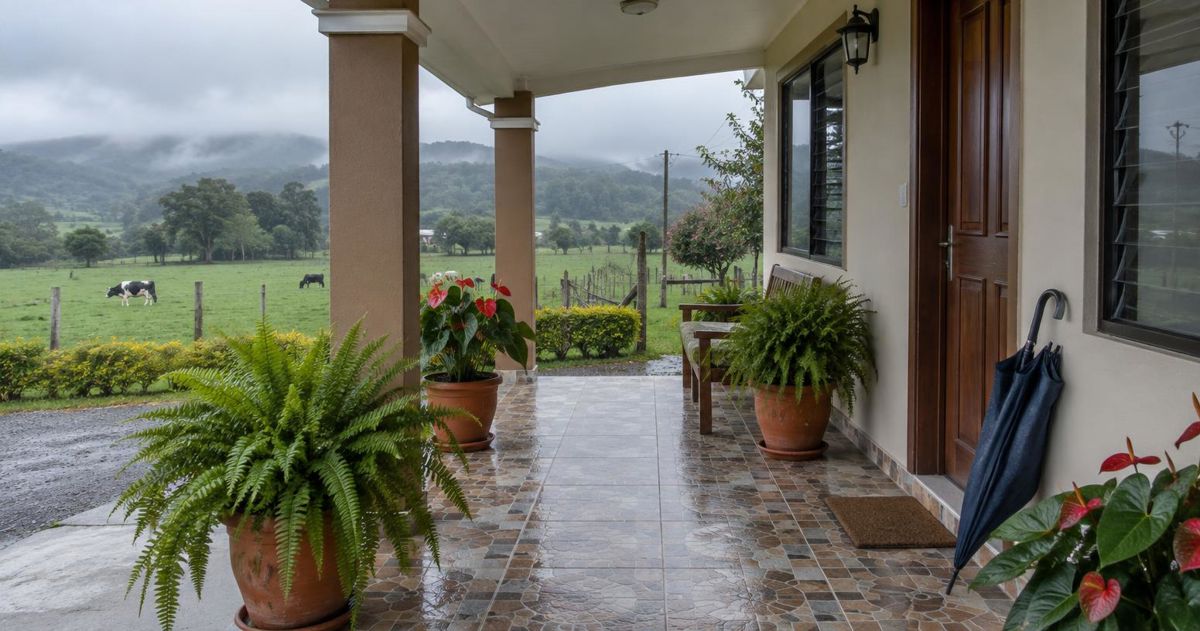
This guide is for the foreign owner who has, or plans to buy, a house in Costa Rica and wants to rent it out by the night to tourists. It explains which law governs that rental, how the activity is registered, what happens with taxes, what condominium bylaws can prevent and how the property is managed when you live outside the country.
Tourist rental or residential lease: which rule applies?
In Costa Rica, renting a house to a tourist for a few nights and renting it to a family that lives in it are two different activities, with different rules. Tourist rentals are governed by article 3 of the framework law on non-traditional lodging (Law 9742), which covers the tourist rental of homes, apartments, villas, rooms or similar buildings for periods of no more than 1 year and no less than 24 hours, when an individual or company provides it in its own name, habitually and for profit. That is the typical case of an owner who lists a house on a booking platform.
A residential lease, by contrast, is governed by another law. Article 7 of the Ley General de Arrendamientos Urbanos y Suburbanos (Law 7527) states that this law does not apply to hotels, guesthouses and similar establishments, nor to tourist homes let by the season in areas that the ICT declares suitable for tourism through a resolution published in the official gazette. For nightly rentals, moreover, the ICT's legal office has taken the view that, when the arrangement falls within Law 9742, the parties' rights and obligations are those of that law and not those of Law 7527. Law 7527 does apply if you rent the house to someone to live in it.
The difference matters in the purchase decision. A house meant for short stays needs furniture, bedding, cleaning between guests and someone to welcome each visitor; a house for long-term rental needs little of that, but ties the property to a single tenant for months. Before deciding, compare how homes for rent in Costa Rica are offered in the area you are interested in and consider which of the two models you are more comfortable managing from a distance.
Advertisements
How is non-traditional lodging registered?
Article 8 of Law 9742 sets three obligations for anyone who rents out a property as non-traditional lodging: register as a provider with the Costa Rican Tourism Institute (ICT) through a simplified digital registration, register as a taxpayer with the Dirección General de Tributación, and issue an itemised digital invoice for the services provided. The three go together: the tourism registration without the tax registration leaves the activity half done, and an invoice without registration has no backing.
- Gather the property details and your identification as owner, whether you are an individual or the company listed as owner in the National Registry.
- Complete the simplified digital registration as a non-traditional lodging provider with the ICT.
- Register as a taxpayer with the Dirección General de Tributación for the lodging activity.
- Set up digital invoicing and decide how you will itemise each service: nights, cleaning or other charges.
- Keep the receipts for both registrations and give a copy to your local manager.
Skipping the registration is not an administrative detail. Under Article 14 of that law, offering non-traditional lodging without being entered in the providers' register, or without meeting the marketing and service requirements, is deemed illegal operation and is penalised as an illegal commercial activity. For an owner who lives abroad the risk is greater, because the problem may surface when bookings are already confirmed and guests are on their way.
Registration also commits you to a service standard. Article 13 of Law 9742 requires guaranteeing at least periodic cleaning of the property, a bathroom and toilet for personal hygiene, maintenance of the facilities, minimum health and hygiene conditions, and containers to separate and handle solid waste. It is wise to write those minimums, one by one, into the contract with whoever manages the house, so they do not depend on anyone's goodwill.
What taxes apply when renting to tourists?
The law does not leave taxes up in the air, although Article 8 does not set a rate: what it requires is that you be registered as a taxpayer and issue an itemised digital invoice. From there, the specific taxes on each stay depend on the tax rules in force and on your situation as a taxpayer, and that calculation belongs to a licensed accountant in Costa Rica, not to the platform or the manager.
Platforms have obligations too. Article 9 of Law 9742 provides that platforms that intermediate non-traditional lodging must register with Tributación and, when the guest pays through the platform, withhold and pay the taxes set by law; they are also jointly and severally liable if withholding applies and the taxes are not paid. That withholding, when it applies, eases part of the process, but it does not replace your own registration or release you from invoicing and filing: lodging for tourists is not a residential lease and is subject to VAT, and a registered taxpayer must file returns within the legal deadlines, even when the guest paid through the platform.
The sensitive point is direct payments. If a guest returns and pays you by bank transfer, outside the platform, nobody withholds on your behalf: the invoice, the return and the payment are in your hands. Keep a record for each booking that shows the payment channel, and ask your accountant to also review how to report that income in your country of residence.
| Situation | Who withholds and pays | What falls to you |
|---|---|---|
| The guest pays through the platform | The platform, if withholding applies | Invoice, file and review what was withheld with your accountant |
| The guest pays the owner directly | You, as a registered taxpayer | Invoice, file and pay |
| The platform fails to withhold when required | The platform is jointly and severally liable | Review your reports with your accountant |
What can condominium bylaws say about nightly rentals?
Many foreigners buy into a condominium because security and upkeep of the common areas make remote management easier. But the condominium brings its own rule. Articles 33 and 34 of the Condominium Property Law (Law 7933) establish that anyone who buys in is bound by the existing bylaws, which cover, among other things, the fees, the use of common areas and penalties, and any amendment must be recorded in the Real Estate Registry. Changing the bylaws requires an agreement of the owners' assembly as the law sets out.
The practical consequence is clear: if the bylaws restrict or ban nightly rentals, do not count on changing them after you buy: an amendment depends on an agreement of the owners' assembly, not on your wishes. Also ask whether any amendment to the bylaws is under discussion. Ask for the recorded bylaws before signing the purchase option, read them with your lawyer and ask the management how the common-area rules apply to guests: check-in at the gatehouse, hours, vehicle limits or noise fines.
Outside a condominium there is also a limit. Article 16 of Law 9742 allows non-traditional lodging to operate in an area zoned as residential, provided it does not alter, disturb or negatively affect the property's surroundings. Noise, street parking and poorly handled garbage are the complaints that most jeopardise that condition. When reviewing homes for sale in Costa Rica, look at the access, the parking space and the distance to the neighbours as much as the finishes.
How is the house managed when you live abroad?
Nightly rentals require presence: someone welcomes the guests, fixes a leak on a Sunday, coordinates the cleaning and checks the house after each departure. If you live outside Costa Rica, that presence is provided by a local manager, who can be a trusted individual or a property management company. Choosing that manager is the decision that weighs most on the guest experience and on the condition of the house over the months.
That arrangement should be set out in a written contract, reviewed by a lawyer in Costa Rica. The table summarises the topics that should not rest on a verbal agreement:
| Topic | What to agree on |
|---|---|
| Services | Guest check-in, cleaning between stays, laundry and emergency response |
| Legal minimums | Periodic cleaning, maintenance, hygiene and separate waste handling |
| Invoicing | Who issues the digital invoice and how copies reach you |
| Money | How the commission is charged, which account receives payments and how often they are settled |
| Reports | Booking calendar, expenses with receipts and photos of the house's condition |
| Condominium | Who answers to the management for guests' violations |
| Exit | Notice period to end the contract and handover of keys and access |
Besides the contract, it helps to keep accounts separate: a bank account in Costa Rica dedicated to the house makes it easier to pay utilities, condominium fees and suppliers, and leaves a clean trail for your accountant. Keep the main access to the platform and invoicing accounts yourself; the manager can operate with a separate user, but ownership of the accounts should be yours. If your house is held by a company, confirm with your notary that the manager's power of attorney covers exactly what the manager will do, and nothing more.
What we would do before the first guest arrives
- Read the condominium's recorded bylaws before signing and walk away from the purchase if they restrict nightly rentals, rather than waiting for a change that depends on the owners' assembly.
- Compare home prices in Costa Rica in areas with tourist demand against the cost of furnishing and managing, which is higher for nightly rentals.
- Complete the registration with the ICT and with Tributación, and set up digital invoicing, before publishing the listing on any platform.
- Sign a written contract with the local manager that includes the law's minimum services and regular reporting.
- If the budget is tight, also review cheap homes for sale in Costa Rica outside the most touristy areas, suited to long-term rentals.
Frequently asked questions
Which area works best depending on the season?
It depends on when your guests travel. Guanacaste and the northern Pacific draw visitors in the dry season, from December to April, when skies are clear; from May to November it rains in the afternoons and occupancy tends to drop. The Caribbean gets rain at any time of year and a public that travels all year round. The northern zone, around San Carlos and the Arenal volcano, lives on nature tourism and holds up better in the rainy season. The Central Valley attracts work or stopover stays. A house with two audiences, tourists and remote workers, suffers less in the low months.
Can a foreigner register a house as non-traditional lodging?
Law 9742 refers to the individual or company that provides the service in its own name, habitually and for profit: what defines the activity is how it is provided. In practice, many foreigners hold the house through a Costa Rican company, in which case that company does the registration. Before starting, confirm with your lawyer which identification documents the ICT and Tributación will ask for, and whether your immigration status imposes any additional requirement.
Is a long-term rental a better fit?
It depends on how much time and control you want to devote. A long-term rental requires less day-to-day management: there is no cleaning between guests or check-in, and the house does not need to be furnished. In exchange, the property is occupied for months and you cannot use it on your holidays. To weigh that alternative, review how cheap homes for rent in Costa Rica and mid-range ones are offered in your area, and compare them with what it would cost to operate nightly with a manager.
This guide summarises practice in Costa Rica as of November 2026 for the foreign owner who rents by the night, based on Law 9742, Law 7527 and Law 7933. It does not replace the advice of a lawyer, a notary or a licensed accountant, who should review your case, your contract and your condominium's bylaws before the first guest arrives.
Advertisements
More in Investing as a foreigner

Moving to Costa Rica, Investing as a foreigner
Can foreigners buy property in Costa Rica?

Moving to Costa Rica, Investing as a foreigner
Buying a lot to build in Costa Rica: what to check

Moving to Costa Rica, Investing as a foreigner
What you actually buy near the sea in Costa Rica

Moving to Costa Rica, Investing as a foreigner
How to buy a house in Costa Rica without travelling
Most viewed in Moving to Costa Rica
Moving to Costa Rica, Investing as a foreigner
Can foreigners buy property in Costa Rica?

Moving to Costa Rica, Relocating to Costa Rica
Costa Rica digital nomad visa: requirements and renting
Moving to Costa Rica, Investing as a foreigner
Buying a lot to build in Costa Rica: what to check
Moving to Costa Rica, Investing as a foreigner
What you actually buy near the sea in Costa Rica