


Healthcare for foreign residents: the Caja and private cover
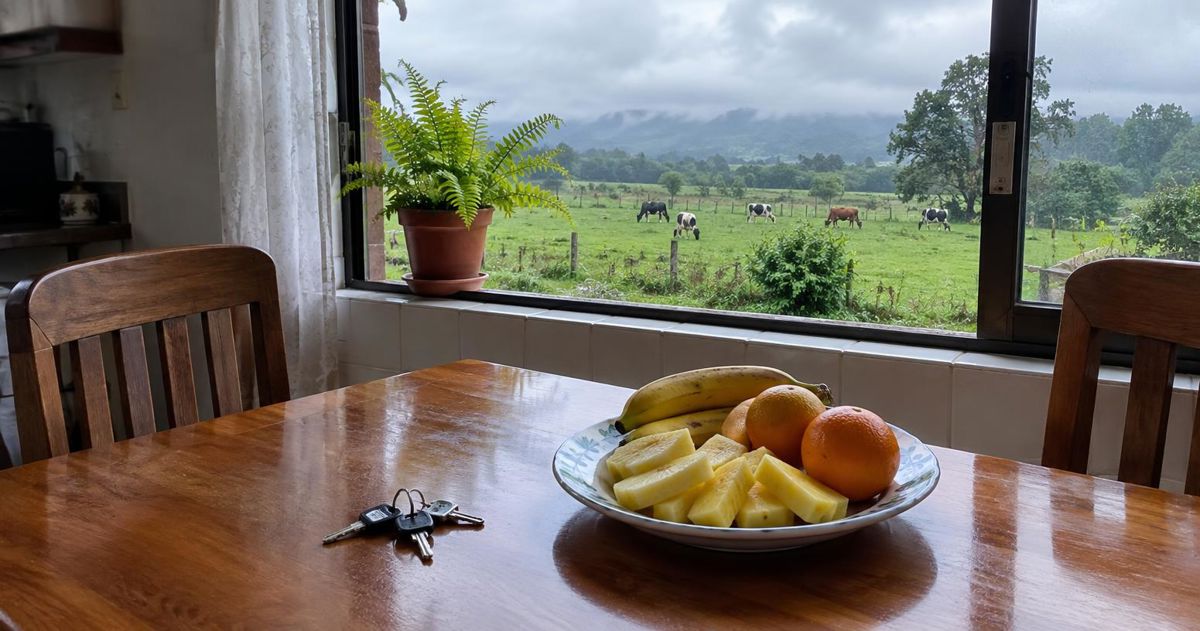
For a foreigner settling in Costa Rica, healthcare is organised in two layers: the Caja Costarricense de Seguro Social, which is mandatory for residents, and private insurance, which complements it. This guide explains when you enrol, what happens if you stop paying, which policy you need while your residence is being processed, and why the distance to a hospital should weigh as much as price when you choose where to buy or rent.
What does the Caja cover and when does a resident enrol?
The Caja Costarricense de Seguro Social, which everyone calls the Caja or the CCSS, is Costa Rica's public health insurer. Its network starts at the EBAIS, the primary care clinic assigned to each home address; it continues through clinics and health areas, and ends at the regional hospitals and the national hospitals in San José. An insured person receives general consultations, referrals to specialists, lab tests and imaging, hospital stays, surgery, emergency care and the medicines on the institution's official list, without paying separately for each service. The monthly contribution covers it all.
For a resident, enrolment is not optional. Under articles 7, 80 and 86 of the Ley General de Migración y Extranjería (Law 8764) and articles 31 and 210 of the Reglamento de Extranjería (Executive Decree 37112-GOB), as a temporary resident you must be insured with the CCSS from the day residence is granted and without interruption, because the immigration authority checks it before each renewal and the extension requires that insurance. In addition, articles 32 and 34 of that regulation provide that once you are notified that your residence was approved, you must apply to join the CCSS, and if you are a pensionado you must show the card stating that you are insured as a pensioner.
The Caja sets the contribution of a pensionado, rentista or investor resident according to the income they declare and their insured category. There is no single rate for all foreigners, so it is wise to ask for the amount at the branch office before drawing up the household's monthly budget. That payment is a fixed cost, like rent or electricity, and it is best treated that way from the first month.
- Wait for the notice that your residence was approved: the enrolment process starts with it.
- Go to the CCSS branch office in your area with your passport, the residence resolution and the proof of income that supported your category.
- If you are a pensionado, show or request the card that identifies you as insured as a pensioner.
- Ask to be assigned to the EBAIS that corresponds to your home address.
- Set up automatic payment of the contribution and keep the receipts for your renewal.
The phrase that matters most is «without interruption». Falling behind for a few months does not only leave the resident without care: it becomes a debt with the Caja and shows up when the immigration authority reviews the renewal. That is why we recommend setting up automatic payment from a Costa Rican bank account and keeping the receipts in a folder, paper or digital, together with the residence resolution. If you travel abroad for long periods, the contribution keeps running: the insurance is paid even when it is not used.
Advertisements
When does private insurance make sense on top of the Caja?
The Caja handles emergencies and complex treatment well, but specialist appointments, scheduled surgery and some imaging studies have waiting lists that can stretch out. That is where private insurance comes in: it gives faster access to doctors of your choice and to private hospitals, which are concentrated in the Greater Metropolitan Area and have branches in some hubs of Guanacaste and the Pacific. For a resident it does not replace the Caja; it complements it.
In Costa Rica there are two types of policy. Local policies are sold by insurers authorised by the Superintendencia General de Seguros (SUGESE), with a network of clinics and doctors in the country and, often, direct billing to the provider. International policies also cover care abroad and usually work by reimbursement. Before signing, read carefully the exclusions for pre-existing conditions, the waiting periods, the age limits for taking out cover, the deductible and whether your nearest hospital is in the network.
| Aspect | Caja (CCSS) | Local policy | International policy |
|---|---|---|---|
| Mandatory for residents | Yes | No | No |
| Who offers it | Public institution | Insurers authorised by SUGESE | Foreign insurers |
| Choice of doctor | Doctor assigned by the EBAIS | Within the policy network | Broad, depending on the policy |
| Wait for specialists | Can be long | Usually short | Usually short |
| Pre-existing conditions | Covered | Often excluded or subject to waiting periods | Often excluded or subject to waiting periods |
| Care outside Costa Rica | No | Limited or none | Yes, depending on the policy |
Many residents combine the two: they use the Caja for chronic check-ups, long-term medicines and a serious hospital stay, and keep private insurance for quick consultations and elective surgery. Others prefer to pay out of pocket for a private consultation when they need one, without a policy. All three strategies are valid as long as the Caja enrolment is up to date.
What insurance do you need while residence is pending?
The residence process takes months, and during that time you cannot yet join the Caja as a resident: enrolment comes after the approval notice. While you wait, the Caja treats emergencies, but it may charge an uninsured person for the service. That is why the recommendation is to arrive with a private or travel policy that covers illness and accidents in Costa Rica, valid from the first day.
For one category the policy is a requirement. Under article 10 of the Ley para atraer trabajadores y prestadores remotos de servicios de carácter internacional (Law 10008) and article 9 of the regulation of Law 10008 (Executive Decree 43619-H-MGP-TUR), as a digital nomad you and each family member must hold a medical policy covering the whole authorised stay, with at least US$50,000 of illness cover in Costa Rica, from an insurer authorised by SUGESE or a valid international insurer.
The delicate point is the transition. If the travel policy expires before you join the Caja, you are left uncovered just as you are settling in, looking for a home and driving unfamiliar roads. Check the expiry date, whether the policy can be renewed from Costa Rica and whether it includes evacuation or repatriation. It should end after the expected enrolment date, not before.
Why does the distance to a hospital matter when choosing where to buy?
When choosing an area, foreigners tend to focus on climate, the view and price. Healthcare deserves the same weight. Your EBAIS will be the one assigned to your address, and referrals go to the regional hospital: towns such as Liberia, Ciudad Quesada or Pérez Zeledón have one, while much of the Caja's specialised care is concentrated in the national hospitals in San José. When you browse homes for sale in Costa Rica, locate the nearest clinic and hospital on the map before booking a visit.
On the coasts and in rural areas, distance is measured not in kilometres but in time: gravel roads, bridges that close when rivers rise and heavy rain from May to November. For a retiree with a heart or respiratory condition, an hour on the road can outweigh an ocean view. Before deciding, it is worth checking the following in person.
- The real driving time to the hospital, by day and by night.
- Where the EBAIS for the address is and what hours it keeps.
- Whether there is a pharmacy and a Red Cross station nearby.
- Whether the road stays passable in the rainy season.
- Whether there is mobile signal to call emergency services.
Proximity and price tend to pull in opposite directions: the best-served areas cost more. The detail by area is in home prices in Costa Rica. If you look at cheap homes for sale in Costa Rica, add the time to the hospital to the calculation: a saving on the price can turn into long trips every time you need a specialist.
What should you prepare about your medicines before coming?
The Caja dispenses the medicines on its official list, which is organised by active ingredient rather than by brand. The medicine you take in your home country may not appear on that list under the same brand name, or a Caja doctor may replace it with an equivalent. Private pharmacies carry many brands, but with a prescription and at your own cost. What matters is that treatment is not interrupted during the move.
- Ask your doctor for a clinical summary with diagnoses, allergies and treatments, and have it translated into Spanish.
- List each medicine by its active ingredient, dose and frequency.
- Bring a supply that lasts until your first appointment in Costa Rica, together with the prescription.
- Ask the consulate whether any of your medicines is controlled and what document customs requires.
- Once enrolled, book an appointment at your EBAIS so a Caja doctor can take over the treatment.
If you have a specialised chronic treatment, such as dialysis, chemotherapy or insulin management, find out before buying which hospital provides that service and how long a referral takes from your future EBAIS. That answer can define the area better than any other criterion. While enrolment is completed, private insurance or buying directly at a pharmacy fills the gap.
What we would do
- Join the Caja as soon as the residence notice arrives and set up automatic payment so no month goes uncovered.
- Keep private insurance from the day of arrival until enrolment, with no gaps between one policy and the next.
- Rent before buying, among the homes for rent in Costa Rica, to test the route to the hospital in the rainy season.
- If the budget is tight, compare cheap homes for rent in Costa Rica near the canton's main town before a bigger house far from every service.
- Arrive with the translated clinical summary and a supply of medicines that covers the wait for the first appointment.
Frequently asked questions
Can a foreigner without residence be treated by the Caja?
They can receive emergency care, but the Caja may charge for the service if they are not insured. Enrolment as a resident comes after the residence approval notice. In the meantime, the practical protection is a private or travel policy with cover in Costa Rica. Some foreigners with formal employment are insured through their employer, but that route depends on their immigration and employment status, and it is best confirmed with a lawyer who specialises in immigration.
Does the Caja cover the resident's family?
The Caja has the figure of the family beneficiary: the insured person can register a spouse or partner and dependent children, under the conditions the institution sets. Each case depends on each member's immigration category and on the documents proving the relationship, such as apostilled and translated marriage or birth certificates. Ask at the branch office which documents are required before you travel, so you can bring them legalised from your home country.
Can private insurance replace the Caja?
For a temporary resident, no. The immigration rule requires CCSS insurance from the day residence is granted and without interruption, and a private policy, however broad, does not meet that requirement before the immigration authority. Private insurance is a complement: it shortens waits and opens the door to private hospitals, but the Caja contribution remains mandatory for as long as you keep your residence.
What happens with the Caja if you move to another canton?
Your enrolment remains valid, but primary care is assigned by address. When you move, update your address with the Caja and ask to be assigned to the EBAIS that corresponds to the new home; that way appointments, check-ups and medicine pick-up stay close by. If you buy after renting for a while, make the change as soon as you sign the deed and move in.
This guide summarises practice in Costa Rica as of November 2026 on Caja enrolment and health insurance for foreign residents. Contributions, the requirements of each category and policy conditions change, so confirm each step at the CCSS branch office and with the insurer. The guide does not replace the advice of an immigration lawyer or a notary.
Advertisements
More in Retiring in Costa Rica

Moving to Costa Rica, Retiring in Costa Rica
How to rent in Costa Rica as a foreigner

Moving to Costa Rica, Retiring in Costa Rica
Where to retire in Costa Rica: Central Valley or coast

Moving to Costa Rica, Retiring in Costa Rica
Costa Rica cost of living for retirees: how to budget

Moving to Costa Rica, Retiring in Costa Rica
Costa Rica pensionado residency: requirements and process
Most viewed in Moving to Costa Rica

Moving to Costa Rica, Investing as a foreigner
Can foreigners buy property in Costa Rica?

Moving to Costa Rica, Relocating to Costa Rica
Costa Rica digital nomad visa: requirements and renting

Moving to Costa Rica, Investing as a foreigner
Buying a lot to build in Costa Rica: what to check

Moving to Costa Rica, Investing as a foreigner
Renting to tourists in Costa Rica: a guide for foreign owners