


Costa Rica digital nomad visa: requirements and renting
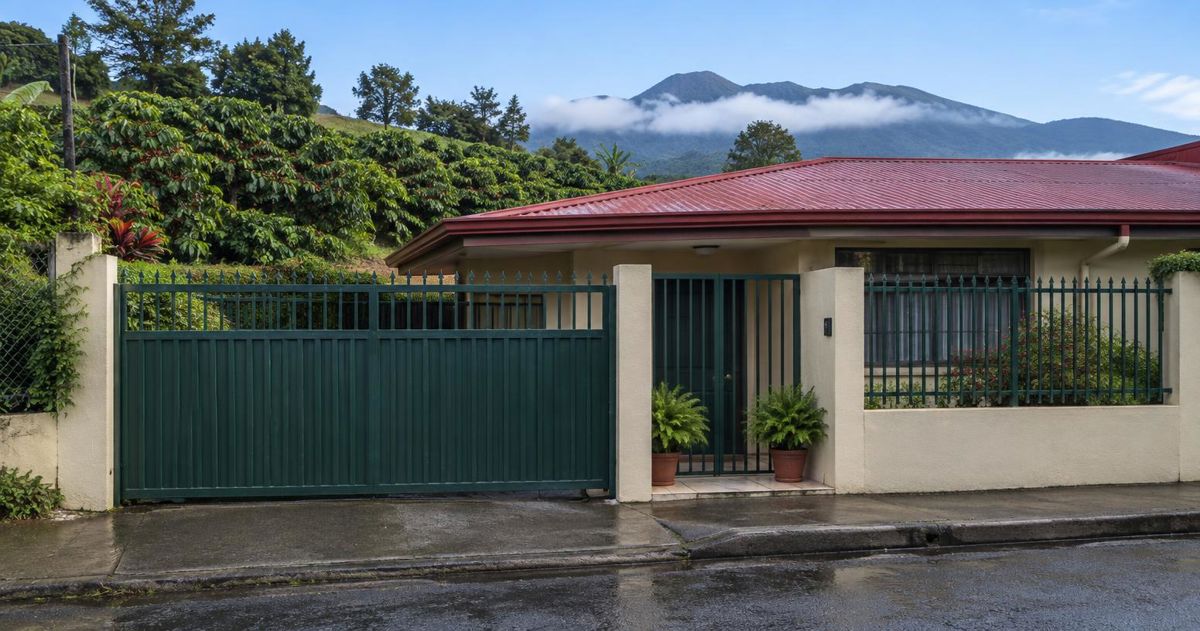
This guide is for people who work remotely for people or companies outside Costa Rica and want to spend a long season here with their papers in order. It explains what the digital nomad stay is, the income you must show, how long it lasts, health insurance, taxes and how to choose a rental home with internet that can handle your workday.
What is the digital nomad stay and what does it mean for renting?
| Type | Median | Typical range | Listings |
|---|---|---|---|
| Houses | US$1,800 | US$1,304 – US$2,700 | 1,206 |
| Apartments | US$1,196 | US$950 – US$1,400 | 1,870 |
Digital nomad status is not residence. Articles 2 and 3 of the Ley para atraer trabajadores y prestadores remotos de servicios de carácter internacional (Law 10008) place it in the non-resident category, "estancia" subcategory, for foreigners who work remotely for people or companies abroad and are paid from abroad. In practice, you arrive in Costa Rica with a temporary permit tied to your work abroad, not with permanent status, and your housing plan should be built around that period.
The status has a clear limit: under Articles 13 and 14 of Law 10008, you may not do paid work in Costa Rica other than remote work for clients abroad, and if you do, the status and all its benefits are cancelled. That includes teaching, serving local clients or running a business here. If you plan to sublet a room in the home you rent to cover costs, first ask a lawyer whether that income fits within what is allowed, and bear in mind that subletting also requires the landlord's express authorisation.
You can come with your family. Articles 3 and 4 of Law 10008 allow you to include a spouse or common-law partner, children under 25 or with a disability at any age, and older adults who live with them, but the tax benefits are for you only. With a family, the rental changes: more bedrooms, proximity to schools and a lease in the name of someone who can sign it. The table in this section shows the rent asked this month for houses and apartments across the country.
Advertisements
What income must you prove and how much does the process cost?
The central requirement is financial. Article 10 of Law 10008 and Article 5 of the regulation of Law 10008 (Executive Decree 43619-H-MGP-TUR) require you to prove monthly income of at least US$3,000 over the last year, or US$4,000 a month if you include your family. That amount may be combined with your spouse's or another member's, and it must be income you can keep receiving outside your home country. One good month is not enough: what counts is consistency.
Organise the proof before you start: bank statements, contracts with your clients or a letter from your employer abroad, and any document showing that payment arrives from abroad. If you work by project and your income varies, it is wise to have a professional check whether the lean months put the requirement at risk before you file the application.
On costs, Articles 5 and 8 of that regulation set US$100 for the application and US$90 for issuing the document, and a one-time guarantee deposit is also required, with the amount set by a separate regulation. Confirm that deposit with the immigration authority before building your budget, because its amount is not in the rules this guide cites.
- Gather proof of income for the last year and, if you come with family, that of the members who add to the amount.
- Take out the medical policy for yourself and for each member of your family.
- File the application with the Dirección General de Migración y Extranjería and pay the application fee.
- Once it is approved, pay for issuing the document and the guarantee deposit.
- With the document in hand, sign a lease with an exit clause that fits the authorised stay.
How long does the stay last and how is it extended?
Under Article 15 of Law 10008 and Article 10 of its regulation, the stay is granted for up to one year and can be extended once for one more year if you stayed in the country at least 180 days during the first year. The extension, then, is not automatic: it depends on how much time you actually spent in Costa Rica. If you travel a lot for work or to visit family, keep a record of entries and exits from the first month.
That term clashes with the rental law, which sets a minimum term for housing leases longer than a one-year permit, even if the lease says less. That does not lock you in: the same law lets the tenant end the lease by giving the landlord advance notice, unless otherwise agreed in writing. So, rather than the term, check the exit clause and send written notice as early as the lease or the law requires, before your stay ends. If the landlord asks for a deposit, put in writing under what conditions it is returned and in which currency.
The same article opens another door: before the stay expires, you may apply to change to another immigration category if you meet the requirements. That option changes how it makes sense to think about housing, and we explain it in the frequently asked questions.
What health insurance is required?
Article 10 of Law 10008 and Article 9 of its regulation require you and each family member to hold a medical policy covering the whole authorised stay, with at least US$50,000 of illness cover in Costa Rica. The policy may come from an insurer authorised by SUGESE or from a valid international insurer.
Check three things before buying it. First, that it is valid for the whole stay and not just the months of the trip. Second, that the illness cover applies inside Costa Rica, not only in your home country. Third, that it covers each person in the family separately. If you plan to extend, consider the renewal now, because the policy will also have to cover the second period.
Insurance also matters when choosing where to rent. If you have young children or a health condition, a home near a hospital or private clinic that accepts your policy saves time in an emergency. Ask the insurer which facilities it works with in the province you are considering before choosing a neighbourhood.
What taxes do you pay on income from abroad?
This is the main attraction. Article 16 of Law 10008 and Articles 13 and 19 of its regulation establish that you are fully exempt from the profits tax in Title I of the Income Tax Law, you are not treated as a habitual resident for tax purposes and your foreign income is not treated as Costa Rican-source.
There are two caveats. The benefit does not extend to your family: if your spouse earns income of their own, their tax situation is reviewed separately. And the exemption refers to that income tax: rent, utilities and everyday purchases are paid the same way anyone in Costa Rica pays them. Costa Rican law says nothing about what you must declare in your home country; check with an accountant there.
There is also relief for work equipment. Under Article 17 of Law 10008 and Article 14 of its regulation, you can import tax-free the basic personal computer and telecom equipment you need for work, and bring in your luggage without prior paperwork a computer, a phone, a tablet, a camera and a recording or sound device. That lets you arrive with your office in your suitcase and rent a home without paying separately for a workspace.
Where to rent with good internet?
Internet matters more than the neighbourhood. In the urban centres of the Central Valley, such as San José, Heredia, Escazú or Curridabat, fibre optic is common in residential developments and buildings; on the coasts of Guanacaste, the central Pacific or the southern Caribbean, quality can change from one street to the next. So before falling for a view, ask which provider the home uses, whether the connection is fibre or wireless and how long it has worked without outages.
During the visit, make a video call from the room where you will work, not from the living room. Ask the neighbours how often the power goes out in the rainy season, which in the Central Valley and the Pacific runs from May to November. Ask for the lease to state whether internet is included in the rent or whether you contract it in your name, and keep a mobile data plan as backup. To compare options across the country, start with homes for rent in Costa Rica and filter by province.
Be realistic about the budget. If your income barely meets the minimum, cheap homes for rent in Costa Rica tend to sit far from the fibre-served centres, and what you save on rent you may lose on connection. A budget below the table's median, such as homes for rent in Costa Rica under US$1,000 a month, still opens options in urban cantons. Those coming with family who need an extra room for an office can look at homes for rent in Costa Rica under US$1,400 a month.
What we would do
- Gather proof of income for the last year before looking for a home, because without an approved stay the lease is up in the air.
- Rent the first months with a flexible exit; homes for rent in Costa Rica under US$600 a month work for testing an area before committing.
- Sign a lease whose early-exit clause fits the authorised stay, reviewed by a lawyer.
- Test the internet from the work room and take out the medical policy for the whole stay and for each family member.
- If you plan to stay, review home prices in Costa Rica from the first year to decide in time between renting on or buying.
Frequently asked questions
Can you go from digital nomad to resident?
Yes, by changing category. Article 15 of Law 10008 and Article 10 of its regulation allow you, before the stay expires, to apply to change to another immigration category if you meet its requirements. The stay does not turn into residence on its own: you must qualify another way, such as the rentista, pensioner or investor route, and it is wise to plan it with an immigration lawyer. People who take that step often start looking at homes for sale in Costa Rica and, with a set budget, at homes for sale in Costa Rica under US$200,000.
Can you drive and open an account at a Costa Rican bank?
Yes. Articles 19 and 20 of Law 10008 allow you to drive in Costa Rica with the valid licence from your home country and to open savings accounts at Costa Rican banks, subject to anti-money-laundering rules. For renting, a local account helps: many landlords prefer to receive rent by transfer, and an account in the country makes the monthly payment and the deposit simpler. Prepare the documents the bank asks for on the source of your funds.
Is your family also exempt from taxes?
No. The tax benefits are for the worker only. Your spouse, your children and the older adults who come with you can be part of the stay as family, but the income tax exemption does not reach them. If a member plans to earn income, consult an accountant in Costa Rica before they start, and remember that each one needs their own medical policy for the whole stay.
Can you rent a home before the stay is approved?
You can, but carefully. Many people arrive as tourists and look for a home while the application is processed. If you sign before approval, ask for a clause that lets you leave without penalty if the stay is rejected, because a short term written into the lease is not enough: the rental law sets a minimum term for housing. Nor should you hand over large deposits without a receipt and a written lease. A furnished rental for a few months is usually the most prudent option at first, while you get to know the area and test your connection.
This guide summarises practice in Costa Rica for remote workers and for those who rent during the stay, with the rules in force in November 2026. It does not replace the advice of a lawyer or a notary: before filing your application or signing a lease, confirm your case with a professional.
Advertisements
More in Relocating to Costa Rica
Moving to Costa Rica, Relocating to Costa Rica
Bringing pets to Costa Rica: requirements step by step

Moving to Costa Rica, Relocating to Costa Rica
How to move your household to Costa Rica after Law 9996
Moving to Costa Rica, Relocating to Costa Rica
Driving in Costa Rica with a foreign license: the rules
Most viewed in Moving to Costa Rica
Moving to Costa Rica, Investing as a foreigner
Can foreigners buy property in Costa Rica?
Moving to Costa Rica, Investing as a foreigner
Buying a lot to build in Costa Rica: what to check
Moving to Costa Rica, Investing as a foreigner
Renting to tourists in Costa Rica: a guide for foreign owners

Moving to Costa Rica, Investing as a foreigner
What you actually buy near the sea in Costa Rica