


A will for your house in Costa Rica as a foreigner
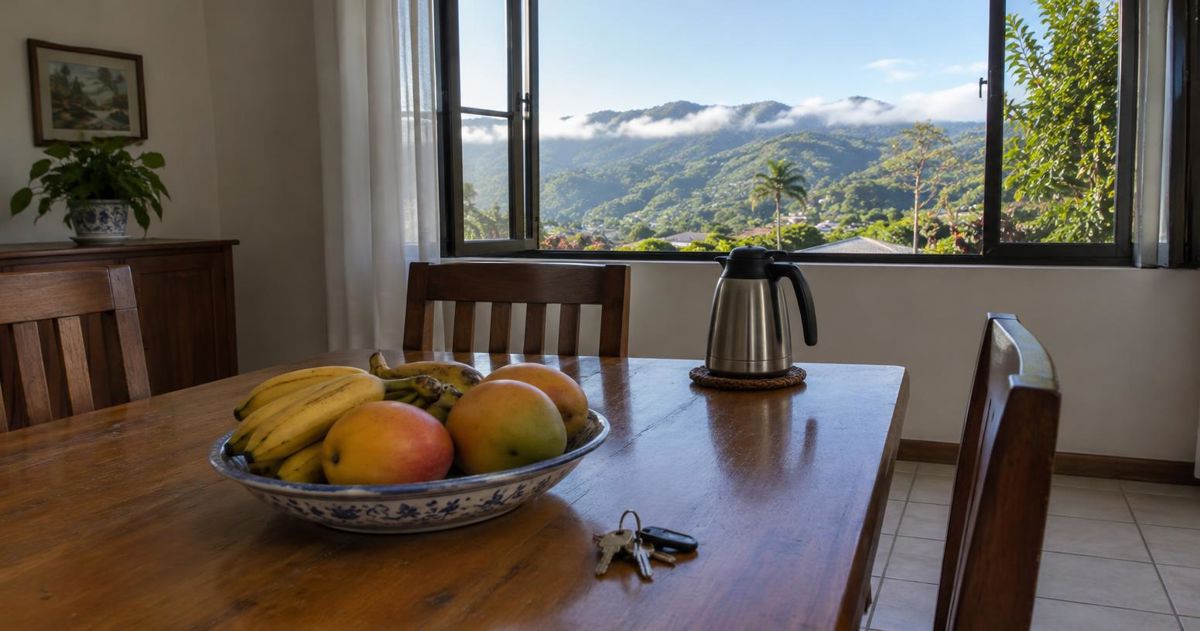
If you are a foreigner, own a house in Costa Rica and your heirs live in another country, this guide explains which law governs that house, whether you should make a will here or at home, which forms of will the Código Civil allows and what happens if you leave none. It is meant to help you sort out your decisions before you sit down with a notary.
Which law governs your house if you are a foreigner?
The starting point is article 24 of the Código Civil: real property located in Costa Rica is governed by Costa Rican law even when it belongs to foreigners, both on its own and when it is part of an estate. In practice, the house you bought in Escazú, in Guanacaste or in Pérez Zeledón will follow Costa Rica's rules when it has to be transferred to your heirs, regardless of your nationality or where they live.
The same Code adds a different rule for the document itself: under article 27 of the Código Civil, wills are governed by the laws of the country where the testator is domiciled. There are therefore two levels worth telling apart. One is the property, which always stays under Costa Rican law. The other is the will, whose validity is judged under the law of your domicile. If you live in Costa Rica, both levels coincide; if you live abroad, they can diverge.
That distinction matters from the moment you buy. Anyone still browsing homes for sale in Costa Rica can think about the estate from the start: whose name the house will be in, who your heirs would be and where your domicile is. These are questions a Costa Rican notary can help you answer before you sign the deed, not afterwards.
Advertisements
Should you make your will in Costa Rica or at home?
There is no single answer, but there is a test: think about the process your heirs will have to go through. If your domicile is in another country and your estate is processed there, articles 135.1 and 135.2 of the Código Procesal Civil (Law 9342) provide that distributions made abroad are valid in Costa Rica if they were handled by those entitled to do so and under that place's laws. But to give them effect, the interested party must first obtain the exequatur and ask the court where the property is located to summon anyone who could be harmed.
The exequatur is the recognition of the foreign decision. Under articles 99.2 and 99.3 of Law 9342, for a foreign judgment, such as one distributing an estate abroad, to have effect in Costa Rica, its recognition must be obtained from the competent cassation chamber by filing an authentic copy that shows the diplomatic or consular requirements were met, plus an official translation if it is in another language. In other words: even if everything goes well at home, the house in Costa Rica requires a second process here.
That is why it is worth considering, with a lawyer from each country, a will made in Costa Rica for the property here, drafted so that it does not contradict the one at home; since its validity will be judged under the law of your domicile, coordinating both is key. What you cannot do is delegate it: article 577 of the Código Civil states that a will cannot be made through an attorney or left to another person's discretion, so even if you have given someone a power to buy or sell, you must make your will yourself.
Which forms of will exist and how many witnesses do they require?
The Código Civil regulates the open will and the closed will. Under articles 583, 585 and 589 of the Código Civil, an open will is made before a notary and 3 witnesses, or a notary and 2 witnesses if the testator writes it, or without a notary before 4 witnesses if the testator writes it or 6 if not. It must also state the place, date and time, be read aloud to the witnesses, be signed by at least 2 witnesses when there is a notary or 3 when there is not, and all of it must happen in one continuous act.
| Form | With a notary | Without a notary | Witness signatures |
|---|---|---|---|
| Open, not written by the testator | Notary and 3 witnesses | 6 witnesses | At least 2 with a notary; 3 without |
| Open, written by the testator | Notary and 2 witnesses | 4 witnesses | At least 2 with a notary; 3 without |
| Closed | Notary's deed with 2 witnesses | Not applicable | The testator, the notary and 2 witnesses sign the deed |
The closed will works differently. Under articles 587 and 588 of the Código Civil, it must be signed by the testator, who hands it in a sealed envelope to a notary; the notary draws up a deed signed by the testator, the notary and 2 witnesses and returns the will, and the envelope is not opened until after the testator's death. It suits those who want to keep the content private, but it forces you to think about where the envelope will be kept and who will know about it.
For a foreigner there is an additional rule about language. Under article 584 of the Código Civil and article 72 of the Código Notarial (Law 7764), if you make a will in a foreign language before a notary, 2 interpreters chosen by you must translate what you dictate into Spanish; if you make it before witnesses only, it is enough that they understand the language the will is written in. If your Spanish is not solid, it is wise to arrange the interpreters from your first appointment with the notary.
Can you leave the house to whomever you want?
Largely, yes. Article 595 of the Código Civil lets a testator freely leave their property by will, as long as they secure maintenance for their minor children until they come of age, for life if a child has a disability that prevents them from supporting themselves, and for their parents and spouse while they need it, unless those relatives have sufficient property of their own when the testator dies.
That limit does not reserve a fixed share for each relative: it requires you to secure the maintenance of those who depend on you. If you have minor children or a spouse who lives on your income, the will must settle how their maintenance is covered, for example with other assets or with the use of the house. If it does not, the door opens for the disposition to be challenged, and the estate you imagined as simple can turn into a dispute among your heirs.
It is also worth thinking about what you want to happen to the house. If your heirs live abroad, they will probably prefer to sell it or rent it out rather than move in. Knowing home prices in Costa Rica in the area helps you decide whether to leave it to a single heir and compensate the others with other assets, or leave it in equal shares and accept that they will have to agree in order to sell it.
What happens without a will, and when is a notary enough?
Without a will, the estate is still opened, but who inherits and in what proportion is set by law, not by you. For the house in Costa Rica that means Costa Rican law, under article 24 of the Código Civil cited above. The distribution the law provides may not match what you would have wanted, especially in families with children from different relationships or with an unmarried partner: ask a lawyer to explain how your case would turn out.
When the estate goes to court, article 8.3.5 of Law 9342 provides that it is heard by the court of the deceased's last domicile or, failing that, the court of the place where most of the property is located. There is, however, a faster route. Under articles 129 and 134 of Law 7764, an estate, with or without a will, may optionally be handled before a notary public when no minors or legally incapacitated persons are among the interested parties, and the notary must stop if an interested party asks, someone objects in writing or a dispute arises.
- Gather the death certificate and, if there is one, the will or a copy of it.
- Confirm whether any minors or incapacitated persons are among the interested parties: if so, the notarial route is not available.
- Choose a notary public in Costa Rica and make sure all heirs agree to that route.
- If an heir lives abroad, have them sign their power of attorney before the Costa Rican consul or a Costa Rican notary, and apostille their certificates and public documents.
- If someone objects in writing or a dispute arises, the notary stops and the matter must go to the competent court.
The notarial route depends on agreement among the heirs. A clear will, stating who receives the house and how the maintenance of those who depend on you is secured, reduces the reasons to object and makes it more likely that your heirs can settle everything before a notary, without going to court.
How do heirs who live abroad take part?
Heirs do not need to travel for every step, but they do need documents that Costa Rica accepts. Under articles 2 and 3 of the Apostille Convention, approved by Law 8923, a public document from another party State no longer needs legalization by Costa Rican consuls, and the only formality that may be required to certify its signature, the signer's capacity and its seal is the apostille. Birth, marriage or death certificates follow that logic if they come from a party State; the power of attorney, as explained next, follows another rule.
The practical approach is for each heir to grant a special power of attorney to a trusted person or a lawyer in Costa Rica. If they live in the United States, Canada or Europe, the safe route is to sign it before the Costa Rican consul or a Costa Rican notary: Costa Rican law requires a public deed for a power used in an act recorded at the Registry, and a power signed before a notary public, even if apostilled, does not work for that, because the apostille certifies the signature and the seal, not the content. Check with the notary whether an official translation will also be needed. That attorney can act in the estate process and, later, in the sale or rental of the house. Keep the difference in mind: an heir can act through an attorney in the estate; you, however, cannot make your will through one.
While the estate moves forward, the house is still there and generates maintenance costs and taxes. Some heirs consider offering it among the homes for rent in Costa Rica to cover those costs; others prefer to sell it once the process is over. Either decision is best coordinated with the notary or the estate's lawyer, and the attorney's power should give clear authority from the start.
What we would do as the foreign owner
- Make a will in Costa Rica for the house here, reviewed by a lawyer from your country so it does not clash with the one you already have.
- Choose the form calmly: open before a notary if you want certainty in how it is made, closed if you want to keep the content private, with interpreters if you do not make it in Spanish.
- Set down in writing how the maintenance of minor children, parents or a spouse who depend on you is secured.
- Ask each heir who lives abroad for a power of attorney in favor of someone in Costa Rica, signed before the Costa Rican consul or a Costa Rican notary, before it is needed.
- If you are still buying, compare cheap homes for sale in Costa Rica while also thinking about who will inherit; and if you plan to make your domicile here, which can change the law governing your will, first consider cheap homes for rent in Costa Rica.
Frequently asked questions
Is the will I made in my country valid in Costa Rica?
It can be. Article 27 of the Código Civil refers to the law of the testator's domicile, so a will that is valid under your country's law is not ruled out. What changes is the process: if the estate is processed abroad, your heirs will have to obtain the exequatur and ask the court where the house is located to summon anyone who could be harmed before the distribution takes effect here. A Costa Rican notary can tell you which documents they will need to file.
Can the person I gave a power of attorney sign my will?
No. A will cannot be made through an attorney or left to another person's discretion. The power you granted to buy, sell or manage the house is not enough to make a will, however broad it is. If you cannot be in Costa Rica, you can make your Costa Rican will before the Costa Rican consul for your district or before a Costa Rican notary who travels to you; you can also consult a lawyer in your country about a will there and how it would be enforced here.
Do my heirs have to come to Costa Rica?
Not necessarily. If their certificates and other public documents come from a party State to the Apostille Convention, the apostille is enough to certify the signature, the signer's capacity and the seal, with no consular legalization. With a power of attorney signed before the Costa Rican consul or a Costa Rican notary in favor of someone here, they can move the estate forward without traveling, unless the notary or the court asks for something else in their specific case.
What if one of my heirs is a minor?
The notarial route is closed when minors or incapacitated persons are among the interested parties, so the estate will have to be processed in court. In addition, your will must secure maintenance for that child until they come of age, and for life if they have a disability that prevents them from supporting themselves. The will should say so clearly and state which assets cover it.
This guide summarizes practice in Costa Rica as of November 2026, based on the Código Civil, the Código Notarial, the Código Procesal Civil and the Apostille Convention. It does not replace the advice of a lawyer or a notary, who should review your case, your domicile and your heirs' situation before you sign.
Advertisements
More in Daily life and inheritance

Most viewed in Moving to Costa Rica

Moving to Costa Rica, Investing as a foreigner
Can foreigners buy property in Costa Rica?

Moving to Costa Rica, Relocating to Costa Rica
Costa Rica digital nomad visa: requirements and renting

Moving to Costa Rica, Investing as a foreigner
Buying a lot to build in Costa Rica: what to check

Moving to Costa Rica, Investing as a foreigner
Renting to tourists in Costa Rica: a guide for foreign owners