


What taxes the foreign owner of a house pays each year
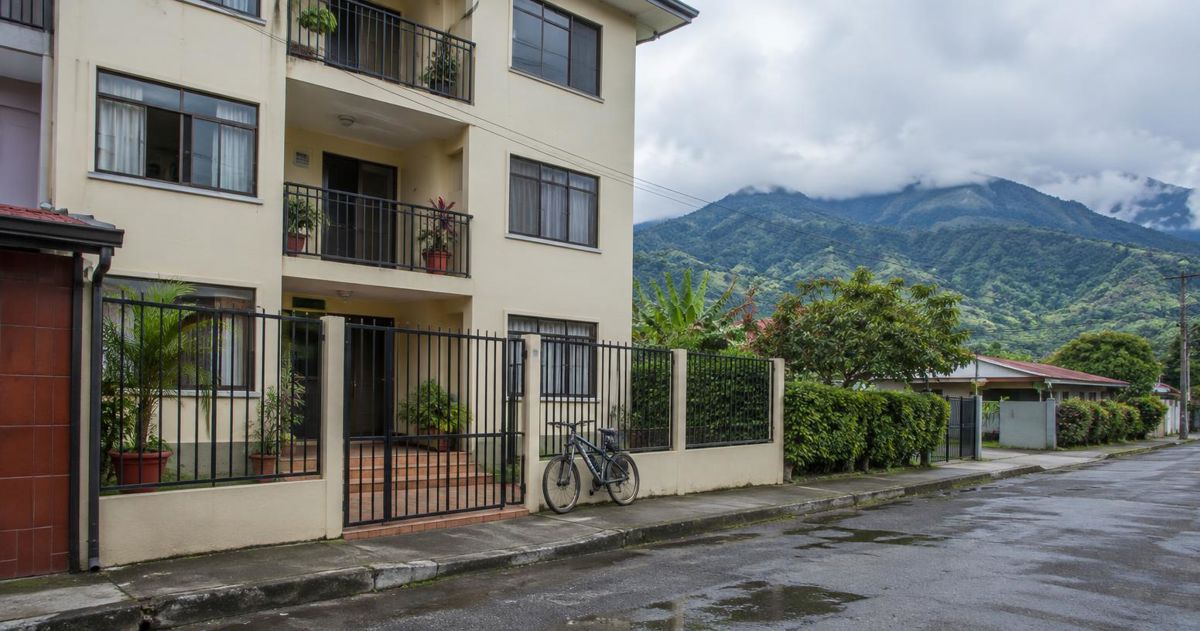
Owning a house in Costa Rica as a foreigner means a yearly bill that does not end with the deed. This guide explains which taxes the owner pays each year, to whom and by when: the property tax, the solidarity tax on luxury homes, the tax on companies and what changes when the property is rented out. It is written for those who are about to buy or already own and spend part of the year abroad.
How much does the municipality charge in property tax and how is it paid?
The first tax for every owner, Costa Rican or foreign, is the property tax. Under articles 3, 22 and 23 of the Property Tax Law (Law 7509), it is annual and equals 0.25% nationwide of the property value recorded by the Tax Administration. The municipality administers and collects it, and it is paid in one, two or four instalments as each municipality decides. That is why it pays to ask the municipality itself how it splits the payments and which methods it accepts, especially if you will be paying from abroad.
There is an important relief. Article 4 of that law provides that, if the property is an individual's only property, it pays no property tax up to a value equal to 45 base salaries, and pays only on the excess. The rule refers to an individual: a house registered in the name of a company does not fit it. Anyone looking among the cheap homes for sale in Costa Rica to hold a single property in their own name should take this benefit into account and ask the municipality how to apply for it.
The value the municipality uses is not necessarily the price you paid. Before signing, it is wise to request the municipal account statement for the property to confirm it is up to date and to learn the recorded value. That charge, together with transfer and deed costs, is explained in our guide on what buying a house costs on top of the price in Costa Rica.
Advertisements
When does a house fall under the solidarity tax on luxury homes?
The second tax is the one most people know as the luxury home tax. Under articles 1 and 2 of the Solidarity Tax for Housing Programmes Law (Law 8683), it falls on whoever, on the first day of each year, owns or holds a right to use or enjoy a residential property in Costa Rica, whether it is a habitual, occasional or holiday home. This matters for foreigners: a holiday home occupied only a few months a year also counts.
Not every house pays it. Article 6 of that law and article 1 of Executive Decree 45358-H establish that, for the 2026 tax period, a residential property is exempt if the fiscal value of its construction, including fixed and permanent installations, is ₡143,000,000 or less. The Executive updates that amount every December according to the change in the consumer price index, so the threshold changes from year to year. One detail matters: the comparison is made with the value of the construction, not with the sale price.
If the house exceeds the threshold, the rate is progressive. Article 5 of Law 8683 and article 2 of the same decree set for 2026 a rate of 0.25% on the property's value up to ₡359,000,000, then 0.30%, 0.35%, 0.40%, 0.45% and 0.50% in the following brackets, up to 0.55% on the excess over ₡2,162,000,000. To see which range a property falls in, home prices in Costa Rica are a useful reference, although the tax is calculated on the fiscal value and not on the asking price in a listing.
How is the value declared and how often?
The solidarity tax is calculated on the fiscal value declared by the owner. Under articles 4 and 10 of Law 8683, that value is obtained with Tributación's parameters, which value both the buildings and installations and the land; in a condominium, the proportional share of the common areas is added. It is a self-declaration: if the value falls short, the responsibility lies with the taxpayer, not with whoever sold the house or with the condominium management.
The deadlines are short. Articles 7, 8 and 9 of that law provide that the tax accrues on the first day of the year and must be paid within the following 15 calendar days at the latest. In addition, every 3 years the taxpayer must file, within the first 15 calendar days of January, a sworn return updating the property's value, except those who are exempt. For those who spend December abroad, it is wise to have the procedure settled before travelling.
- Gather the property's details: registry number, building area, land area and finishes.
- Calculate the fiscal value with Tributación's parameters, adding land, buildings and installations.
- Compare the value of the construction with the year's exempt amount to know whether you must pay.
- File the sworn return in January when it is due under the three-year cycle.
- Pay the tax within the January deadline and keep the receipt.
What does a company that owns the house pay each year?
Many foreigners register their house in the name of a company. In that case, under article 1 of the Tax on Legal Entities Law (Law 9428), that company pays the tax on legal entities, which falls on every commercial company, branch of a foreign company and sole-proprietor limited-liability company registered with the Registry of Legal Entities. The tax depends on registration, not on whether the company has commercial activity.
The amount depends on the company's situation. Article 3 of that law establishes that, each year, a registered company that is not registered in the Single Tax Registry (RUT) pays 15% of one monthly base salary. One that files profit tax pays 25%, 30% or 50% of one monthly base salary, depending on whether the gross income in its previous return is below 120 base salaries, between 120 and under 280, or 280 or more.
That is why, before buying through a company, it is worth running the full numbers: the company tax is added to the property tax, and the house is left out of the only-property benefit, which is for individuals only. A company may make sense for other reasons, but it is not an automatic saving. When reviewing homes for sale in Costa Rica registered to a company, also ask for proof that the company is up to date with this tax.
What changes if you rent the house to tourists or by the month?
Renting the house adds obligations. If you offer it as non-traditional lodging, article 8 of the framework law on non-traditional lodging (Law 9742) requires you to register as a provider with the ICT through a simplified digital registration, register as a taxpayer with the Dirección General de Tributación, and issue an itemised digital invoice for the services provided. If you live abroad, it is wise to leave an accountant or a representative in charge of these procedures from the first guest.
Platforms also have duties. Article 9 of Law 9742 provides that platforms intermediating non-traditional lodging must register with Tributación and, when the guest pays through the platform, withhold and pay the taxes set by law; they are also jointly and severally liable if withholding applies and the taxes are not paid. That does not release you from your own registration or from invoicing: withholding applies when the payment goes through the platform, not when the guest pays you directly.
If instead of tourists you are looking for a tenant by the month, the rent still generates income that Tributación may tax, and it is wise to review this with an accountant before listing the property among the homes for rent in Costa Rica. To set a realistic amount, also compare with the cheap homes for rent in Costa Rica in the same area: a rent out of line with the market leaves the house empty while the annual taxes keep running.
What happens if you do not pay on time?
The consequences vary by tax. For the company they are specific: article 5 of Law 9428 establishes that, if the company is in arrears, the National Registry will not issue it certificates of legal standing or register any document in its favour, it may not contract with the State, and the debt becomes a preferential statutory mortgage on its real estate. In practice, a company in arrears complicates any registry procedure for the house until it catches up.
The solidarity tax also stays with the property. Article 7 of Law 8683 provides that whoever buys a property subject to this tax is jointly and severally liable for the tax of the fiscal period current at the purchase date and for its interest. Before signing, ask the seller for proof of payment for the current year. With the property tax, arrears build up on the property's municipal account; review that statement at least once a year, even if you do not live in the country. The table summarises to whom each tax is paid and when.
| Tax | Who pays it | Paid to | When |
|---|---|---|---|
| Property tax | The property owner | The municipality | In one, two or four instalments a year |
| Solidarity tax | The owner of a non-exempt house | Tributación | In the first 15 calendar days of January |
| Legal entities | The registered company | The Tax Administration | Every year |
| Non-traditional lodging | Whoever rents to tourists | ICT and Tributación | On registering and with each invoice |
What we would do before buying or renting
- We would request the municipal account statement and proof of the year's solidarity tax payment before signing.
- We would calculate the fiscal value of the construction to know whether the house is exempt from the solidarity tax.
- We would compare buying in our own name with buying through a company, adding the company's annual tax.
- If the house is to be rented to tourists, we would register with the ICT and Tributación before the first guest.
- We would leave a representative or an accountant in charge of the January payments if we spend that time abroad.
Frequently asked questions
Does a foreigner pay the same as a Costa Rican?
The rules described in this guide tax the property and its owner, not their nationality. The property tax and the solidarity tax are calculated the same way for a Costa Rican and for a foreigner, and the company pays the same tax whoever its shareholder is. What does change is the logistics: those who live abroad must organise the January payments and the returns remotely, usually with a representative in Costa Rica.
Does residence as a pensionado or rentista make you a tax resident?
Not automatically. Under article 6 of the Ley para la atracción de inversionistas, rentistas y pensionados (Law 9996) and article 26 of the regulation of Law 9996 (Executive Decree 43926-MGP-H-TUR), holding immigration residence as a pensionado, rentista or investor does not automatically make you a Costa Rican tax resident; that status is acquired only if you meet the requirements of the Income Tax Law and its regulation. It is wise to review your case with an accountant, especially if you rent out the house.
What does a house in the maritime-terrestrial zone pay?
On the coastal strip, many properties are concessions rather than titled land. Under article 48 of the Maritime-Terrestrial Zone Law (Law 6043) and article 6 of Law 7509, the concession holder pays the municipality a fee (canon) for the land and, in addition, the property tax on fixed buildings and installations. The canon replaces the tax only as regards the land, so the built house pays separately.
How often does the solidarity tax's exempt amount change?
Every year. The 2026 exempt amount is ₡143,000,000 of fiscal value of the construction, and the Executive updates it every December according to the change in the consumer price index. That is why a house that is exempt today could stop being so if its fiscal value grows faster than the threshold, or the reverse. The prudent step is to check the new decree every December, before the January payment deadline.
This guide summarises practice in Costa Rica as of November 2026 under the laws cited and does not replace the advice of a lawyer, a notary or an accountant who reviews your case, especially if the house is held through a company or rented out.
Advertisements
More in Daily life and inheritance


Most viewed in Moving to Costa Rica
Moving to Costa Rica, Investing as a foreigner
Can foreigners buy property in Costa Rica?

Moving to Costa Rica, Relocating to Costa Rica
Costa Rica digital nomad visa: requirements and renting

Moving to Costa Rica, Investing as a foreigner
Buying a lot to build in Costa Rica: what to check

Moving to Costa Rica, Investing as a foreigner
Renting to tourists in Costa Rica: a guide for foreign owners