


Selling your lot or land: papers, price and listing
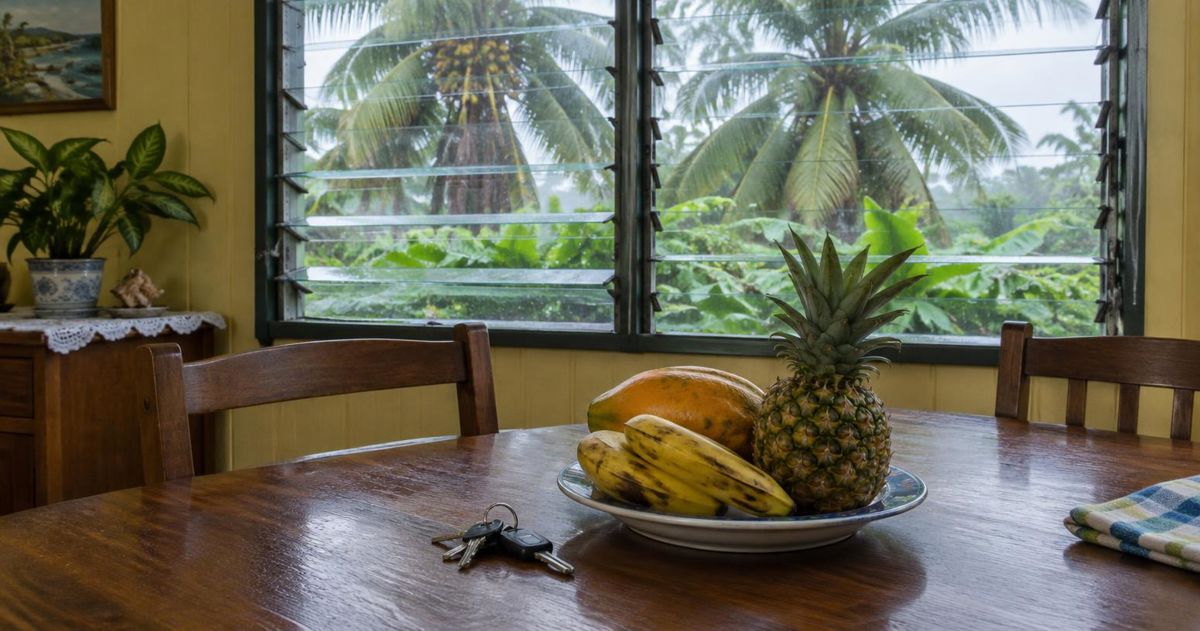
This guide is for the owner who wants to sell a lot or a piece of land in Costa Rica and would rather meet the first interested buyer with everything in order. It explains which papers to have ready before listing it, how to price it against what the market is asking, which photos and details a land buyer asks for and what your two paths are: list it yourself or hand it to a local agent.
How do you set a realistic price for your lot?
| Type | Median | Typical range | Price per m² of land | Listings |
|---|---|---|---|---|
| Lots | US$167k | US$87k – US$400k | US$110 | 3,383 |
The table in this section shows the prices being asked this month for the lots listed on Anuntico across the country. Use it as a starting point, not as the answer: these are asking prices in listings, not closed sale prices, and a lot sells for what someone is willing to pay after checking its papers. What helps is to find your province and see the range in which listings similar to yours move. If your price sits far above that range, buyers will notice in seconds; if it sits far below, you may be leaving money on the table.
Two lots of the same size in the same district can ask very different prices. Street frontage on a public road matters, as do the topography (a flat plot is cheaper to build on than a sloped one), the services already reaching the boundary, access during the rainy season, the permitted zoning and the view. Write down which of those advantages your lot has and which it lacks, and compare it only with listings that resemble it. The detail by area is on the page of land prices in Costa Rica, updated every month.
If you want a second reference, Anuntico's property value estimator gives you a point of comparison with the site's data. Our reading: a lot with complete papers defends its price better, because the buyer does not have to discount the cost or the risk of fixing them. Before lowering the price, check whether what holds buyers back is the figure or a doubt about the survey plan, the zoning or the water.
Which papers do you need, and why does the survey plan come first?
A land buyer almost always asks the same thing before the price: is there a recorded survey plan? The reason is legal. Under article 30 of the National Cadastre Law (Law 6545), except for mortgage cancellations, family-patrimony entries and attachments, every registry entry on a property must cite a survey plan; no survey plan has legal effect unless it is recorded in the National Cadastre, and the Registry suspends the recording of any document that lacks a recorded plan. In other words: without that plan, the transfer of your lot is not recorded.
In addition, article 450 of the Código Civil requires that, to record a sale in the Registry, the title be in a public deed, a final judgment or another authentic document expressly authorised by law. In practice, the sale ends before a notary. Before listing, it is wise to check what the buyer will check: that the property is in your name, that the area and boundaries on the plan match what is on the ground and that there are no pending entries. The guide on how to check a house at the Registry before buying it explains that search step by step.
| Document | What it is for | Where to get it |
|---|---|---|
| Recorded survey plan | Identifies the lot and allows the transfer to be recorded | National Cadastre |
| Registry search of the property | Shows the owner and any entries | National Registry |
| Zoning certificate | Shows which use the zoning allows | Municipality of the canton |
| Water availability certificate | Proves water service is available | AyA, ASADA or service operator |
| Municipal approval, if you sell part | Allows the land to be subdivided in an urban area | Municipality of the canton |
| Deed by which you acquired the lot | Backs your title before the notary | Your files or the notary who executed it |
Also keep at hand the deed by which you acquired the lot and your valid ID: the notary will ask for them to prepare the new deed. If you inherited the land or bought it long ago, confirm that the transfer to your name was recorded. The guide on the property deed in Costa Rica: validity and transfer explains how that transfer is done and what the notary checks, and its steps also apply to a lot.
How do you check zoning and prove the lot has water?
Zoning tells what can be done on your land: housing, commerce, industry or farming. Under article 28 of the Urban Planning Law (Law 4240), using land or a building for a purpose incompatible with zoning is prohibited, and owners must obtain a municipal certificate showing that the use conforms, although each zoning regulation sets the date from which that certificate becomes mandatory. The certificate is requested at the municipality of the canton where the lot is.
Requesting it before listing saves you time with buyers looking for something the zoning does not allow, such as a shop in a residential-only area. It also lets you state in the listing, with backing, what the lot can be used for. Our reading: a recent certificate in hand is worth more than any adjective in the description, because it answers the doubt the buyer would otherwise have to resolve alone.
Water is the other question. Article 117 of the INVU Building Regulations (Reglamento de Construcciones), which applies where the municipality has no rules of its own, states that every building must have water service available and that the document proving it must be obtained: a certificate from AyA, the ASADA or the service operator or, if supplied by a well, spring or natural source, an availability document or water-use concession from MINAE's water department with potability tests. Anyone buying a lot to build will need that paper; if you already have it, you remove a big doubt.
Keep its validity in mind. Under articles 37 and 38 of AyA's water and sewerage service regulations, for a single-family house AyA's positive availability certificate is valid for 12 months and can be extended up to a maximum of 24 consecutive months if concrete steps on the project are shown; the extension must be requested within the last quarter of validity or the certificate lapses. That is why it is wise to request it close to the date you plan to list. The guide buying a lot to build in Costa Rica: what to check shows how the buyer reviews these papers.
Can you sell only part of your land?
Many owners want to sell part of their property and keep the rest. Since every registry entry must cite a survey plan, the part you sell will need its own. And under articles 33 and 34 of Law 4240, to subdivide land in an urban district or other area under planning control you first need a plan approved by the municipality, issued free of charge within 15 days of filing; public offices that grant building permits, utility services or loans treat subdivisions made without that approval as non-existent.
In an urban district, a subdivision without approval leaves the buyer with land that those offices treat as non-existent when it comes to permits, services or loans, and that drives away any serious buyer. Outside those areas, the requirements depend on the place: consult a surveyor and a notary before listing the part. The usual order of the process is this:
- Hire a surveyor to measure the part you will sell and draw its plan.
- File the plan with the municipality for approval, if the land is in an urban district or other area under planning control.
- Record the plan in the National Cadastre so it has legal effect.
- List the part with its recorded plan and exact area, not approximate measurements.
- Sign the subdivision and the sale in a public deed before a notary.
What photos and details does a land buyer ask for?
A land buyer does not see a living room or a kitchen: they have to imagine what they will build. That is why they need to understand the land from their phone before driving out to it. A good listing answers the questions they would otherwise ask by phone:
- A photo of the front of the lot from the street, showing the access and the type of road
- Photos from the corners or boundary markers, so the shape and slope are clear
- The view from the highest point of the land, if it has one
- The nearest power poles, meter or water pipe, if they exist
- The exact area according to the recorded survey plan, with frontage and depth
- The zoning stated in the municipal certificate and how water is obtained
- The distances to the nearest school, supermarket and main road
Take the photos on a clear morning, with the grass cut and the boundaries visible; an overgrown plot looks smaller and raises doubts about access. Do not hide what the buyer will discover on the visit, such as a creek, a steep slope or a gravel road: what does not appear in the listing turns into visits that lead nowhere. You can see how other owners present their plots among the land & lots for sale in Costa Rica and borrow the ideas that best show a piece of land.
Our reading: a lot listing is won with data, not adjectives. Many buyers arrive with a checklist in hand, like the one in what to check before buying a lot or a farm; if your listing answers that checklist point by point, the buyers who contact you will have already cleared the basic doubts and the conversation will start with the price.
List it yourself or have an agent sell it?
The first door is to list your property yourself on Anuntico: you upload the photos, write the details and deal with interested buyers. It suits you if you know your land well, have the papers ready and have time to answer messages and show the lot. No one can promise you how long the sale will take: it depends on the area, the price and how the land is presented.
The second door is to hand the sale to someone who knows the market in your area. If you prefer that route, you can sell or rent with an expert or look among the real estate agents in Costa Rica for one who handles lots in your canton. An agent helps set the price, screens out the curious and coordinates visits; in return they charge a commission, which is best agreed in writing before starting.
Either way, the closing is done by a notary. Under article 68 of the fee schedule for legal and notarial services (Decreto Ejecutivo 41457-JP), unless the parties agree otherwise or a legal provision says otherwise, the notary's fees, duties, stamps and taxes on an act or contract are paid in equal parts, except the creation and cancellation of mortgages and pledges, which the debtor pays. Discuss that split with the buyer from the first conversation. The guide agent, lawyer or notary: who does what when buying a home clarifies each one's role.
What we would do before listing your lot
- We would first get a copy of the recorded survey plan and check that it matches the land
- We would request the zoning certificate at the municipality of the canton
- We would obtain the water certificate close to the listing date, to make the most of its validity
- We would set the price by comparing with this guide's table and with similar listings in the same area
- We would decide from the start whether to sell on our own or with an agent, and agree with the buyer on who pays the notary's costs
Frequently asked questions
Can you list land without services or with an easement?
Many lots are listed without water or electricity, or with access through an easement. What helps is to say so in the listing and explain how water would be obtained: through AyA, an ASADA or a well or spring with its MINAE process, as explained above. If access is through an easement, state where it runs and show the plan. The legal effects of an easement depend on each case: consult a lawyer or a notary before listing.
Who pays the costs of the sale deed?
As explained in the section on the two doors, unless the parties agree otherwise or a legal provision says otherwise, the notary's fees, duties, stamps and taxes are paid in equal parts by the seller and the buyer. The exception is the creation and cancellation of mortgages and pledges, which the debtor pays. The prudent course is to settle that split before receiving any payment, so it does not become a stumbling block at signing.
How long is AyA's water certificate valid?
For a single-family house, AyA's positive availability certificate is valid for 12 months and can be extended up to a maximum of 24 consecutive months if concrete steps on the project are shown. The extension is requested within the last quarter of validity; otherwise, the certificate lapses. That is why, in practice, it is wise to obtain it when you are about to list the lot, not long in advance. If the water comes from an ASADA or another operator, ask them about their conditions.
How long does it take to sell a lot?
No one can promise you a timeline. The area, the price against similar listings, the available services and how complete your papers are all play a role. What is in your hands is to reach the market with the survey plan, zoning and water certificate settled, a price that holds up against this guide's table and a listing with clear photos and details. If time passes without interested buyers, review the price and the presentation first.
This guide summarises the practice for selling a lot or a piece of land in Costa Rica as of November 2026 and does not replace the advice of a lawyer or a notary, who should review your specific case before you sign.
More in Selling a property
Most viewed in Property Owners
Property Owners, Renting out your property
How to rent out your house in Costa Rica as an owner
Property Owners, Selling a property
What the seller pays when selling a house in Costa Rica
Property Owners, Selling a property
How to sell your house fast in Costa Rica: an owner's guide
Property Owners, Selling a property
What your house is worth in Costa Rica and how to estimate it