


What your house is worth in Costa Rica and how to estimate it
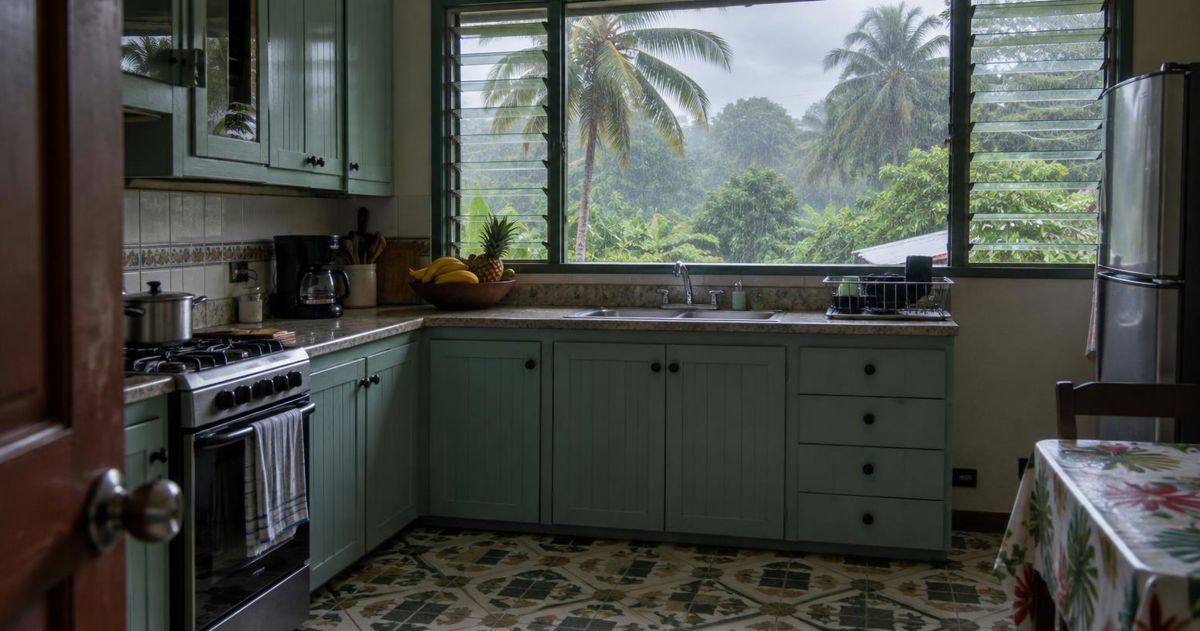
Knowing how much a house is worth in Costa Rica, and above all how much yours is worth, is the first decision in any sale: a price that is too high leaves the listing idle for months, and one that is too low costs you money. This guide explains what drives the value of a house, an apartment or a lot, how to read the prices asked on the site and when it is worth paying for an appraisal. The guide explains; the estimator calculates your range.
How much is a house worth in Costa Rica, and how much is yours?
| Type | Median | Typical range | Price per area | Listings |
|---|---|---|---|---|
| Houses | US$285k | US$190k – US$480k | US$1,271/m² | 8,495 |
| Apartments | US$190k | US$145k – US$290k | US$2,049/m² | 2,618 |
| Lots | US$167k | US$87k – US$400k | US$110/m² of land | 3,383 |
There is no single price for the whole country. A house in a residential development in Heredia or Cartago and another on a farm in Guanacaste or Pérez Zeledón belong to different markets, with different buyers and different reasons to pay. That is why the useful question is not how much an average house is worth, but how much is being asked for properties like yours in your own area. The table in this section shows the prices being asked this month for houses, apartments and lots for sale across the country, and it is updated every month with the site's active listings.
Read it as a starting point, not as the value of your house. A national figure mixes large properties with simple houses, the coast with the city and new homes with older ones. It helps you get your bearings: whether your property sits at the top or the bottom of the market, and whether you should look at the detail by province, canton or district. That detail, area by area, is on the page of home prices in Costa Rica, where you can compare your canton with its neighbors before thinking of a figure.
With an apartment the logic is the same, with two nuances. The building weighs more than the land: security, the elevator, parking spaces, common areas and the condominium fee are part of what the buyer pays, and a high fee holds back what they are willing to offer. Also, the comparison should be made with apartments in the same building or in similar buildings in the same area, not with houses. An apartment on a high floor with a view and another on the ground floor of the same building can have quite different prices.
What drives the price of a property?
Five factors explain most of the price a buyer is willing to pay. None is looked at on its own: a large house in an area with little demand can be worth less than a small, well-located one, and a big piece of land loses appeal if the house needs a full renovation. The table summarizes what the buyer looks at in each.
| Factor | What the buyer looks at | How it usually weighs |
|---|---|---|
| Area | Closeness to work, schools and shops; safety; state of the road | It weighs the most and is the only one that cannot be changed |
| Built square meters | Usable area, number of bedrooms and bathrooms, layout | More meters raise the price, but not in the same proportion |
| Land | Size, shape, slope, street frontage, room to grow | It weighs more for houses and lots than for apartments |
| Condition | Roof, wiring, plumbing, finishes, damp | A house that needs repairs is negotiated down |
| Services | Water, electricity, internet, public transport, access | Missing a basic service narrows the pool of buyers |
The area is the factor that weighs the most. Closeness to work and schools, the state of the road and travel time at rush hour can move the price of two nearly identical houses. We explain it in detail in how location and roads change the value of a house. Be wary, though, of anyone who assures you that your area is going to rise: to tell an area with real demand from a rumor, it helps to read how to spot an appreciating area without believing promises.
Condition is the factor you do control. A roof without leaks, inspected wiring, walls without damp and fresh paint take away the buyer's arguments for a discount. Not every project is recovered in the price: some improvements raise the value and others only reflect the owner's taste. Before investing in a renovation to sell, review which improvements raise a home's value in Costa Rica and prioritize the repairs a buyer would notice on the first visit.
How is a lot, a square meter of land or a hectare valued?
An empty lot is almost always compared by the square meter, because it is the simplest way to set plots of different sizes side by side. But the square meter does not tell the whole story. The shape of the land, its street frontage, the slope, whether water and electricity reach the lot, whether the road is paved or gravel and what can be built on it all weigh in. Before setting a price, the prudent step is to confirm with the municipality what can be built on that land, because that answer is the first thing a serious buyer asks.
To estimate how much a square meter of land is worth in your area, look for several lots for sale near yours, divide the asking price by their square meters and see which band they cluster in. Bear in mind that small lots usually ask more per meter than large ones, and that a corner lot that is flat and has services sits at the top of that band. If your land has a house on it, the buyer does not pay for the land plus the building separately: they pay for the whole, and a house in poor condition can subtract from the value of the lot.
The hectare is the unit for farms and rural land in Guanacaste, the northern zone or the southern zone. There the price depends on other things: the topography, springs or streams, access in the rainy season, the distance to the nearest town and the use the land allows, whether cattle, crops or forest. Per hectare, sellers ask far less than for a square meter of an urban lot, so a farm is compared with similar farms in the same region, never with lots in a residential development.
Why is a listing price not the selling price?
Listings show asking prices: what each owner hopes to receive on the day they publish. The closing price is a different one, agreed between buyer and seller after visits, offers and counteroffers, and it is almost never published. In practice it usually ends up below the asking price, and some properties stay listed for months without selling because the price was set above what the market in their area was willing to pay. That is why the table in this guide and any comparison with listings give you a reference ceiling, not a guarantee.
This does not make listings less useful: it turns them into the best source for knowing who you compete with. Before setting your price, browse the homes for sale in Costa Rica that resemble yours, in your canton and of a similar size, and notice which ones have been listed the longest. If a house comparable to yours is still on the site after several months, its price is probably high. If after publishing you get few inquiries in the first weeks, the price is usually the first thing worth reviewing.
Remember, too, how the buyer does the math. The buyer does not compare only the listing price: they add the closing costs, the move and the repairs they see pending. We summarize it in what buying a house costs on top of the price in Costa Rica. A seller who understands that math sets a price the buyer can afford with everything else included.
How do you work out a price range for your property?
A range is more honest than an exact figure: it recognizes that two buyers can value the same house differently. The method we propose combines three sources, your property's details, the site's estimator and comparable listings in your area, and it takes an afternoon.
- Gather your property's details: built square meters, land square meters, bedrooms, bathrooms, parking spaces, approximate age and overall condition.
- Enter the type of property, the area and the size in the site's property value estimator to get an initial range based on the price per square meter of listings in your area.
- Look for several similar properties listed in your own canton or district and note what they ask and how long they have been listed.
- Adjust the range for what your property has more or less of: a larger plot, a recent renovation, a roof that needs replacing or a road in poor condition.
- Set an asking price within the range and, before publishing, the minimum you would be willing to accept.
The estimator calculates; you decide. Its range comes from the site's active listings, so it shares the same limitation as any listing: it reflects asking prices, not closing prices. Nor does it take bedrooms, bathrooms or condition into account, or see what can only be seen in person, such as an open view, a noisy neighbor or hidden damp. Use it so you do not start from zero and to check whether the figure you had in mind is within reason, and adjust it with what you know about your house better than anyone.
When is a professional appraisal worth paying for?
An appraisal is the report of a professional who visits the property, measures it, checks its condition and compares it with others in the area to arrive at a value. Unlike the estimator, someone walks through the house and sees what the data does not say. It has a cost, so it is not always justified: if your house is similar to many others listed in the same development, the estimator and comparable listings are usually enough to set a reasonable range.
It is worth paying for when the property is hard to compare: a farm, a very large house or one with an unusual design, or a rural area where there are hardly any similar listings. Also when several owners have to agree, as in an inheritance or a separation, because an independent report avoids disputes. And when the amount at stake is high, the cost of the appraisal is small next to the risk of setting the price wrong.
Bear in mind, too, that when the buyer finances the purchase with a loan, it is common for their bank to commission its own appraisal. If the agreed price is well above that value, the loan may not cover the difference and the sale gets complicated. Setting a price close to what an appraiser would consider reasonable saves you that setback. If you prefer someone with experience to handle the whole process, from the price to the negotiation, you can sell or rent with an expert.
What we would do before pricing your house
- Start from a range, not a figure: the property's details, the estimator and comparable listings in your canton.
- Compare only with properties of the same type and in the same area: houses with houses, apartments with apartments, farms with farms.
- Fix the visible repairs before publishing, instead of lowering the price to make up for them.
- Pay for an appraisal only when the property is hard to compare or when several owners have to agree.
- With the range clear, list your property at an asking price that leaves a reasonable margin to negotiate.
Frequently asked questions
How much is my house worth if there are no similar ones for sale nearby?
When there are hardly any comparable listings, widen the search to neighboring districts and cantons with similar features and use the estimator to get a first range. If your property is still hard to compare, because of its size, its design or because it is in a rural area with little supply, that is precisely the case in which a professional appraisal is justified, because someone visits the house and sees what the data does not show.
Is it worth asking more to leave room for negotiation?
A reasonable margin is normal, because the closing price usually ends up below the asking price. The problem is exaggerating it: a house priced well above comparable ones in its area gets few inquiries and can stay listed for months. Also, if the buyer uses a loan, their bank usually does its own appraisal, and a very high price complicates the sale. The prudent step is to set the asking price within the range you calculated.
Does the site's estimator replace an appraisal?
No. The estimator gives you a range based on the site's active listings, with asking prices and without seeing the property. It helps you avoid starting from zero and check whether your price idea is reasonable. The appraisal is the report of a professional who visits the house, measures it and checks its condition. For a house similar to many others in its area, the estimator and comparable listings are usually enough; for a property that is hard to compare, the appraisal is advisable.
This guide summarizes the practice for pricing a house, an apartment or a lot in Costa Rica based on Anuntico's listings, and it does not replace the advice of a lawyer or a notary, nor the report of a professional appraiser.
More in Selling a property
Most viewed in Property Owners
Property Owners, Renting out your property
How to rent out your house in Costa Rica as an owner
Property Owners, Selling a property
What the seller pays when selling a house in Costa Rica
Property Owners, Selling a property
How to sell your house fast in Costa Rica: an owner's guide
Property Owners, Selling a property
Selling your lot or land: papers, price and listing