


How to buy a house in Costa Rica without travelling
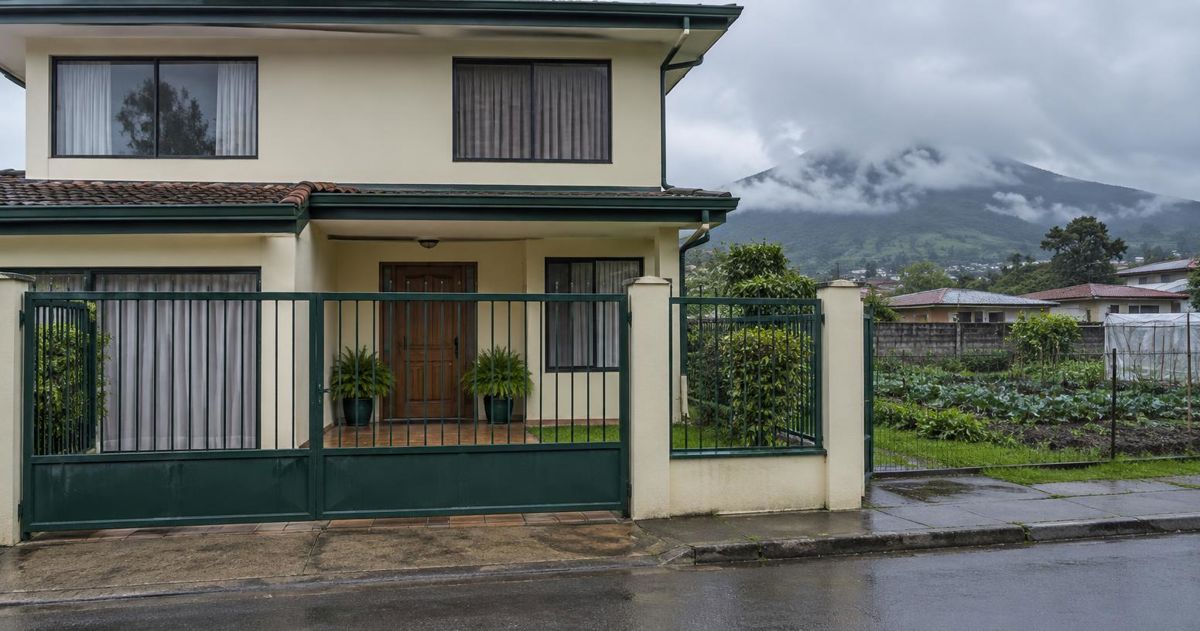
Buying a house in Costa Rica without being in the country is possible, but not everything can be settled by email. This guide explains, for anyone living in the United States, Canada, Europe or another country, what can be done remotely, which power of attorney is needed and before whom it must be signed, what the apostille and translation do, how to move the money and how to spot fraud before paying.
What can you do without travelling and what requires being present?
Almost the entire stage before signing can be done from outside Costa Rica: browsing homes for sale in Costa Rica, asking for recent photos and videos, comparing the asking price with home prices in Costa Rica, negotiating in writing and hiring a lawyer in the country to check the National Registry. What cannot be done remotely is signing the deed of sale: in Costa Rica the deed is authorized by a notary and each party signs it before that notary, in person or through an attorney-in-fact.
That leaves two paths. The first is travelling for the signing, which lowers the risk and lets you see the house before paying. The second is granting a power of attorney to a trusted person in Costa Rica so they sign on your behalf. Even on that second path there is one step that requires your presence: the power itself is signed before a consul or a notary, with you there and your identity document in hand. The table summarizes what can be handled remotely and what cannot.
| Stage | Remotely | What it requires |
|---|---|---|
| Searching and comparing houses | Yes | A connection and time |
| Negotiating the price and the purchase option | Yes | A written agreement reviewed by your lawyer |
| Checking the National Registry | Yes | A lawyer or notary in Costa Rica |
| Visiting the house | Through someone you trust | A person independent from the seller |
| Signing the power of attorney | No | Appearing before the consul or a Costa Rican notary |
| Signing the deed of sale | Only through an attorney-in-fact | You in person or your attorney-in-fact before the notary |
Advertisements
Which power of attorney works for buying a house and how is it granted?
The instrument that records a mandate is called a power of attorney (poder). Article 1251 of the Código Civil provides that general or generalísimo powers must be granted in a public deed and recorded in the Registry, and that they only take effect against third parties from the date they are recorded. With a generalísimo power, under articles 1253 and 1254 of the Código Civil, the attorney can sell, mortgage or otherwise transfer or encumber any kind of property and sign any kind of contract, except acts the law reserves for the owner in person and acts that require a special power (poder especialísimo).
For a specific purchase, the usual choice is a special power. Article 1256 of the Código Civil establishes that a special power only authorizes the attorney for the acts it specifies and that, when it is for an act or contract with registry effects, such as buying a registered property, it must be granted in a public deed, although it does not need to be recorded in the Registry. That is its practical advantage: it works for a single transaction and does not hand the attorney control of all your assets.
Our reading: ask your lawyer in Costa Rica to draft the special power before the signing appointment, with the property identified by its registration number, the maximum price you authorize, and the authority to sign the deed, pay the transfer costs and take possession of the property. A generalísimo power to buy a single house is more power than you need, and if the attorney acts badly, the damage can reach your other assets.
Why, from the United States, Canada or Europe, is it signed before the consul or a Costa Rican notary?
Many buyers sign the power before a notary in their city, have it apostilled and send it. For a purchase in Costa Rica, that path is not safe if you live in the United States, Canada or Europe. Under article 16 of the Inter-American Convention on the Legal Regime of Powers of Attorney to be Used Abroad (Law 6165), per the OAS register of ratifications, that convention only applies among the 16 countries that ratified it, so it does not apply to a power signed in the United States, Canada, Europe, Colombia or Nicaragua.
In 2018 the Registry Appeals Tribunal (Tribunal Registral Administrativo), in decision 0645-2018 applying articles 1 and 14 of Law 6165, confirmed that a special power signed before a United States notary public, even if apostilled, is not valid for an act with registry effects in Costa Rica, and that it must be granted before a Costa Rican notary with their protocol or before the Costa Rican consul. For general or generalísimo powers, circular DPJ-15-2017 of the Registry of Legal Entities, based on those same articles, states that they are recorded if they were signed before a Costa Rican notary or the consul.
Two routes remain. Under articles 14 and 70 of the Código Notarial (Law 7764), Costa Rica's consuls abroad act as notaries public within their district for acts or contracts that are to take effect in Costa Rica, and what they authorize is a notarial document governed by that code. In addition, article 32 of Law 7764 allows a Costa Rican notary public to practice outside the country to authorize acts and contracts that are to take effect in Costa Rica; a consular notary, by contrast, may only act within the district of their appointment.
- Ask your lawyer in Costa Rica for the draft special power, written in Spanish.
- Identify the Costa Rican consulate whose district covers your place of residence and request an appointment, or arrange with a Costa Rican notary who can attend you where you are.
- Bring your valid passport and the draft; if you do not understand Spanish, arrange the translator from the appointment on.
- Sign before the consul or the notary and request the copy or certified copy (testimonio) that the notary in Costa Rica will need.
- Send the document by courier with a tracking number to the notary who will authorize the sale.
The local notary in your city is only a route the convention backs if you live in one of the countries that ratified the convention, such as Mexico, Argentina or Chile, and even then the document must meet the national requirements, such as a public deed and an apostille. Our reading: if you live in the United States, Canada or Europe, do not spend money on a power before a local notary for this purchase; request a consulate appointment as soon as negotiation begins, because the consular calendar can take longer than the deadline the seller gives you.
What do the apostille and translation do for your documents?
Costa Rica approved the Apostille Convention through Law 8923. Under articles 2 and 3 of that convention, a public document from another party State no longer needs legalization by Costa Rican consuls, and the only formality that may be required to certify its signature, the signer's capacity and its seal is the apostille. For a buyer abroad, that simplifies the public documents from their country that must be filed in Costa Rica: they are apostilled in the country that issued them and do not go through the consulate.
The limit is clear. Under article 3 of that convention, as read by the Registry Appeals Tribunal in decision 0645-2018, the apostille only certifies the document's origin, that is the signature, the signer's capacity and the seal, not its content, so it does not make a power valid for Costa Rica if the power does not meet the formalities of Costa Rican law. A power before a United States notary public still does not work for the purchase, however many apostilles it carries.
Language also matters. Articles 71 and 72 of the Código Notarial establish that deeds and other notarial documents are written in Spanish, and that if you do not understand Spanish an official translator or another one accepted by the parties and the notary must take part, unless the notary understands your language and everyone agrees that the notary translates, so that you learn the text in a language you know. Our reading: do not sign a power or a deed you do not understand word for word; the cost of a translator is small compared with the cost of a mistake.
How is the money sent without handing it over blindly?
In a remote purchase, the money is the most exposed point. The most prudent practice in Costa Rica is escrow: an entity independent from the seller receives the funds, holds them and only releases them when the conditions agreed in writing are met, usually the signing of the deed and its filing with the National Registry. If the purchase falls through for a reason set out in the contract, the money returns to you. Ask your lawyer to review the escrow contract before transferring.
- Sign the option or sale contract with the conditions for releasing the money.
- Open or confirm the escrow with an entity that you or your lawyer have verified.
- Confirm the destination account with a call to a number you already knew, not the one that arrived in the same email.
- Transfer from an account in your name and keep the receipt and the documents on the origin of the funds.
- Authorize the release only when the notary confirms the signing of the deed and its filing with the National Registry.
Banks in Costa Rica usually ask for documents that justify the origin of a large international transfer, so it is wise to gather them before sending the money. Our reading: the last-minute account change is the most common trap; if you receive an email saying the escrow account has changed, stop the transfer and confirm it by phone with your lawyer before moving a single dollar.
How are the house, the seller and the warning signs of fraud checked remotely?
Verification starts at the National Registry, which can be consulted online. Your lawyer should confirm who the recorded owner is, whether the property has mortgages, liens or annotations, and whether the cadastral map matches what is on the ground. Next comes the municipality, for land use and up-to-date taxes, and a visit by a trusted person who does not depend on the seller or the broker, who films the house, the boundaries and the access.
If the seller also signs through an attorney-in-fact, the risk rises. Articles 84 and 85 of Law 7764 require the notary to certify the attorney's current authority after seeing the document, to keep the original power in the notary's reference file and, if the parties are foreigners, to take the appropriate steps to make sure their identity documents and the powers they granted are authentic. Choose the notary yourself and ask them to explain how they verified that power.
- The seller only communicates by message and never by video call from the house.
- The name of the recorded owner does not match that of the person selling, and the explanation is a power of attorney nobody shows you.
- You are asked to transfer to a personal account or an intermediary's account, not to escrow.
- You are pressed to use the notary or lawyer the seller proposes.
- You are pressured with deadlines of hours because there is another buyer.
- The destination account changes at the last minute by email.
Our reading: a price far below what similar houses are asking is the warning sign that weighs the most. Compare the offer with cheap homes for sale in Costa Rica in the same area; if the gap cannot be explained by the condition of the house or by the Registry, treat the bargain as a warning, not an opportunity.
What we would do if we were buying from abroad
- Hire a lawyer and notary in Costa Rica who is independent from the seller first, and let them choose the escrow.
- Grant a special power, not a generalísimo, before the Costa Rican consul or a Costa Rican notary, with the property and the maximum price identified.
- Transfer nothing before having the National Registry search, the independent visit and the signed contract.
- Travel at least once before the signing and, if the area is new to you, spend a few weeks in one of the homes for rent in Costa Rica before buying.
- If the budget for that stay is short, look among the cheap homes for rent in Costa Rica to get to know the neighbourhood without hurry.
Frequently asked questions
How long does the power last and how is it revoked?
Under articles 1278 and 1282 of the Código Civil, a power does not expire after a legal term: it ends when the business is done, the term or condition you set arrives, you revoke it, the attorney resigns or either of you dies, among other causes. If the power is recorded, its revocation only binds third parties from the date it is recorded. That is why it is wise to set a deadline in the special power and to notify the notary in writing if you decide to revoke it.
Does a power signed before a notary in Mexico, Argentina or Chile work?
It can work, because those countries are among the ones that ratified the Inter-American Convention on powers. According to circular DPJ-15-2017 of the Registry of Legal Entities, based on articles 1 and 14 of Law 6165, a power granted before a foreign notary is only recorded when that country ratified the convention and the document meets the national requirements, such as a public deed and an apostille. Before signing it, send the draft to your notary in Costa Rica to confirm they will accept it.
Does the special power have to be recorded before the purchase?
No. Article 1256 of the Código Civil requires the special power for buying a registered property to be granted in a public deed, but it clarifies that it does not need to be recorded in the Registry. What is needed is that the original reaches the notary who will authorize the sale, because the notary must see it, certify the current authority and keep it in the reference file. Allow enough time for shipping from abroad.
This guide summarizes the practice for buying a house in Costa Rica from abroad, under the rules in force in November 2026, and it does not replace the advice of a Costa Rican lawyer or notary who reviews your case, your documents and the specific property before you sign or pay.
Advertisements
More in Investing as a foreigner
Moving to Costa Rica, Investing as a foreigner
Can foreigners buy property in Costa Rica?
Moving to Costa Rica, Investing as a foreigner
Buying a lot to build in Costa Rica: what to check
Moving to Costa Rica, Investing as a foreigner
Renting to tourists in Costa Rica: a guide for foreign owners

Moving to Costa Rica, Investing as a foreigner
What you actually buy near the sea in Costa Rica
Most viewed in Moving to Costa Rica
Moving to Costa Rica, Investing as a foreigner
Can foreigners buy property in Costa Rica?

Moving to Costa Rica, Relocating to Costa Rica
Costa Rica digital nomad visa: requirements and renting
Moving to Costa Rica, Investing as a foreigner
Buying a lot to build in Costa Rica: what to check
Moving to Costa Rica, Investing as a foreigner
Renting to tourists in Costa Rica: a guide for foreign owners